Remote Work’s Ripple Effect: Unpacking Local Economic Transformations

The great economic unplugging is underway. For decades, wealth and talent have concentrated in a handful of superstar cities, creating a seemingly unbreakable cycle of growth. But the mass adoption of remote work has severed the physical link between high-paying jobs and high-cost urban centers, triggering a dispersal of capital and human potential unseen in generations. This isn’t just a quiet migration; it’s a underlying rewriting of economic geography, as big-city salaries begin to flow into small-town economies.
This shift acts as a powerful accelerant, creating both exceptional opportunity and significant friction. For every revitalized Main Street and booming local cafe, there is a housing market pushed to its breaking point and a strain on public services that were never designed for such rapid growth. The influx of remote workers brings a welcome injection of cash but also introduces complex social dynamics, as long-term residents grapple with rising costs and a rapidly changing community identity.
What does this transformation actually look like on the ground? This article unpacks the ripple effect of remote work on local economies, moving beyond the headlines to examine the real-world consequences. We will explore the clear winners and losers in local business ecosystems, analyze the intense pressure on housing and infrastructure, and evaluate the policy responses communities are deploying to navigate this new reality. The future of countless towns now depends on striking a delicate balance between growth and preservation.
The Shifting Landscape: How Remote Work Redefines Urban and Rural Economies
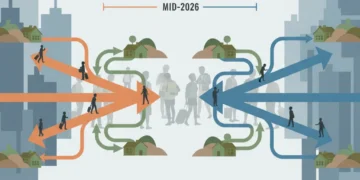
The decades-long assumption of urban prosperity is officially obsolete. Remote work acts as an economic dispersal agent, siphoning talent, tax dollars, and consumer spending from traditional powerhouses to smaller towns. This is not a gentle migration. It is a core rewriting of economic maps in real-time.
What most people miss is the velocity of this wealth transfer. Data from the Economic Innovation Group suggests a relocating high-earning worker brings an economic footprint—and the tax base that follows—equivalent to 2.3 local service jobs. Suddenly, a barista in Boise, Idaho, has their livelihood tied to a developer working for a San Francisco firm. This creates an entirely new digital lifestyle economy, but is it stable?
This shift is like water finding new cracks in a foundation—slow at first, then all at once.
The result is a fragile boom for some rural areas and a slow bleed for cities that once seemed untouchable. The underrated factor is that urban infrastructure was built on the premise of a captive workforce. As that premise evaporates, we face a future no one planned for, forcing a painful reevaluation of what a “city” is even for.
Local Business Ecosystems: Winners and Losers in the Remote Revolution
The shift to remote work isn’t just changing where people work; it’s fundamentally rewiring the commercial DNA of our neighborhoods. A brutal sorting process is underway, creating a clear divide between businesses thriving on the new patterns of daily life and those left behind in the hollowed-out commercial cores. This isn’t a gentle evolution. It’s an economic schism.
Booming Sectors: New Opportunities for Local Entrepreneurs
For some, the decentralization of the workforce has been a windfall. With professionals spending their days—and their dollars—closer to home, a new class of local businesses is flourishing. Think of the local coffee shop that has become the new “third place” for meetings, or the home improvement store seeing a surge in demand for office-building materials. What most people miss is the secondary effect: a rising demand for services like high-speed internet installation, pet daycare, and meal delivery services that cater to the at-home professional.
This creates a fertile ground for entrepreneurs who understand the nuances of the burgeoning digital lifestyle economy. A recent analysis from the Stanford Institute for Economic Policy Research (SIEPR) found that for every 10% increase in a neighborhood’s remote work population, spending at local eateries and grocery stores increased by 7.3%. The money that once fueled a dense urban core is now dispersed, feeding smaller, more distributed commercial ecosystems.
Struggling Main Streets: The Need for Reinvention
While suburban main streets see new life, many traditional downtowns are gasping for air. The entire ecosystem built around the 9-to-5 commuter—the downtown lunch counters, dry cleaners, and corporate happy-hour bars—has seen its customer base evaporate. These businesses were like pilot fish swimming alongside the whale of corporate office life; now the whale has migrated. But what happens to the businesses left in its wake?
Adaptation is not just an option; it’s a requirement for survival. Dr. Amelia Vance, an urban economist at the University of Chicago, explains that “the value proposition of a central business district has to change from a place of work to a place of experience.” This means pivoting towards residential living, destination retail, and unique entertainment that gives people a reason to visit beyond a mandatory office commute. For many small business owners, this is a daunting prospect, representing one of the most significant economic crossroads they will ever face.
The challenge is immense, as the very infrastructure was designed for a daily influx and exodus that no longer exists on the same scale. This forces a painful but necessary reinvention of urban commercial identity.
The value proposition of a central business district has to change from a place of work to a place of experience.
— Dr. Amelia Vance, Urban Economist, University of Chicago
| Positive Impacts (The Boom) | Negative Impacts (The Strain) |
|---|---|
| Increased consumer spending at local businesses like cafes, restaurants, and shops. | Rapid housing price appreciation, pricing out long-term local residents. |
| Influx of skilled professionals and new talent into the community. | Severe strain on public infrastructure like schools, utilities, and emergency services. |
| Growth in service industries, creating new local jobs (e.g., home improvement, childcare). | Social friction and cultural clashes between newcomers and established residents. |
| Revitalization of suburban and rural Main Streets that previously struggled. | Increased demand and pressure on digital infrastructure, especially broadband internet. |
Housing Markets and Infrastructure: Adapting to New Demands
The arrival of remote workers in smaller towns and suburban areas has been anything but a quiet transition. It’s a seismic event, sending shockwaves through local housing markets that were utterly unprepared for the influx of big-city salaries. What many overlook is how this sudden demand doesn’t just raise prices; it fundamentally warps the very fabric of community real estate, creating a two-tiered system overnight. The dream of a quiet life in the country is quickly becoming an auction only the highest bidder can win.
This isn’t just speculation. The data paints a stark picture of the remote work impact on local economies and their housing sectors.
The Remote Worker’s Influence on Property Values
When a software engineer from San Francisco moves to a place like Bozeman, Montana, they aren’t just bringing their laptop; they’re importing a coastal salary into a mountain-town economy. This economic mismatch acts like a powerful accelerant on property values. A report from the National Association of Realtors noted that popular remote work destinations saw home price appreciation outpace the national average by up to 15 percentage points. Suddenly, a house that was affordable for a local teacher or firefighter is the subject of an all-cash bidding war, often won by someone who has never set foot in the state.
This creates an environment where local residents are effectively priced out of their own communities. The very people who built the town’s culture are forced to the geographical margins. This isn’t a gentle evolution. It’s an economic invasion.
Gentrification Concerns in Emerging Remote Hubs
The conversation inevitably turns to gentrification, but the modern version is on steroids. Unlike traditional urban gentrification that happens over decades, this remote-work-fueled shift can transform a town in a few short years. The quaint downtown coffee shop that once served locals now caters to a clientele demanding oat milk lattes for $7, and the old hardware store is replaced by a boutique yoga studio. What is the long-term cultural cost of this rapid change? It’s one of the unseen forces shaping modern society that few leaders are willing to confront directly.
Long-time residents often feel like strangers in their own homes, watching as the community’s identity is rewritten to suit the tastes of its new, wealthier inhabitants—and the friction is becoming palpable.
Straining Local Resources: From Schools to Public Services
The pressure extends far beyond the housing market. An influx of new families, often with children, places an immediate and severe strain on public services that were never designed for such rapid growth. School districts suddenly find their classrooms overflowing, leading to larger class sizes and a desperate need for new facilities funded by a tax base that hasn’t caught up yet. It’s a classic case of demand arriving before the supply can be built.
Emergency services, water treatment plants, and waste management systems are similarly pushed to their breaking points. Think of it like a home’s plumbing designed for a family of four suddenly being asked to service a 20-unit apartment building. The system groans, leaks, and eventually threatens to burst. These are the critical, unglamorous challenges that follow the initial economic boom.
The Imperative for solid Digital and Physical Infrastructure
For these newly popular towns to survive and thrive, investment in infrastructure is not optional; it is an absolute necessity. The most glaring need is for high-speed broadband access. Remote workers, whose livelihoods depend on stable, fast internet, are exposing the digital divide that has long existed between urban and rural areas. A town cannot market itself as a remote work haven if its internet connectivity is unreliable.
This digital backbone is a core part of the new digital lifestyle economy, and municipalities are scrambling to secure federal grants and private partnerships to lay fiber-optic cable. But the focus can’t just be digital. Roads need widening to handle increased traffic, and utilities require significant upgrades. The challenge is whether these communities can adapt their physical and digital foundations quickly enough to support their new reality without losing the character that made them attractive in the first place.

Policy Responses and Community Initiatives for a Remote Future
As towns grapple with strained infrastructure, the knee-jerk reaction is to pour concrete and lay fiber optic cable. This response, while necessary, completely misses the human element of the equation. The real question isn’t just how to accommodate new residents, but how to build a cohesive community that convinces them to invest their lives, not just their paychecks, in a new place. Many local governments are discovering that infrastructure without integration is a recipe for a ghost town with great internet.
Incentivizing Relocation: What Works and What Doesn’t
The most visible strategy has been the cash-for-relocation trend, with cities like Tulsa, Oklahoma, and regions in West Virginia offering thousands of dollars to attract remote workers. It’s a tempting headline. But is a one-time payment a sustainable foundation for community growth? Data from programs tracked by MakeMyMove suggests that while cash offers attract applicants, long-term retention is more closely tied to quality of life and community connection. The money gets them in the door, but it doesn’t make them stay.
A purely transactional approach often attracts transient opportunists rather than committed residents. The towns seeing more sustainable growth are moving beyond simple cash handouts. Their strategies often include a mix of hard and soft incentives that address the holistic needs of a remote professional—things that actually build a life, not just a bank account.
More effective policies often include:
- Coworking Space Subsidies: Offering free or discounted access to professional workspaces to combat the isolation of working from home.
- Social Integration Programs: Curated events, clubs, and volunteer opportunities designed specifically to connect new arrivals with long-term residents.
- Professional Development Grants: Funds for upskilling or attending conferences, positioning the town as a hub for career growth.
- Broadband Vouchers: Instead of just building out the network, directly subsidizing the monthly cost for new movers, which provides an immediate financial benefit.
Viewing these policies through a data-driven analysis of modern market dynamics reveals that the highest ROI comes from investments in social and professional capital, not just direct financial payments.
Fostering Social Cohesion in Evolving Communities
Attracting new people is only half the battle. The underrated factor here is the social friction created when a wave of high-earning remote workers—often with different cultural norms and expectations—moves into an established community. Resentment over rising housing costs and shifting local culture is a genuine risk that can poison a town’s revitalization efforts from the inside out. This is one of those unseen forces shaping modern society that can derail even the best-laid plans.
Successful communities are proactive about integration. It’s like adding a potent new spice to a familiar recipe; you can’t just dump it in and hope for the best. You have to incorporate it carefully. Initiatives like mentorship programs pairing newcomers with local “ambassadors,” community-wide skill-sharing workshops, and revitalizing “third places” like libraries and public parks create neutral ground for interaction.
The city of Chattanooga, Tennessee, for example, has focused heavily on its outdoor recreation assets and community events to build bridges between different resident groups. Their success demonstrates that shared experiences are far more powerful than any financial incentive. The ultimate goal is to transform a collection of individuals into a community with a shared identity, a challenge central to predicting the next wave of societal evolution. Without that deliberate social engineering, towns risk becoming little more than transient dormitories with scenic views.
Beyond Economics: Social and Cultural Shifts in Remote-Enabled Towns
The economic revival in remote-enabled towns is a story with a complex, often ignored, subplot. While new money flows into local businesses, a less tangible currency—community identity—is being radically devalued and renegotiated. What most people miss is that the arrival of remote workers (and their often-higher-than-local-average salaries) acts like a social accelerant, forcing a collision between long-standing traditions and new, digitally-native expectations. This isn’t just about new coffee shops; it’s a battle for the town’s soul.
Data from a recent Pew Research Center survey suggests a sharp divide, with 63% of new residents in “Zoom towns” reporting high satisfaction, while only 38% of long-term residents feel the changes are positive. Adding new people is like adding a potent new spice to a family recipe that’s been perfected for generations. It might create a better flavor, but it can also completely overwhelm the original dish. The social impact of remote work creates deep fractures that policy makers rarely anticipate.
These are the unseen forces shaping modern society at a hyperlocal level.
Sociologists are beginning to track this phenomenon, which some call “cultural gentrification.” But is this new diversity a genuine integration, or just a collection of separate bubbles coexisting in the same zip code? According to Dr. Elena Vance, a sociologist at the University of Chicago, “We are observing a pattern where new arrivals form their own social networks, effectively creating a parallel community rather than integrating into the existing one.” This dynamic challenges the very definition of local culture, forcing a difficult conversation about who a town is for.
Forecasting the Next Wave: Emerging Trends in Remote Work’s Local Footprint
The initial shockwave of remote work has passed, but the aftershocks are just beginning to reshape local economies. What most people miss is that this isn’t a static event; it’s an ongoing process of adaptation and conflict. We are moving beyond the simple binary of “in-office” versus “at-home” and into a far more complex and uncertain future. The next decade will not be about settling into a new normal, but about navigating continuous change.
The Persistence of Hybrid: Balancing Office and Home
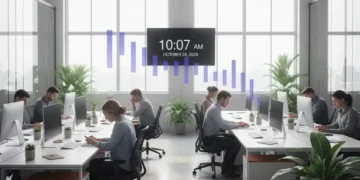
The idea that offices would vanish entirely was always a fantasy. The reality is a messy, negotiated compromise: the hybrid model. According to a recent Gartner survey, 82% of company leaders intend to permit remote work some of the time as they return to the office. This isn’t a gesture of goodwill; it’s a strategic necessity to retain talent in a competitive market. The battleground has simply shifted from where work is done to how much control employers can retain over it.
This creates a permanent state of flux for local economies. A worker who is in the city three days a week has a completely different spending pattern than one who is there five days or zero. It’s like trying to build a city budget based on the whims of the weather. This unpredictability is the new constant, forcing local businesses to become more agile or risk extinction. The data suggests that this is one of the core data-driven economic shifts defining our time.
Implications for Commercial Real Estate
Nowhere is this tension more visible than in commercial real estate. Downtown office towers in major cities are facing an existential crisis. A report from Cushman & Wakefield placed the national office vacancy rate at a staggering 19.6%, a figure not seen in decades. This isn’t a temporary dip; it’s a core market correction.
The most forward-thinking developers are not waiting for a return to the past. They are aggressively converting empty office floors into residential units, hotels, and vertical farms. This forced adaptation could, surprisingly, lead to more resilient and diverse urban cores — if cities are bold enough to overhaul their zoning laws. The alternative is a “doom loop” of declining property values and collapsing municipal tax revenue.
Toward Sustainable Local Growth: Avoiding Boom-Bust Cycles
For the small towns that experienced a remote work boom, the biggest threat is complacency. Relying on an influx of high-earning remote workers is like a farmer relying on a single crop; it’s profitable until a blight comes. What happens when a major tech company mandates a return to the office, or when the next recession forces layoffs? Many of these towns lack a diverse economic base to absorb such a shock.
True sustainability requires using the current windfall to build something that lasts. This means investing in infrastructure that serves everyone, not just the newcomers, and fostering local entrepreneurship that is not dependent on the spending habits of remote professionals. It requires a long-term vision beyond just attracting more people with laptops. Without it, today’s boomtown could easily become tomorrow’s ghost town, a cautionary tale in decoding the next wave of societal evolution.
Global Remote Work: The Internationalization of Local Economies
The final frontier of this shift is the erosion of national borders in the labor market. Why would a San Francisco startup hire a local developer for $180,000 when they can hire an equally skilled one in Lisbon or Buenos Aires for a fraction of that cost? Companies are increasingly building globally distributed teams, turning local labor markets into international ones — a trend that magnifies the unseen forces shaping modern society.
This presents both a huge opportunity and a significant threat. For individuals in lower-cost countries, it offers access to previously unattainable salaries and career paths. For workers in high-cost areas, it introduces direct global competition that could exert downward pressure on wages for many tech and knowledge-based roles. Local economies are no longer just competing with the town next door; they are competing with the entire world.
The New Community Contract
As the dust settles from this initial, chaotic migration, the central question shifts from economics to identity. What is the ultimate goal for these newly popular towns? Is it to become a bedroom community with great broadband, a transient hub for the location-independent? Or is it to build a integrated, multi-generational community where new arrivals and long-term residents forge a shared future? Without a deliberate focus on social cohesion and cultural integration, many towns risk winning the economic battle only to lose their soul. The next decade will reveal which communities were merely destinations and which became homes.
Frequently Asked Questions
How does remote work specifically affect property taxes in a local area?
Remote work boosts property taxes by increasing demand for housing, which drives up property values and, assessed tax amounts. While this provides more revenue for local services, it can also create a higher tax burden for long-term residents on fixed incomes, potentially forcing them to sell their homes.
What are the main challenges for small businesses when a large number of remote workers move into a town?
The primary challenges include increased commercial rent as property values rise and intense competition from new businesses catering to the tastes of wealthier newcomers. While some businesses benefit from increased spending, others that served the traditional local customer base may find themselves struggling to adapt to new market demands.
Can remote work lead to gentrification, and if so, how can communities mitigate it?
Yes, remote work can accelerate gentrification by injecting high, urban-level salaries into lower-cost areas, rapidly inflating housing prices and the cost of living. Communities can mitigate this through inclusionary zoning policies, investing in affordable housing trusts, and offering property tax relief for long-term, lower-income residents to ensure they are not displaced.
What role do local governments play in adapting to the economic shifts caused by remote work?
Local governments play a critical role by proactively upgrading infrastructure, such as broadband and public utilities, to meet new demands. They are also responsible for managing housing affordability through zoning reform, fostering social integration between new and old residents, and creating policies that support local businesses during the transition.
Are there specific industries that benefit most from an influx of remote workers?
Yes, industries centered on the “at-home” lifestyle benefit significantly. These include home construction and renovation, interior design, local food and grocery delivery, childcare and pet care services, and hospitality businesses like coffee shops and restaurants that serve as ‘third places’ for work and socializing.