Navigating the Digital Nomad Economy: A Modern Lifestyle Guide
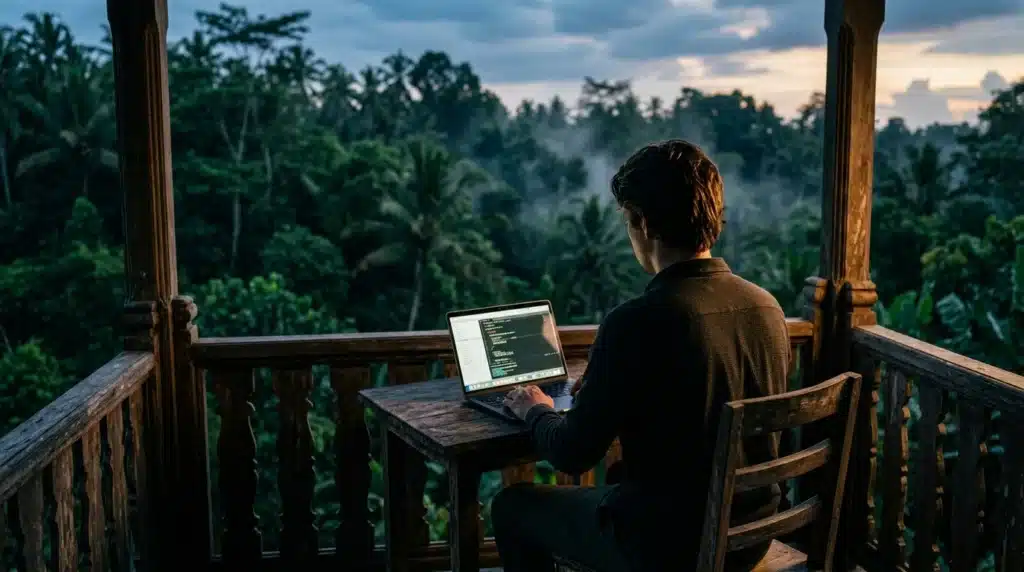
The image is iconic: a laptop open on a rustic wooden table, with a turquoise ocean stretching to the horizon. This is the promise of the digital nomad lifestyle, a dream of ultimate freedom and adventure sold to millions. But behind the perfectly curated social media feeds lies a complex reality, one where economic disruption, legal ambiguity, and personal discipline are as much a part of the journey as any passport stamp.
What was once a niche subculture for tech pioneers and travel bloggers has exploded into a mainstream economic force. The global shift towards remote work has flung open the doors for professionals in dozens of fields, transforming the theoretical possibility of working from anywhere into a practical reality for a significant portion of the workforce. This migration isn’t just a trend; it’s a structural shift in labor, with an estimated 12% of the U.S. workforce now fully remote, injecting their foreign-earned salaries into economies around the globe.
This guide navigates the true landscape of the digital nomad economy, moving beyond the aspirational photos to examine the real-world consequences. We will explore the profound economic impact on host cities, detailing both the benefits and the significant challenges like housing affordability. we’ll outline the necessary skills and strategies for building a sustainable remote career, tackle the often-overlooked legal and financial hurdles, and confront the personal costs of a life defined by constant motion. Is this modern lifestyle the future of work, or a gilded cage with a view?
The Rise of the Location-Independent Workforce
The term digital nomad often conjures images of someone typing away on a laptop with a tropical beach in the background. While not always that glamorous, the core concept is simple: individuals who use technology to earn a living while traveling and working from anywhere with an internet connection. This lifestyle intentionally decouples income from a physical office, giving professionals historic freedom over where they live and work.
What most people miss is that this isn’t an entirely new phenomenon. The idea has roots stretching back to the late 1990s as internet access became more widespread. But for a long time, it remained a niche pursuit. The recent growth was less like a sudden explosion and more like a pot of water slowly coming to a boil, with global events in recent years turning the heat all the way up and normalizing remote work on a massive scale.
This widespread acceptance has been a major shift. According to a study from Stanford’s Institute for Economic Policy Research, fully remote arrangements now make up over 12% of the U.S. workforce, a number that was below 5% pre-pandemic. This shift is deeply intertwined with other modern labor trends, such as the growth of project-based roles detailed in The Gig Economy Explained. Suddenly, the tools and policies needed to work from anywhere became mainstream.
It was a massive cultural and economic adjustment.
This has solidified location-independent work not as a temporary fad, but as a permanent and expanding feature of the modern economy. The question is no longer if remote work is viable, but rather how individuals and companies are adapting to its implications.
Economic Underpinnings: How Nomads Reshape Global Markets
The arrival of digital nomads in a city is more than a cultural shift; it’s a direct economic event. Their laptops and backpacks carry significant financial influence, injecting foreign currency into local economies with a consistency that traditional tourism rarely matches. This creates a complex financial ripple effect. It benefits many but also introduces very real pressures.
Boosting Local Businesses and Tourism
Unlike a tourist on a one-week holiday, a digital nomad often stays for months. This extended presence changes spending patterns dramatically. They aren’t just hitting the top attractions; they’re buying groceries, paying for laundry, joining gyms, and renting desks at co-working spaces. This steady stream of spending is like a slow-release fertilizer for small businesses, providing predictable revenue outside of the typical tourist season. The impact is substantial.
A report from the Nomad List platform, analyzing user spending data, suggests the average nomad injects approximately $1,900 per month directly into their host community’s economy. This money supports a wide range of sectors, from real estate to the local coffee shop owner who now has regulars from three different continents. What many people miss is how this diversifies a city’s economic reliance away from seasonal tourism, creating a more stable, year-round market. This shift is a key part of the modern digital lifestyle.
Challenges for Local Residents
This influx of capital, doesn’t come without a cost. When a significant group of people earning foreign salaries—often much higher than the local average—settles in an area, it can distort the local market. But what happens when the price of a flat white coffee starts to reflect a New York tech salary instead of a Medellin average wage? This is the core of the friction.
The most immediate and painful effect is often a sharp increase in the cost of living. Suddenly, everyday goods and services begin to cater to a wealthier clientele, leaving long-term residents facing prices they can no longer afford. This creates a two-tiered economy within the same city blocks.
Housing Market Pressures
Nowhere is this pressure more acute than in the housing markets. Landlords and property owners, seeing an opportunity for higher returns, often shift their properties from the long-term rental market to short-term platforms favored by nomads. According to a study by the University of Lisbon’s Institute of Geography and Spatial Planning, neighborhoods popular with foreigners saw long-term rental listings decrease by 43% in a five-year period, while short-term listings skyrocketed.
Locals get priced out of their own communities.
This creates a difficult situation where the very people who form the backbone of a city’s culture—teachers, artists, service workers—are pushed to the periphery. The irony is palpable; a movement celebrating freedom and flexibility for some can inadvertently reduce those same things for others. It’s a dynamic that echoes broader conversations about the Gig Economy Explained and its effect on societal structures.
Cultural Integration and Infrastructure Strain
Beyond the direct financial squeeze, there’s the strain on public infrastructure. An influx of thousands of temporary residents puts new demands on everything from Wi-Fi bandwidth and public transport to healthcare services not designed for a transient population. Many cities, especially in developing nations, are not equipped to handle this sudden surge, leading to overloaded systems.
There’s also a cultural component to consider. Instead of integrating, nomads sometimes form “expat bubbles,” creating social enclaves where English is the primary language and interactions with the local community are purely transactional. This prevents genuine cultural exchange and can lead to resentment from residents who feel like strangers in their own city—a social cost that doesn’t appear on any economic spreadsheet.
Economic Impacts: A Tale of Two Cities
| Economic Benefits for Host Cities | Economic Drawbacks for Host Cities |
|---|---|
| Increased Spending: Consistent, year-round revenue for local businesses like cafes, restaurants, and retail. | Inflation: Rising cost of living for everyday goods and services, pricing out local residents. |
| Tourism Diversification: Reduces dependency on short-term, seasonal tourists. | Housing Scarcity: Conversion of long-term rentals to short-term lets, causing rental prices to soar. |
| Skill Transfer: Potential for nomads to share skills, host workshops, and invest in local startups. | Infrastructure Strain: Overburdened public services like internet, transportation, and healthcare. |
| Global Reputation: Enhances the city’s image as a modern, globally-connected hub. | Cultural Displacement: Formation of expat enclaves and potential erosion of local culture and identity. |
Ultimately, the challenge for cities worldwide is to find a sustainable equilibrium. The goal is to harness the undeniable economic energy of the digital nomad movement without sacrificing the well-being and affordability that made the location attractive in the first place.
The lack of clear separation between work and leisure — your cafe is your office, your apartment is your boardroom — can accelerate burnout.
— Dr. Ian Grant, Sociologist
| Digital Nomad Economy: Key Figures & Facts | |
|---|---|
| Average Monthly Spending | Approximately $1,900 injected into the local economy per nomad. |
| Top Remote Job Sectors | Tech, marketing, and project management account for over 57% of remote roles. |
| Primary Lifestyle Challenge | Loneliness is cited as the biggest struggle by 19% of remote workers. |
| Housing Market Impact | Popular nomad hubs have seen long-term rental listings fall by over 40%. |
| Common Tax Residency Rule | The ‘183-Day Rule’ is a frequent, but not universal, standard for determining tax liability. |
| Biggest Administrative Hurdle | 61% of globally mobile workers find navigating international tax law their top challenge. |
Crafting Your Digital Nomad Career: Skills and Opportunities
Transitioning from a traditional office job to a location-independent career isn’t just about packing a bag; it’s about building a portable professional identity. The foundation of this lifestyle rests on having skills that are in high demand and can be delivered from anywhere with a stable internet connection. It requires a underlying shift in how you view work. Your career becomes less of a fixed place and more of a set of valuable, transportable abilities.
What most people miss is that this isn’t just for tech geniuses or social media influencers. While those fields are popular, the remote work landscape is surprisingly diverse. The key is identifying where your existing expertise can intersect with the needs of the digital marketplace. It’s a deliberate process of reinvention.
In-Demand Professions for Remote Work
Certain career paths are naturally suited for the digital nomad life due to their project-based nature and reliance on digital tools. A recent FlexJobs analysis found that tech, marketing, and project management roles account for over 57% of all remote job postings. Think about roles like software development, UX/UI design, and cybersecurity analysis, which have been remote-friendly for years.
Beyond pure tech, opportunities are expanding. Content creators, virtual assistants, online tutors, and e-commerce managers are all building successful careers on the road. The underrated factor here is the importance of “soft skills”—communication, self-discipline, and time management are just as critical as your technical abilities. Building a remote career is like assembling a toolkit; you need the right combination of specialized and universal tools to be effective. Here are some required skills to cultivate:
- Digital Marketing: SEO, SEM, content marketing, and social media management are consistently sought after.
- Writing and Editing: Includes technical writing, copywriting, and grant writing for various clients.
- Project and Product Management: Using tools like Asana or Jira to coordinate teams across different time zones.
- Customer Support: Providing assistance via chat, email, or phone for companies globally.
- Financial Services: Bookkeeping, financial advising, and accounting can often be done entirely online.
Leveraging Online Platforms and Networks
So, you have the skills—but how do you find the work? This is where online platforms and strategic networking come into play. Websites like Upwork, Fiverr, and Toptal have become the modern-day job boards for freelancers, creating a centralized marketplace that connects talent with employers. These platforms are a core part of what many call The Gig Economy Explained, allowing professionals to bid on projects and build a portfolio of work with international clients.
Relying solely on these platforms can be a race to the bottom on pricing. Building a personal network is vital for long-term success. Engaging in professional groups on LinkedIn or joining niche Slack and Discord communities can lead to higher-quality, direct-to-client work. It’s also a way to stay connected and maintain your Mental Health in the Modern Workplace, which can be a challenge when you’re working alone. Your reputation—built through reliable work and positive relationships—becomes your most valuable asset, opening doors that platforms alone cannot.
The Lifestyle Equation: Balancing Freedom and Responsibility
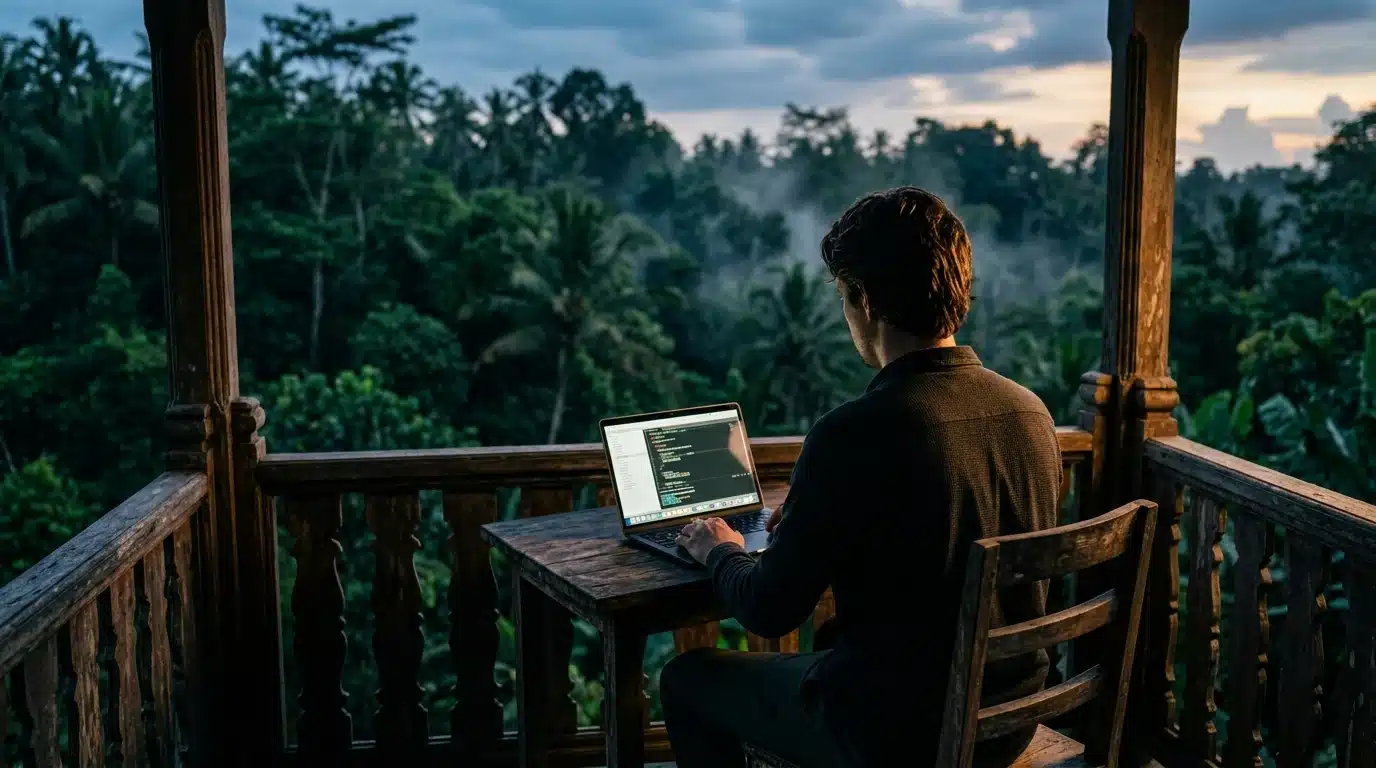
The promise of ultimate freedom is what draws most people to the digital nomad lifestyle. You get to set your own hours and choose your own backdrop. But what most people miss is that absolute freedom can quickly lead to a lack of structure, creating a surprisingly difficult environment to thrive in.
Without the built-in community of a traditional office, feelings of isolation can become a significant issue. A recent Buffer survey found that 19% of remote workers cite loneliness as their biggest struggle. Dr. Ian Grant, a sociologist specializing in remote work dynamics, explains, “The lack of clear separation between work and leisure — your cafe is your office, your apartment is your boardroom — can accelerate burnout.” This is a growing concern, echoing many of the issues discussed in studies on Mental Health in the Modern Workplace.
Suddenly, self-discipline becomes your most important job.
Actively building a community is non-negotiable. This means joining co-working spaces, attending local meetups, or using apps designed to connect travelers. It’s about creating your own “water cooler” moments wherever you are. Establishing firm work-life boundaries, like having a dedicated work laptop or setting a hard “end of day” time, provides the guardrails needed to make this lifestyle sustainable for the long haul.
Navigating the Legal and Financial Landscape
While the photos show laptops on sunny beaches, the reality of a nomadic life involves a surprising amount of paperwork. Managing finances and legal status isn’t just a box-ticking exercise; it’s the foundation that makes this lifestyle sustainable. Without a solid framework, you risk fines, deportation, or significant financial headaches. This is where the glamour meets the spreadsheet.
Setting up this framework feels a lot like preparing a complex recipe for the first time. You need the right ingredients (documents), a clear method (a plan), and the patience to follow each step precisely.
Understanding Tax Obligations Across Borders
Taxes are arguably the most confusing part of the digital nomad puzzle. Your tax liability is typically determined by your tax residency, which is the country where you are legally obligated to pay taxes. Many countries use the “183-day rule”—if you spend more than 183 days in a year there, you may be considered a tax resident. The problem is, this isn’t a universal standard, and rules can be incredibly complex.
What most people miss is that you can potentially be considered a tax resident in multiple places at once, or sometimes, nowhere at all. A recent survey from the financial firm PriceWaterhouseCoopers indicated that 61% of globally mobile workers find navigating international tax treaties to be their single biggest administrative challenge. Do you pay taxes where your clients are, where your company is registered, or where you physically are? The answer often requires professional advice from an accountant specializing in expatriate tax law.
Failing to plan can lead to double taxation or penalties. Tracking your days in each country is not optional; it’s primary data for your tax filings (and yes, you really do have to track every single day). The stress of this uncertainty can also impact well-being, a topic closely related to discussions around Mental Health in the Modern Workplace.
Visa and Residency Requirements
Entering a country is the first legal hurdle. For years, nomads have operated in a legal gray area, using tourist visas while working remotely. This approach is simple but carries significant risk. Working on a tourist visa is technically illegal in most countries, and if discovered, can lead to immediate deportation and a ban on re-entry. It’s a gamble that is becoming less necessary as governments adapt.
The key is to understand the specific entry requirements and limitations of your chosen destination before you book a flight.
Digital Nomad Visas: Opportunities and Limitations
A growing number of countries are now offering specific digital nomad visas, recognizing the economic benefit these remote workers bring. These visas provide a legal right to reside in a country for an extended period (usually one to two years) while working for a foreign employer or clients. Financial planner and nomad expert, Alex Vance, states, “These visas are a major shift, offering stability and legitimacy that the tourist-visa-hop simply can’t.” they come with their own set of requirements, such as minimum income thresholds, proof of health insurance, and application fees.
Here’s a comparison of common visa options:
- Tourist Visa
- Pros: Easy and fast to obtain, low upfront cost, available for most countries.
- Cons: Legally prohibits work, short duration (typically 30-90 days), risk of deportation, no access to local services like banking.
- Digital Nomad Visa
- Pros: Provides legal right to work remotely, longer-term residency (1+ years), potential pathway to temporary residency, offers peace of mind.
- Cons: High income requirements (often $35,000+ annually), lengthy application process, higher fees, not yet available everywhere.
Required Insurance and Banking Solutions
Your domestic health insurance plan almost certainly won’t cover you abroad for extended periods. Securing a detailed global health insurance policy is non-negotiable. These plans are designed for people living outside their home country and cover everything from emergency medical care to routine check-ups across multiple nations. Look for plans that offer strong evacuation coverage in case you need to be transported for serious medical attention.
On the banking front, relying on your home bank can lead to staggering fees from foreign transactions and ATM withdrawals. The solution is a modern financial toolkit. This includes opening accounts with neobanks that offer multi-currency wallets, low-to-no foreign transaction fees, and a smooth app-based experience. Setting up this financial infrastructure is a core element of participating in what is often called The Gig Economy Explained on a global scale.
Building this legal and financial scaffolding requires proactive effort, but it’s the only way to ensure your nomadic journey is built on solid ground rather than shifting sand.
The Future of Digital Nomadism: Trends and Predictions
The digital nomad lifestyle is moving beyond its initial, freewheeling phase into a more established and integrated part of the global workforce. What started as a niche for coders and writers on beaches is now attracting a wider range of professionals. The next chapter will be defined less by novelty and more by sustainability, technology, and formal recognition. This isn’t just a trend; it’s a structural shift in how we view work and place.
Technological Innovations Shaping Remote Work
Artificial intelligence is arguably the most significant force set to reshape the nomad experience. Beyond simply automating tasks, AI tools are breaking down long-standing barriers to global work. Real-time translation software, for example, is making it possible to collaborate with teams or clients regardless of native language. This opens up markets and opportunities that were previously inaccessible for many. The Future of Work: Automation and AI is no longer a distant concept but a daily reality for remote professionals.
According to Priya Sharma, a remote work analyst at Forrester Research, “We’re seeing a 42% increase in the adoption of AI-powered project management tools among fully remote teams.” These platforms don’t just assign tasks; they predict bottlenecks, optimize workflows, and even suggest team members for specific projects based on skills and current workload. Think of it less as a boss and more as a hyper-efficient assistant — one that helps you spend less time on admin and more time exploring.
Evolving Government Policies and Infrastructure
Governments are finally catching up. Recognizing the economic benefits nomads bring, countries are rolling out specialized visas and infrastructure to attract them. Currently, over 59 nations offer some form of digital nomad visa, simplifying the legal maze of long-term stays. These programs provide a clear path to residency, offering stability that was previously hard to find.
But will this formalization change the spirit of nomadism? As cities build co-working campuses and “nomad villages,” there’s a growing conversation around the movement’s impact. A greater emphasis on Sustainable Travel Practices is emerging, with nomads being encouraged to engage more deeply and responsibly with local communities rather than just passing through.
This shift from transient visitor to temporary resident changes everything. It challenges nomads to build genuine connections and contribute locally, transforming the very definition of what it means to live and work on the road.
The Next Frontier: From Nomad to Global Citizen
As the digital nomad movement matures, the central question shifts from “how can I do this?” to “what is my impact while doing this?” The era of operating in legal gray areas and ignoring socioeconomic footprints is drawing to a close, replaced by a growing demand for more intentional and sustainable practices. Countries are no longer just passive backdrops; they are actively designing visas and policies to attract, and regulate, this new class of mobile talent.
The next evolution of this lifestyle may hinge on a new sense of responsibility. Will nomads organize to invest in the communities they inhabit, moving from transient consumers to part-time residents who contribute to local infrastructure and social projects? As cities begin to compete for the economic benefits these workers bring, the power dynamic could shift, giving nomads collective leverage to advocate for policies that mitigate their own disruptive impact, such as supporting affordable housing initiatives. The ultimate challenge, then, is not about finding the next cheap paradise, but about defining what it means to be a responsible citizen of a world without borders.
Frequently Asked Questions
What is the average income of a digital nomad?
Digital nomad income varies dramatically by profession and experience. While data is diverse, surveys suggest that a significant portion earns over $50,000 annually, with those in high-demand tech and marketing fields often exceeding $100,000. many others, especially those starting out on freelance platforms, may earn considerably less.
Which countries are most welcoming to digital nomads?
Many countries are now actively courting digital nomads with special visas. Nations like Portugal, Mexico, Thailand, and Estonia are popular for their combination of affordability, infrastructure, and favorable residency options. The best choice depends on individual priorities regarding cost of living, time zone, and community.
How do digital nomads handle healthcare and emergencies abroad?
Most digital nomads rely on specialized international health insurance plans designed for long-term travelers. These policies cover medical emergencies, hospitalization, and sometimes routine care across multiple countries. It’s a critical piece of planning to avoid catastrophic financial risk while living abroad.
Is digital nomadism sustainable in the long term?
Long-term sustainability is a major challenge and depends on the individual’s ability to manage finances, combat loneliness, and maintain professional relevance. Burnout from constant travel and a lack of deep community roots can be significant hurdles. Many successful long-term nomads adopt a slower travel pace, staying in locations for several months at a time.
What are the biggest challenges faced by digital nomads?
Beyond the logistical issues of visas and taxes, the most cited challenges are loneliness and building community. Other major difficulties include maintaining work-life balance when there’s no physical separation between office and home, and dealing with the mental fatigue of constant planning and instability.