Metaverse Privacy: U.S. 2026 Updates & Digital Citizen Safety

Navigating the Metaverse Safely: Essential Privacy Updates for U.S. Digital Citizens in 2026
The metaverse, once a distant concept, is rapidly evolving into a tangible reality, promising unprecedented levels of immersion, interaction, and innovation. As we step further into this interconnected digital frontier, the importance of privacy and data security becomes paramount. For U.U.S. digital citizens, understanding the latest Metaverse Privacy Updates in 2026 is not just beneficial, it’s essential for safe and responsible participation. This comprehensive guide will delve into the recent legislative changes, technological advancements, and best practices designed to protect your digital identity and personal information in the burgeoning metaverse.
The metaverse is more than just a new platform; it’s a convergence of virtual reality (VR), augmented reality (AR), artificial intelligence (AI), and blockchain technology, creating persistent, shared, and interactive virtual worlds. In these worlds, users can work, play, socialize, learn, and even conduct commerce. However, with this expanded digital footprint comes a heightened risk of data exploitation, identity theft, and privacy breaches. As the metaverse matures, so too must the regulatory frameworks and user awareness surrounding privacy. The year 2026 marks a pivotal point, with significant developments shaping the future of metaverse privacy for U.S. citizens.
Understanding the Evolving Landscape of Metaverse Privacy
The concept of privacy in the metaverse is multifaceted. It extends beyond traditional data protection to encompass aspects like avatar identity, spatial privacy, biometric data, and even the privacy of your virtual actions and interactions. Unlike static websites, the metaverse collects a rich tapestry of behavioral data, emotional responses, and even physiological data through advanced VR/AR peripherals. This depth of data collection necessitates robust protections.
Key Challenges to Metaverse Privacy
- Data Overload: The sheer volume and variety of data collected (e.g., gaze tracking, movement patterns, voice modulation, biometric feedback) pose significant challenges for anonymization and security.
- Interoperability Issues: As users move between different metaverse platforms, ensuring consistent privacy standards and data portability becomes complex.
- Identity Management: Distinguishing between real-world identities and virtual avatars, and managing the privacy associated with each, is a critical concern.
- Spatial Privacy: The concept of personal space in virtual environments, and who can enter or observe it, is a new frontier for privacy regulations.
- Regulatory Lag: Technology often outpaces legislation, leading to gaps in protection that can be exploited.
The U.S. government, alongside tech giants and privacy advocates, has been working towards establishing clearer guidelines and regulations. These efforts are culminating in the Metaverse Privacy Updates of 2026, which aim to address these complex challenges head-on.
Recent Legislative & Policy Developments in 2026
The year 2026 has seen a significant push for more comprehensive privacy legislation specifically tailored for immersive digital environments. While a single overarching federal metaverse law is still in development, several existing and newly amended acts are now being interpreted and applied to metaverse contexts. These updates are crucial for understanding your rights and responsibilities as a digital citizen.
The Digital Privacy & Trust Act (DPTA) of 2026
One of the most impactful developments is the enactment of the Digital Privacy & Trust Act (DPTA) in early 2026. This act builds upon previous data protection laws, explicitly extending their scope to cover virtual and augmented reality platforms. Key provisions of the DPTA include:
- Enhanced Consent Requirements: Metaverse platforms are now required to obtain explicit, granular consent for the collection and processing of various types of data, especially biometric and behavioral data. Users must be clearly informed about what data is collected, how it’s used, and with whom it’s shared.
- Data Minimization Principles: Companies are mandated to collect only the data strictly necessary for the provision of their services in the metaverse, reducing the risk of over-collection.
- Right to Data Portability & Deletion: Users have strengthened rights to transfer their data (including avatar customizations and virtual assets) between platforms and to request the complete deletion of their data.
- Age-Appropriate Design: Stricter guidelines for metaverse platforms targeting minors, including default privacy settings and parental consent requirements for data collection.
- Algorithmic Transparency: Platforms must provide more transparency regarding the algorithms used to personalize experiences, recommend content, and influence user behavior, especially concerning data privacy implications.
Amendments to Existing Laws
Beyond the DPTA, several existing U.S. privacy laws have seen amendments or clearer interpretations concerning the metaverse:
- Children’s Online Privacy Protection Act (COPPA) Expansion: COPPA has been updated to specifically address the unique challenges of protecting children’s privacy in immersive metaverse environments, including stricter rules on targeted advertising and social interactions for minors.
- Health Insurance Portability and Accountability Act (HIPAA) & Biometric Data: As VR/AR devices collect more biometric and health-related data (e.g., heart rate, stress levels, eye movements), HIPAA’s applicability to these data points within healthcare-related metaverse applications has been clarified, ensuring sensitive health information remains protected.
- State-Level Initiatives: Several states, including California (CCPA/CPRA), Virginia (VCDPA), and Colorado (CPA), continue to lead with their own robust privacy frameworks, which are also being updated to specifically address metaverse activities within their jurisdictions. These state laws often provide additional layers of protection beyond federal mandates.
Technological Advancements & Privacy-Enhancing Features
Beyond legislation, technological innovation plays a crucial role in safeguarding privacy. Metaverse platforms are integrating advanced features to empower users and enhance security.
Decentralized Identity (DID) Solutions
One of the most promising advancements is the widespread adoption of Decentralized Identity (DID) solutions. DIDs allow users to control their digital identities, rather than relying on centralized platforms. This means:
- Self-Sovereign Identity: Users own and manage their identity data, granting access to specific platforms or services on a need-to-know basis.
- Verifiable Credentials: Digital credentials (e.g., age verification, certifications) can be issued and verified cryptographically without revealing underlying personal information.
- Reduced Data Exposure: By minimizing the amount of personal data stored on central servers, the risk of large-scale data breaches is significantly reduced.
Zero-Knowledge Proofs (ZKPs)
Zero-Knowledge Proofs are cryptographic methods that allow one party to prove to another that a statement is true, without revealing any information beyond the validity of the statement itself. In the metaverse, ZKPs can be used for:
- Age Verification: Prove you are over 18 without revealing your exact birth date.
- Authentication: Verify your identity without transmitting passwords or sensitive credentials.
- Compliance: Demonstrate adherence to regulations without exposing proprietary data.

Enhanced Encryption & Blockchain Security
The underlying infrastructure of many metaverse platforms now incorporates advanced encryption protocols and leverages blockchain technology for enhanced security. Blockchain’s immutable ledger can record ownership of digital assets and verify transactions transparently, while encryption protects data in transit and at rest. These technologies are foundational to the robust Metaverse Privacy Updates we’re seeing.
Best Practices for U.S. Digital Citizens in the Metaverse (2026)
While legislation and technology provide a strong foundation, individual user vigilance remains crucial. Here are essential best practices for U.S. digital citizens to protect their privacy in the metaverse:
1. Understand Platform Privacy Policies
Before diving into any metaverse platform, thoroughly read and understand its privacy policy. Pay close attention to:
- Data Collection: What types of personal, behavioral, and biometric data are collected?
- Data Usage: How will your data be used (e.g., personalization, advertising, research)?
- Data Sharing: With whom will your data be shared (third parties, advertisers)?
- Data Retention: How long will your data be stored?
- Your Rights: How can you access, correct, delete, or port your data?
2. Configure Your Privacy Settings
Always customize your privacy settings to the highest level of protection upon joining a new metaverse platform. Do not rely on default settings, which are often less restrictive. Look for options to:
- Limit Data Collection: Opt-out of non-essential data collection, such as gaze tracking or emotional analysis, if available.
- Control Social Interactions: Manage who can interact with your avatar, send you messages, or enter your private virtual spaces.
- Manage Visibility: Adjust who can see your avatar’s activities, virtual assets, or online status.
- Location Privacy: Disable or restrict location tracking within virtual environments unless absolutely necessary.
3. Be Mindful of Your Digital Identity & Avatars
Your avatar is an extension of your identity in the metaverse. Consider:
- Anonymity vs. Real Identity: Decide when and where to link your real-world identity to your avatar. Use pseudonymous avatars for general exploration.
- Avatar Appearance: Be aware that highly realistic avatars or those incorporating biometric data can be more easily linked to your real identity.
- Virtual Asset Ownership: Understand the privacy implications of owning NFTs or other digital assets, as their transaction history may be public on a blockchain.
4. Exercise Caution with Third-Party Integrations
Many metaverse platforms allow integration with third-party applications, games, or services. Each integration could be a potential privacy vulnerability:
- Review Permissions: Carefully review the data permissions requested by any third-party app before granting access.
- Reputable Sources: Stick to well-known and reputable third-party providers.
- Regular Audits: Periodically review which third-party apps have access to your metaverse data and revoke access for those no longer needed.
5. Secure Your Accounts
Basic cybersecurity hygiene remains critical:
- Strong, Unique Passwords: Use complex, unique passwords for all your metaverse accounts.
- Multi-Factor Authentication (MFA): Enable MFA whenever possible to add an extra layer of security.
- Phishing Awareness: Be wary of suspicious links or messages within the metaverse that attempt to trick you into revealing credentials.
6. Understand Data Monetization
Many metaverse platforms operate on business models that involve data monetization. While this can provide free access to services, it’s vital to understand how your data contributes to this:
- Targeted Advertising: Your in-metaverse behavior, preferences, and even emotional responses can be used to deliver highly personalized advertisements.
- Behavioral Data Sales: Aggregated or anonymized behavioral data may be sold to third-party researchers or marketers.
- Opt-Out Options: Look for and utilize options to opt-out of data collection for advertising or research purposes.
The Role of Education and Advocacy
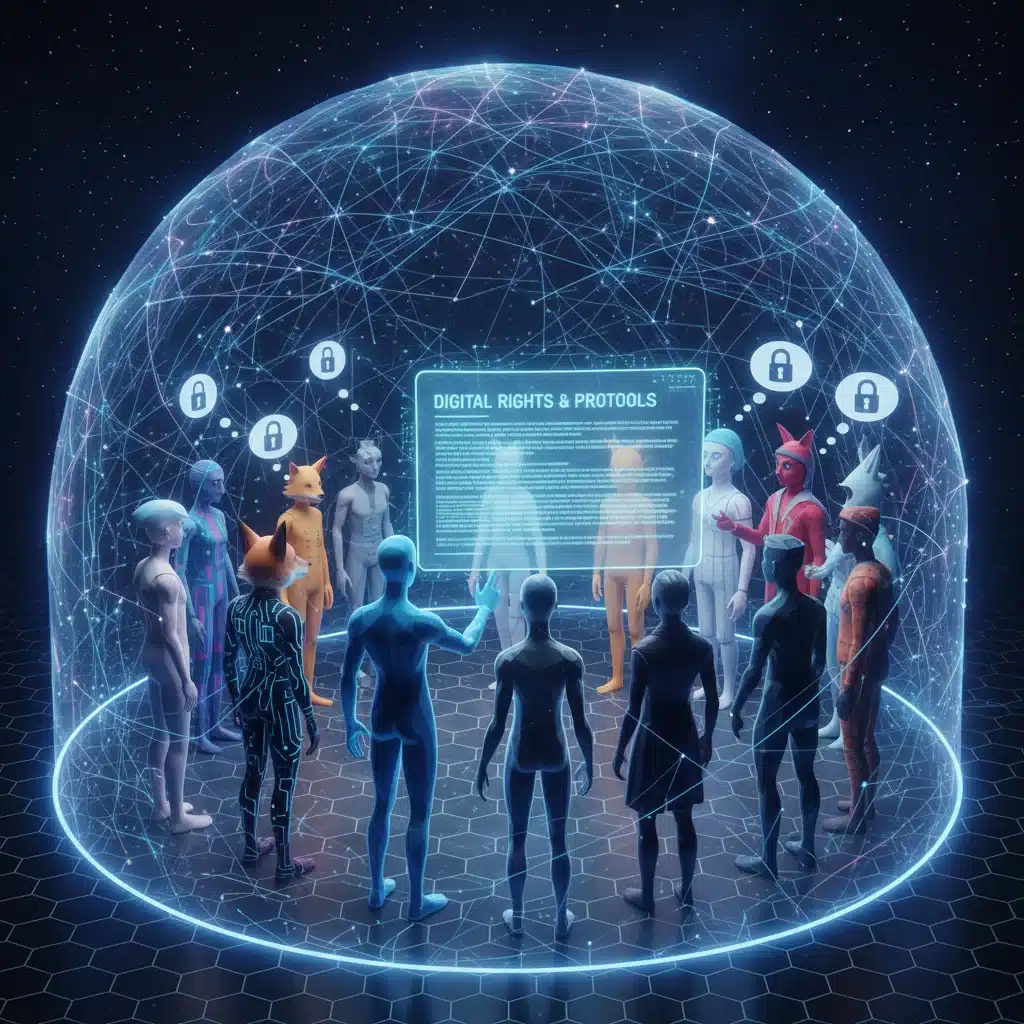
Beyond individual actions and governmental regulations, ongoing education and advocacy are crucial for shaping a privacy-respecting metaverse. Digital citizens must remain informed about the latest Metaverse Privacy Updates and actively participate in discussions about ethical data use in virtual worlds. Organizations dedicated to digital rights are playing an increasingly important role in pushing for stronger protections and holding platforms accountable.
Empowering the Next Generation
As the metaverse becomes more integrated into daily life, especially for younger generations, educating children and teenagers about digital privacy, online safety, and responsible avatar interaction is paramount. Schools and parents have a vital role in fostering digital literacy that extends to immersive environments, teaching them how to navigate the metaverse safely and responsibly.
Looking Ahead: The Future of Metaverse Privacy
The Metaverse Privacy Updates of 2026 are just one step in an ongoing journey. As the metaverse continues to evolve, we can anticipate further developments:
- Global Harmonization: Increased efforts towards international cooperation on metaverse privacy standards to address the borderless nature of virtual worlds.
- AI Ethics in Data Processing: Greater scrutiny on how AI algorithms process and interpret metaverse data, ensuring fairness, transparency, and non-discrimination.
- Neuro-Privacy: As brain-computer interfaces (BCIs) become more prevalent, the concept of ‘neuro-privacy’ – protecting thoughts and mental states – will emerge as a critical area of concern.
- Dynamic Privacy Policies: Development of more intuitive and dynamic privacy settings that adapt to context and user preferences in real-time within immersive environments.
The vision for the metaverse is one of boundless creativity and connection. However, this vision can only be fully realized if it is built on a foundation of trust and respect for individual privacy. For U.S. digital citizens, staying informed about the latest Metaverse Privacy Updates, adopting best practices, and advocating for strong protections are key to shaping a safe, secure, and empowering digital future.
Conclusion
The metaverse represents a profound shift in how we interact with technology and each other. The Metaverse Privacy Updates of 2026, including new legislation like the DPTA, amendments to existing laws, and advancements in privacy-enhancing technologies, are critical milestones in establishing a more secure and trustworthy virtual landscape. By understanding these developments and actively implementing best practices, U.S. digital citizens can confidently explore the vast potential of the metaverse while safeguarding their most valuable asset: their privacy. The journey towards a truly private and secure metaverse is ongoing, but with collective effort and individual vigilance, we can ensure that this new frontier remains a place of opportunity, not vulnerability.