Remote Work US: 4 Policy Changes Impacting 60% of Office Workers by 2026

The seismic shift towards remote work, accelerated by global events, has fundamentally reshaped the professional landscape in the United States. What was once a niche offering has become a mainstream expectation, with a significant portion of the workforce now operating outside traditional office confines. This evolution, however, is far from static. As remote work solidifies its place in the American economy, regulatory bodies and legislative frameworks are catching up, leading to a series of anticipated policy changes that will profoundly impact businesses and employees. By Q3 2026, it’s projected that these changes will directly affect a staggering 60% of office workers, necessitating a proactive approach from all stakeholders.
Understanding these forthcoming shifts in remote work US policies is not merely an academic exercise; it’s a strategic imperative for companies aiming to thrive in this new era. From tax implications and worker classification to data privacy and cybersecurity, the regulatory environment is set to become more complex and, in many ways, more defined. This comprehensive article will explore four critical policy changes expected to influence the trajectory of remote work in the US, offering insights into their potential impact, recent updates, and strategies for adaptation.
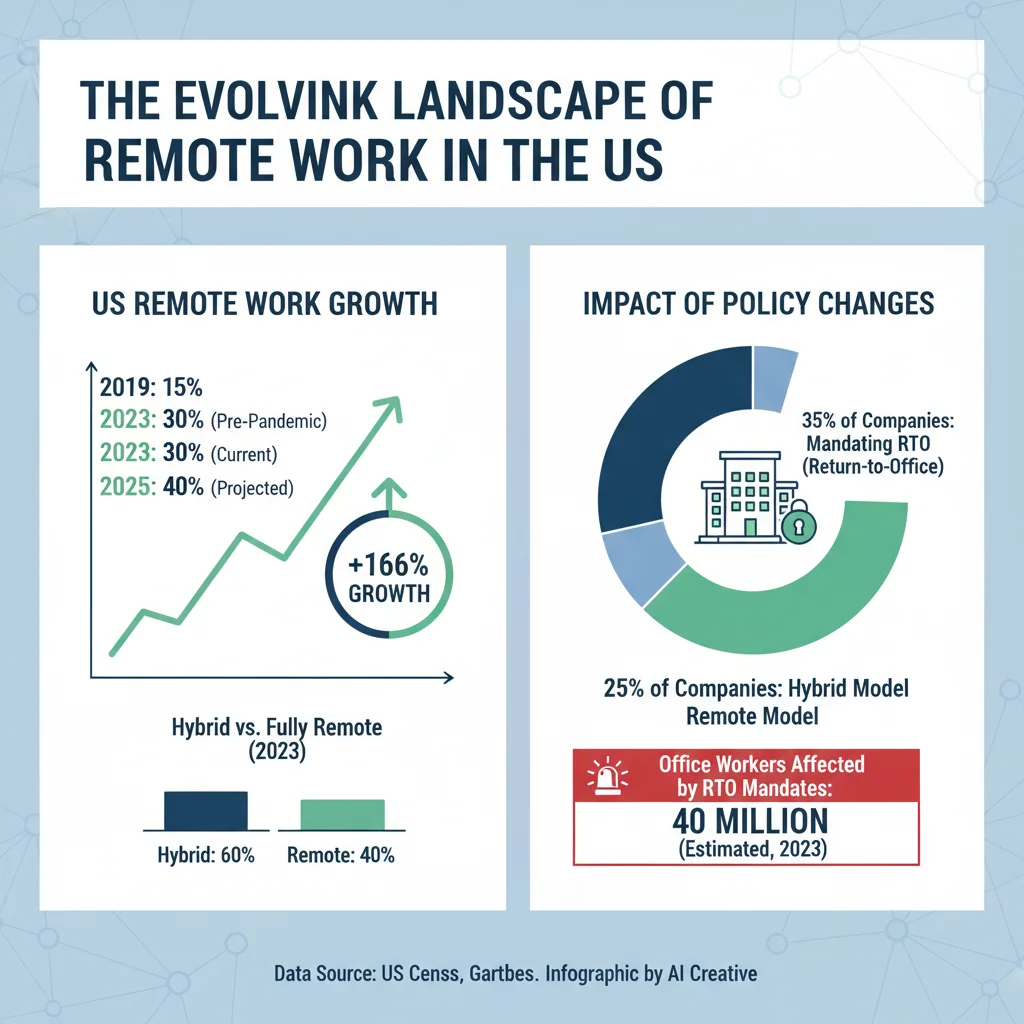
The Evolving Landscape of Remote Work in the US
Before diving into specific policy changes, it’s crucial to acknowledge the current state and trajectory of remote work in the US. The initial surge was largely reactive, driven by necessity. Now, companies are adopting more deliberate strategies, often embracing hybrid models that blend in-office and remote work. However, this flexibility introduces new challenges, particularly concerning compliance and equity across different states and even within different roles.
The benefits of remote work are well-documented: increased employee satisfaction, access to a wider talent pool, reduced overhead costs for businesses, and improved work-life balance for many. Yet, these advantages are tempered by concerns around maintaining company culture, ensuring adequate supervision, and navigating the legal intricacies of a geographically dispersed workforce. These complexities are precisely what the upcoming policy changes aim to address, creating a more structured and regulated environment for remote work US policies.
Policy Change 1: State-Specific Tax and Employment Law Harmonization
One of the most significant challenges for companies with remote employees is the patchwork of state-specific tax and employment laws. An employee residing in one state but working for a company headquartered in another creates a jurisdictional quagmire. This issue is becoming increasingly pressing as more companies hire talent irrespective of their location.
The Current Dilemma: A Labyrinth of Regulations
Currently, businesses must navigate varying state income tax regulations, unemployment insurance requirements, workers’ compensation laws, and even minimum wage standards based on where the employee physically performs their work, not just where the company is registered. This administrative burden is substantial, especially for small to medium-sized enterprises (SMEs) lacking extensive legal and HR departments.
Anticipated Changes and Impact
By Q3 2026, we anticipate a concerted effort towards either federal guidelines or interstate compacts designed to harmonize these disparate regulations. This could manifest in several ways:
- Federal Guidance on Tax Nexus: The federal government may issue clearer guidelines on what constitutes a tax nexus for remote employees, simplifying compliance for businesses operating across state lines. This could involve a standardized threshold for remote work duration or income generated in a particular state before tax obligations kick in.
- Interstate Reciprocity Agreements: States may enter into more comprehensive reciprocity agreements for income tax withholding, similar to existing agreements for certain professions. This would reduce the need for employees to file multiple state tax returns and for employers to manage complex multi-state payroll systems.
- Uniform Employment Standards: Efforts might be made to establish more uniform employment standards for remote workers, particularly concerning issues like overtime, sick leave, and anti-discrimination laws, mitigating the risk of inadvertent non-compliance due to state-specific nuances.
Impact on Businesses: This policy change would significantly reduce administrative overhead and legal risks for companies employing remote workers across state lines. It would also foster a more predictable environment for talent acquisition, allowing companies to truly embrace a location-agnostic hiring strategy without fear of regulatory entanglement.
Impact on Employees: Remote employees would benefit from clearer tax obligations and more consistent employment protections, regardless of their physical location within the US. This could also streamline benefits administration and reduce the complexity of personal tax filings.
Policy Change 2: Enhanced Data Privacy and Cybersecurity Regulations for Remote Work
The distributed nature of remote work inherently expands a company’s attack surface for cyber threats. Employees accessing sensitive company data from home networks, often using personal devices, present significant data privacy and cybersecurity challenges. Existing regulations, while robust for traditional office environments, often fall short in addressing the unique vulnerabilities of a remote workforce.
The Growing Threat Landscape
Recent years have seen a dramatic increase in cyberattacks targeting remote workers, from sophisticated phishing schemes to ransomware attacks exploiting less secure home networks. Companies are grappling with the imperative to protect proprietary information, customer data, and intellectual property in an environment where the traditional perimeter has dissolved.
Anticipated Changes and Impact
By Q3 2026, expect to see the introduction of more stringent federal and state-level regulations specifically tailored to remote work environments. These could include:
- Mandatory Cybersecurity Protocols: New policies may mandate specific cybersecurity protocols for remote access, including multi-factor authentication (MFA), virtual private networks (VPNs), and secure endpoint management solutions. Companies might be required to demonstrate adherence to these standards through regular audits.
- Data Encryption Standards: Regulations could stipulate mandatory data encryption for sensitive information accessed or stored on remote devices, ensuring that even if a device is compromised, the data remains unreadable without proper authorization.
- Employee Training Requirements: New policies may require companies to provide regular, mandatory cybersecurity awareness training for all remote employees, covering topics like phishing detection, secure password practices, and incident reporting procedures.
- Remote Device Management Policies: Regulations might encourage or mandate the implementation of robust remote device management policies, including the ability to remotely wipe company data from lost or stolen devices and enforce software updates.
Impact on Businesses: While these regulations will necessitate investment in new technologies and training, they will ultimately enhance data security and reduce the risk of costly data breaches. Compliance will be a key differentiator and a significant operational consideration for all companies with remote teams. The cost of non-compliance, in terms of fines and reputational damage, will likely increase.
Impact on Employees: Employees will experience a more secure remote work environment, reducing their personal risk of being vectors for cyberattacks. However, it may also lead to increased monitoring of company-provided devices and stricter adherence to cybersecurity protocols, potentially impacting perceived flexibility.
Policy Change 3: Clarification and Expansion of Worker Classification for Remote Roles
The distinction between employees and independent contractors has always been a complex area of labor law, but remote work has exacerbated this challenge. As companies increasingly engage remote talent on a project basis, the lines blur, leading to potential misclassification issues with significant legal and financial repercussions.
The Misclassification Minefield
Misclassifying an employee as an independent contractor can lead to substantial penalties, including back wages, unpaid taxes, benefits, and fines. The criteria for classification vary by state and federal agencies, creating confusion for businesses attempting to comply with the law while leveraging the flexibility of contract work. The gig economy has further complicated this, pushing for re-evaluation of traditional definitions.
Anticipated Changes and Impact
By Q3 2026, we anticipate clearer federal guidelines and potentially new state legislation aimed at defining worker classification more explicitly for remote roles. This could involve:
- Updated ABC Test Adoption: More states, and potentially the federal government, might adopt a version of the ‘ABC test’ for worker classification, which presumes a worker is an employee unless three specific conditions are met. This test is generally more stringent than common law tests and makes it harder to classify workers as independent contractors.
- Remote-Specific Classification Criteria: New criteria may emerge that specifically address the nuances of remote work, such as the degree of control an employer has over a remote worker’s schedule, tools, and work environment, even if they are not physically present in an office.
- Enhanced Enforcement: Federal and state labor departments are likely to increase enforcement actions related to worker misclassification in remote contexts, driven by concerns over lost tax revenue and worker protections.
- Hybrid Worker Classification Models: The emergence of ‘dependent contractor’ or ‘worker’ classifications, distinct from both employees and independent contractors, could gain traction, offering a middle ground with some benefits and protections without full employee status.
Impact on Businesses: Companies will need to meticulously review their classification practices for remote workers, particularly those engaged on a contract basis. This may lead to reclassifying some contractors as employees, incurring additional costs related to payroll taxes, benefits, and compliance with employment laws. However, it will also provide greater legal certainty and reduce the risk of costly litigation.
Impact on Employees/Contractors: Workers currently classified as independent contractors but performing employee-like duties may gain access to benefits and protections traditionally afforded to employees, such as minimum wage, overtime, and unemployment insurance. This could significantly improve their economic security.
Policy Change 4: Evolution of Remote Work Benefits and Compensation Standards
As remote work becomes a permanent fixture, the debate around equitable benefits and compensation for a distributed workforce is intensifying. Traditional benefits packages designed for in-office employees often don’t fully translate to remote settings, and questions arise about fair compensation when employees are located in different cost-of-living areas.
The Current Disparity
Some companies have adopted location-based pay, adjusting salaries according to an employee’s geographic location, while others maintain a single pay scale. Similarly, benefits like commuting subsidies, office perks, and even health insurance plans designed for specific regions become irrelevant or complex for remote workers. The lack of standardized approaches creates potential for inequity and dissatisfaction.
Anticipated Changes and Impact
By Q3 2026, we anticipate policy interventions that aim to standardize or provide guidance on remote work benefits and compensation. These could include:
- Guidance on Location-Based Pay: Federal or state labor departments may issue guidance or even regulations on the legality and fairness of location-based pay adjustments, potentially advocating for transparency and non-discriminatory practices.
- Mandated Remote Work Stipends: Some jurisdictions might introduce mandates for employers to provide stipends for remote work-related expenses, such as internet, utilities, and home office equipment, recognizing these as legitimate business costs.
- Standardization of Remote-Specific Benefits: There may be a push for standardizing remote-specific benefits, such as mental health support for isolated workers, ergonomic home office assessments, and professional development opportunities accessible remotely.
- Re-evaluation of Leave Policies: Existing leave policies (sick leave, family leave) may be updated to explicitly address the unique circumstances of remote workers, ensuring equitable application regardless of physical presence.
- Enhanced Focus on Digital Well-being: Policies might emerge to address the digital well-being of remote employees, potentially limiting ‘always-on’ expectations and promoting healthy boundaries between work and personal life.

Impact on Businesses: Companies will need to reassess their compensation and benefits strategies to align with new standards. This could involve increased operational costs for some, but also an opportunity to attract and retain top talent through competitive and equitable remote work packages. Transparency in compensation practices will become even more critical.
Impact on Employees: Remote employees could see improved financial support for their home office setups, fairer compensation models, and benefits packages more tailored to their working environment. This would contribute to greater job satisfaction and a stronger sense of equity.
Preparing for the Future: Strategies for Businesses and Employees
The anticipated policy changes in remote work US policies are not a distant threat but a foreseeable evolution. Proactive preparation is key to navigating these transformations successfully.
For Businesses:
- Stay Informed: Regularly monitor legislative developments at both federal and state levels. Subscribe to legal updates and consult with employment law experts specializing in remote work.
- Conduct a Compliance Audit: Review current remote work policies, tax obligations, and worker classification practices against anticipated changes. Identify potential areas of non-compliance and develop remediation plans.
- Invest in Technology and Training: Upgrade cybersecurity infrastructure, implement robust data protection measures, and provide ongoing training for employees on best practices. Explore remote device management solutions.
- Re-evaluate Compensation and Benefits: Analyze current pay structures and benefits offerings for remote employees. Consider developing a transparent, equitable, and competitive compensation philosophy that accounts for geographic differences and remote work expenses.
- Foster a Culture of Communication: Maintain open lines of communication with remote employees regarding policy changes, expectations, and available resources. Gather feedback to adapt policies effectively.
- Legal Counsel Engagement: Proactive engagement with legal counsel specializing in labor law and remote work regulations is crucial to ensure all policies and practices are compliant.
For Employees:
- Understand Your Rights and Obligations: Familiarize yourself with your company’s remote work policies and any relevant state or federal labor laws that apply to your situation.
- Prioritize Cybersecurity: Adhere strictly to company cybersecurity protocols. Use strong, unique passwords, enable MFA, and be vigilant against phishing attempts.
- Maintain Clear Communication: Keep open lines of communication with your manager and HR regarding any concerns about your work arrangements, compensation, or benefits.
- Document Your Work: Maintain clear records of your work hours, projects, and any expenses incurred related to remote work, especially if you are an independent contractor.
- Advocate for Your Needs: If you believe your remote work setup requires specific accommodations or resources, communicate these professionally to your employer.
Conclusion: Embracing the New Era of Remote Work in the US
The future of remote work US policies is one of increasing structure and clarity. While the immediate impact of these four policy changes may present challenges for some organizations, they ultimately aim to create a more stable, secure, and equitable environment for the majority of office workers. By Q3 2026, the landscape will likely be more defined, offering both businesses and employees a clearer framework within which to operate.
Companies that proactively adapt to these changes will not only ensure compliance but also gain a competitive edge in attracting and retaining top talent. Embracing a forward-thinking approach to remote work policies, investing in the right technologies, and fostering a culture of transparency and support will be paramount. For the 60% of office workers impacted, these policies represent a step towards a more secure and standardized remote work experience, solidifying its place as a cornerstone of the modern American economy.
The journey towards fully integrated and regulated remote work is ongoing, but the upcoming policy changes mark a significant milestone. Staying informed, adaptable, and strategic will be the hallmarks of success in this evolving professional paradigm.