US Labor Market Rebalancing: 3 Key Sectors Projecting 5% Growth by Mid-2026

US Labor Market Rebalancing: 3 Key Sectors Projecting 5% Growth by Mid-2026
The United States labor market is currently undergoing a significant rebalancing, a dynamic process influenced by technological advancements, demographic shifts, and evolving consumer demands. This rebalancing is not merely a recovery from recent economic fluctuations but a fundamental reshaping of the employment landscape. As we approach mid-2026, several sectors are emerging as frontrunners in job creation, with projections indicating robust growth exceeding 5%. For job seekers, educators, policymakers, and businesses alike, understanding these trends is paramount to navigating the future of work successfully. This comprehensive analysis delves into the intricate details of the US labor rebalancing, spotlighting three critical sectors poised for remarkable expansion: healthcare, technology, and renewable energy. We’ll offer recent updates and insider knowledge to provide a clearer picture of where the opportunities lie.
The broader economic context for this rebalancing is complex. Post-pandemic shifts have accelerated digital transformation across industries, leading to increased demand for skilled workers in areas like artificial intelligence, cybersecurity, and data analytics. Simultaneously, an aging population continues to fuel the need for healthcare services, while the global imperative to combat climate change drives unprecedented investment in renewable energy. These macro trends are not isolated; they interact and influence each other, creating a rich tapestry of opportunities and challenges within the US labor market.
Understanding the nuances of the US labor rebalancing requires a deep dive into specific industry drivers, skill requirements, and geographic concentrations of growth. Our focus on healthcare, technology, and renewable energy is deliberate, as these sectors consistently demonstrate resilience, innovation, and a strong capacity for job generation. By examining their unique growth trajectories, we can better anticipate future workforce needs and prepare accordingly. This article aims to be a valuable resource for anyone interested in the future of the US labor market, offering actionable insights and a forward-looking perspective.
The Shifting Sands of the US Labor Market: An Overview
Before we pinpoint the high-growth sectors, it’s essential to grasp the overarching forces at play in the US labor rebalancing. The past few years have been characterized by unprecedented volatility, from the rapid job losses during the initial stages of the pandemic to the subsequent tight labor markets and the ‘Great Resignation.’ Now, the market is stabilizing, but not returning to its pre-pandemic state. Instead, it’s evolving into something new, driven by several key factors:
- Technological Acceleration: Automation, AI, machine learning, and big data are not just buzzwords; they are fundamentally altering job roles and creating entirely new ones. This requires a workforce that is adaptable and continuously upskilling.
- Demographic Changes: The aging of the baby boomer generation continues to impact both labor supply (retirements) and demand (increased need for healthcare and elder care services).
- Globalization and Supply Chain Reshaping: Geopolitical events and a renewed focus on supply chain resilience are influencing manufacturing and logistics sectors, creating localized demand for certain skills.
- Policy and Investment: Government initiatives, particularly in infrastructure and green energy, are channeling significant investment into specific industries, directly stimulating job growth.
- Remote Work and Flexibility: The widespread adoption of remote and hybrid work models has changed geographical constraints for many jobs, influencing talent acquisition and retention strategies.
These factors collectively contribute to the US labor rebalancing, making certain sectors more attractive for investment and career development. The projected 5% growth in our highlighted sectors is not a random figure; it’s a reflection of these deep-seated structural changes in the economy. This growth represents not just an increase in raw job numbers but also an expansion in the complexity and value of the work being performed.
Moreover, the concept of ‘rebalancing’ implies a reallocation of talent and resources. Workers from declining industries or those whose roles have been automated are increasingly seeking opportunities in these burgeoning fields. This necessitates robust training and reskilling programs, both at the individual and institutional levels, to ensure a smooth transition and to meet the growing demand for specialized expertise. The government, educational institutions, and private companies all have a crucial role to play in facilitating this transition, ensuring that the workforce is adequately prepared for the jobs of tomorrow.
Sector 1: Healthcare – A Pillar of Enduring Growth
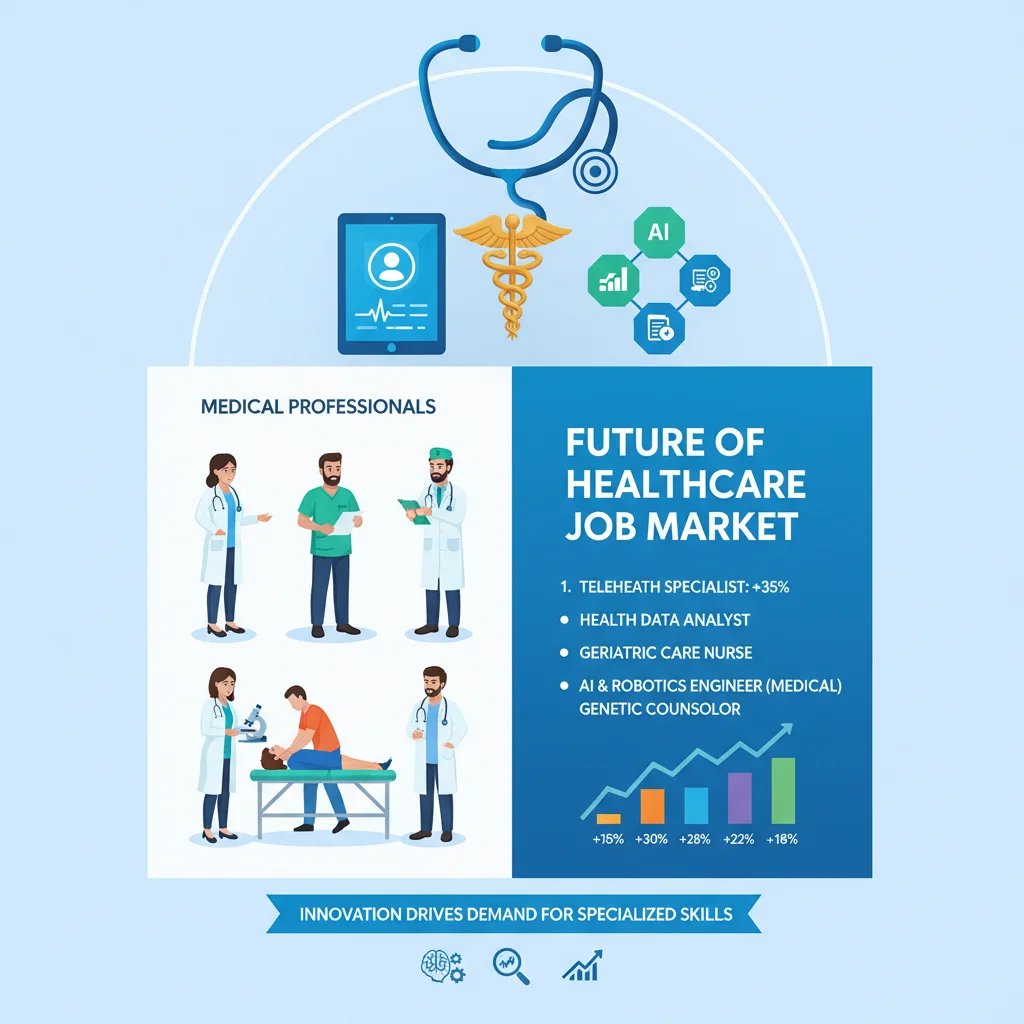
The healthcare sector has consistently been a robust engine of job growth in the US, and this trend is set to continue, even accelerate, through mid-2026. Driven by an aging population, advances in medical technology, and an increasing focus on personalized medicine and preventative care, the demand for healthcare professionals across all levels is soaring. Projections suggest that healthcare will easily surpass the 5% growth mark, with some sub-sectors experiencing even higher rates.
Key Drivers of Healthcare Job Growth:
- Aging Demographics: As the baby boomer generation enters retirement age, the need for geriatric care, specialized medical services, and long-term care facilities will continue to expand.
- Technological Innovation: Telemedicine, AI-powered diagnostics, robotic surgery, and electronic health records (EHR) systems are transforming healthcare delivery, creating demand for IT professionals with medical domain knowledge, as well as healthcare providers proficient in using these new tools.
- Chronic Disease Management: The prevalence of chronic conditions like diabetes, heart disease, and obesity requires ongoing medical attention, driving demand for nurses, physicians, therapists, and support staff.
- Preventative Care Emphasis: A growing understanding of the importance of preventative health and wellness is leading to increased demand for dietitians, public health specialists, and fitness professionals.
- Mental Health Awareness: Increased awareness and reduced stigma surrounding mental health issues are leading to a surge in demand for psychiatrists, psychologists, counselors, and social workers.
High-Demand Roles and Skills in Healthcare:
Within the vast healthcare landscape, specific roles are experiencing particularly rapid growth. Registered Nurses (RNs) remain in high demand, especially those with specialized skills in critical care, geriatrics, and informatics. Physical and Occupational Therapists are also seeing significant opportunities due to an aging population and advancements in rehabilitation. Medical and Health Services Managers are crucial for navigating the complex administrative and operational challenges of healthcare systems. Furthermore, roles in medical records and health information technicians are expanding rapidly as data management becomes increasingly central to healthcare efficiency and patient outcomes.
The skills most valued in this sector extend beyond clinical expertise. Strong communication, empathy, problem-solving, and adaptability to new technologies are crucial. Data literacy and an understanding of healthcare analytics are also becoming increasingly important for professionals at all levels. Educational institutions are responding by developing new programs that integrate technology and interdisciplinary approaches into healthcare curricula, preparing the next generation of professionals for these evolving demands.
Sector 2: Technology – The Ever-Expanding Digital Frontier
The technology sector continues its relentless march forward, driven by continuous innovation and its pervasive integration into every aspect of modern life. Even with recent fluctuations in certain tech segments, the overall trajectory for the US labor market in technology remains strongly positive, with growth well above the 5% threshold projected through mid-2026. This sector is not just about Silicon Valley; it encompasses a broad range of industries leveraging digital tools and solutions.
Key Drivers of Technology Job Growth:
- Digital Transformation Across Industries: Businesses across all sectors – from retail to manufacturing to finance – are investing heavily in digital solutions to improve efficiency, customer experience, and competitive advantage. This fuels demand for IT professionals.
- Artificial Intelligence and Machine Learning: AI and ML are no longer nascent technologies; they are being deployed in real-world applications, creating a massive need for AI engineers, data scientists, and machine learning specialists.
- Cybersecurity Imperative: With the increasing sophistication of cyber threats, the demand for cybersecurity experts to protect sensitive data and critical infrastructure is at an all-time high and continues to grow exponentially.
- Cloud Computing Adoption: The migration of data and applications to cloud platforms (AWS, Azure, Google Cloud) continues, requiring cloud architects, engineers, and administrators.
- Software Development and Data Analytics: The need for custom software solutions and the ability to extract insights from vast amounts of data remain foundational drivers of tech job growth.
High-Demand Roles and Skills in Technology:
Software Developers, particularly those with expertise in specific programming languages (Python, Java, JavaScript) and cloud development, are consistently sought after. Data Scientists and Analysts, who can interpret complex datasets to inform business strategies, are also in high demand. Cybersecurity Analysts and Engineers are critical for protecting digital assets. Cloud Architects and Engineers are essential for designing and maintaining cloud infrastructure. Beyond these core roles, there’s growing demand for UX/UI Designers, DevOps Engineers, and AI/ML Specialists.
The necessary skills in technology are constantly evolving. Beyond technical proficiency in coding, algorithms, and specific platforms, employers highly value problem-solving abilities, critical thinking, continuous learning, and strong communication skills. The ability to work in agile environments and collaborate effectively in cross-functional teams is also paramount. Many tech companies are now looking for candidates with a blend of technical expertise and soft skills, recognizing that innovation thrives in collaborative and adaptable settings. Lifelong learning is not just a recommendation in this sector; it’s a necessity for staying relevant.
Sector 3: Renewable Energy – Powering a Sustainable Future
The renewable energy sector is experiencing an unprecedented boom, driven by global climate change concerns, decreasing technology costs, and supportive government policies. This sector is not only environmentally critical but also a significant economic powerhouse, projected to see well over 5% job growth by mid-2026. The transition to a green economy is creating a diverse array of jobs, from engineering and manufacturing to installation and maintenance.
Key Drivers of Renewable Energy Job Growth:
- Climate Change Mitigation: The urgent need to reduce carbon emissions and transition away from fossil fuels is the primary driver, leading to massive investments in solar, wind, geothermal, and other clean energy sources.
- Government Incentives and Policies: Federal and state-level policies, tax credits, and regulatory frameworks (e.g., the Inflation Reduction Act) are providing significant financial incentives for renewable energy projects, stimulating job creation.
- Cost Reductions: The cost of renewable energy technologies, particularly solar panels and wind turbines, has dramatically decreased over the past decade, making them competitive with, and often cheaper than, traditional energy sources.
- Energy Independence and Security: Geopolitical events have highlighted the importance of energy independence, further accelerating the shift towards domestically produced renewable energy.
- Grid Modernization: The integration of intermittent renewable sources requires significant upgrades and modernization of the existing electrical grid, creating demand for smart grid specialists and electrical engineers.
High-Demand Roles and Skills in Renewable Energy:
Solar Panel Installers and Wind Turbine Technicians are on the front lines of renewable energy deployment, and these roles are seeing substantial growth. Electrical Engineers, particularly those specializing in power systems and grid integration, are crucial for designing and optimizing renewable energy projects. Environmental Scientists and Hydrologists are needed for site assessment and impact studies. Project Managers with experience in large-scale infrastructure development are also in high demand. Furthermore, research and development roles for new energy storage solutions and advanced materials are expanding.
The skills required in renewable energy are diverse, encompassing engineering principles, technical installation and maintenance knowledge, project management capabilities, and an understanding of environmental regulations. There’s also a growing need for data analysts who can optimize energy production and consumption, and for policy experts who can navigate the regulatory landscape. Safety protocols and sustainable practices are integral to all roles within this sector. Vocational training programs, community college initiatives, and university-level engineering courses are all playing a vital role in preparing the workforce for these exciting opportunities.

Insider Knowledge: Navigating the US Labor Rebalancing
Beyond identifying the high-growth sectors, understanding how to position oneself or one’s business to capitalize on the US labor rebalancing requires a deeper look into the operational dynamics and strategic considerations. Here’s some insider knowledge to help navigate these evolving landscapes:
For Job Seekers:
- Upskill and Reskill Continuously: The pace of change means that skills acquired today may be obsolete tomorrow. Invest in continuous learning through certifications, online courses, and advanced degrees. Focus on transferable skills like problem-solving, critical thinking, and digital literacy.
- Network Strategically: Attend industry conferences, join professional organizations, and leverage platforms like LinkedIn to connect with professionals in your target sectors. Many opportunities emerge through networking.
- Consider Apprenticeships and Vocational Training: For sectors like renewable energy and certain healthcare support roles, apprenticeships and vocational programs offer direct pathways to employment and hands-on experience, often leading to well-paying jobs without a traditional four-year degree.
- Embrace Interdisciplinary Learning: The convergence of fields (e.g., health tech, green tech) means that a blend of skills from different disciplines is highly valuable. For example, a healthcare professional with data analytics skills will be highly sought after.
- Geographic Flexibility: While major urban centers often lead in job creation, some renewable energy and manufacturing jobs are concentrated in specific regions. Be open to relocating if it aligns with your career goals.
For Businesses and Employers:
- Invest in Workforce Development: Proactive investment in employee training and reskilling programs is crucial for retaining talent and adapting to new technological demands. Consider partnerships with educational institutions.
- Foster a Culture of Innovation: To attract and retain top talent in high-growth sectors, businesses must offer dynamic work environments that encourage creativity, collaboration, and continuous learning.
- Leverage Data for Talent Acquisition: Use advanced analytics to identify skill gaps, forecast future workforce needs, and optimize recruitment strategies. Understand where talent pools are developing.
- Embrace Diversity, Equity, and Inclusion (DEI): A diverse workforce brings a wider range of perspectives and skills, fostering innovation and resilience. DEI initiatives are not just ethical but also strategic for business success.
- Strategic Partnerships: Collaborate with other companies, research institutions, and government agencies to address shared workforce challenges and develop innovative solutions. This is particularly relevant in complex sectors like renewable energy.
Challenges and Considerations in the Rebalancing Act
While the growth projections for these three sectors are exciting, the US labor rebalancing is not without its challenges. Addressing these considerations is vital for sustainable and equitable growth:
- Skill Gap: A significant challenge is the potential mismatch between the skills of the available workforce and the skills required by these burgeoning industries. Bridging this gap requires concerted efforts from educational institutions, government, and industry.
- Equitable Access: Ensuring that all segments of the population have access to the training and opportunities in these high-growth sectors is crucial to prevent exacerbating existing inequalities. Initiatives focused on underserved communities are essential.
- Infrastructure Development: For sectors like renewable energy, robust infrastructure (e.g., smart grids, charging stations) is necessary to support widespread adoption and job creation. This requires significant public and private investment.
- Automation’s Impact: While technology creates new jobs, it also automates existing ones. Managing this transition and supporting workers whose roles are displaced will be an ongoing challenge.
- Economic Volatility: Global economic conditions, inflation, and interest rate changes can impact investment and consumer spending, which in turn affect job growth even in strong sectors.
Addressing these challenges requires a holistic approach that involves ongoing dialogue and collaboration among all stakeholders. Proactive policy-making, adaptive educational systems, and responsible corporate strategies will be key to ensuring that the US labor rebalancing leads to a stronger, more resilient, and more inclusive economy.
Conclusion: A Bright Outlook for Strategic Growth
The US labor market is undeniably in a state of dynamic rebalancing, moving towards a future shaped by technological innovation, demographic imperatives, and environmental sustainability. The projected 5% growth in healthcare, technology, and renewable energy sectors by mid-2026 is not just a statistic; it represents millions of new job opportunities, significant economic expansion, and a fundamental shift in the nation’s economic priorities.
For individuals, this rebalancing offers clear pathways for career development and advancement. Strategic investment in relevant skills and continuous learning will be the hallmarks of success. For businesses, it necessitates agile strategies for workforce development, talent acquisition, and fostering innovative work environments. For policymakers, it underscores the importance of supportive legislation, investment in critical infrastructure, and equitable access to education and training.
As we look towards mid-2026, the insights gleaned from this analysis of the US labor rebalancing provide a roadmap for navigating the future of work. By understanding the forces at play and focusing on these high-growth sectors, we can collectively build a more prosperous, sustainable, and technologically advanced economy. The future is not just arriving; it’s being built by the hands and minds within these rapidly expanding industries, offering a bright outlook for those prepared to embrace the change.