Federal Reserve 2026 Projections: Impact on US Business Investments
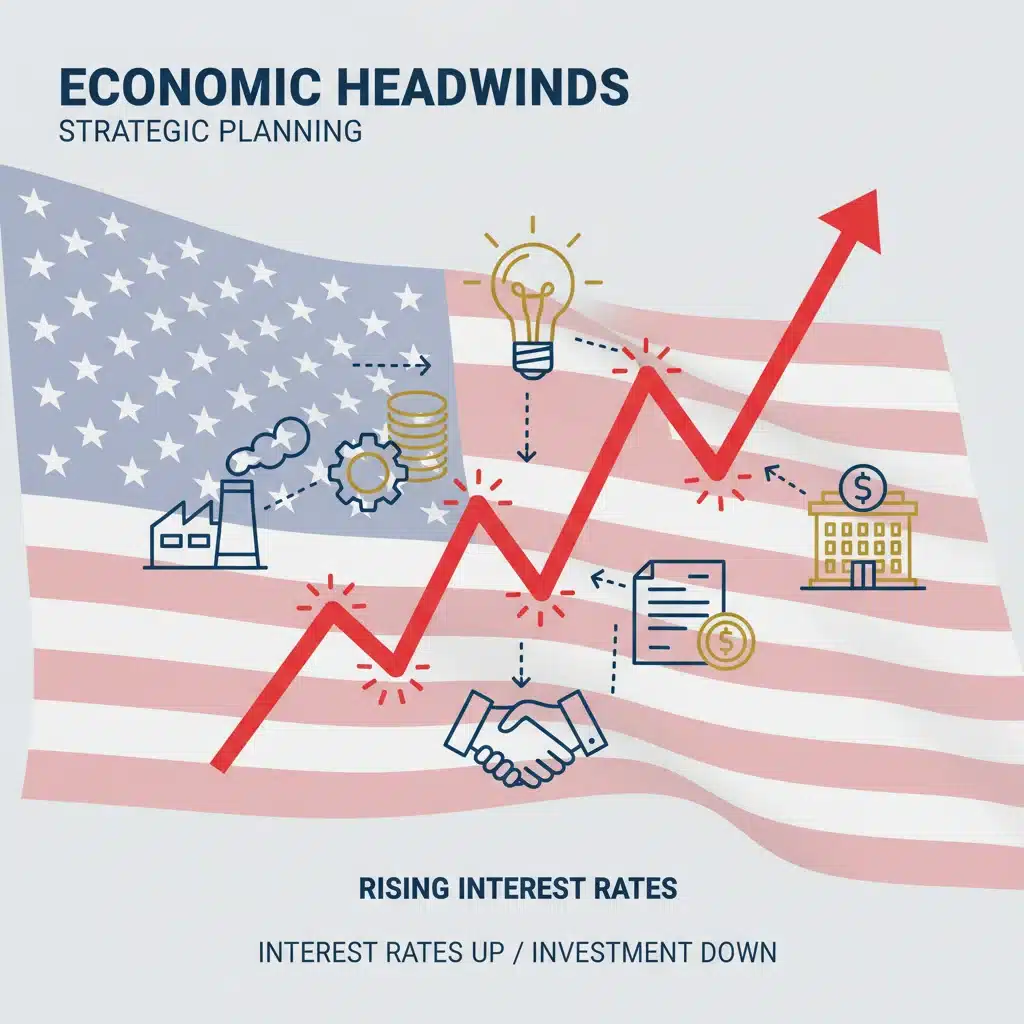
In the intricate dance of the global economy, few entities wield as much influence over domestic and international markets as the Federal Reserve. Its monetary policy decisions, particularly those concerning interest rates, reverberate through every sector of the U.S. economy, directly shaping the landscape for business investments. As we look towards 2026, the Federal Reserve’s interest rate projections become a critical compass for businesses navigating future financial strategies. This comprehensive analysis delves deep into how these Fed Rate Projections for 2026 are expected to impact U.S. business investments, offering an insider’s perspective on the anticipated shifts and the strategic implications for enterprises of all sizes.
Understanding the Federal Reserve’s forward guidance is paramount for any business aiming to thrive in a dynamic economic environment. The Fed’s projections are not merely academic exercises; they represent a carefully considered outlook on inflation, employment, and economic growth, which directly informs their interest rate decisions. These decisions, in turn, affect the cost of borrowing, the attractiveness of investments, and the overall economic sentiment. For U.S. businesses, anticipating these shifts can mean the difference between seizing opportunities and facing unforeseen challenges.
The year 2026, while seemingly distant, is already on the horizon for strategic planners. Businesses are currently making long-term investment decisions that will come to fruition in that timeframe. Therefore, a thorough understanding of the Federal Reserve’s anticipated monetary policy stance, particularly its Fed Rate Projections, is not just beneficial but essential for sound financial planning and sustainable growth. This article will dissect the various facets of these projections, exploring their potential impact on capital expenditures, mergers and acquisitions, research and development, and general operational costs across diverse industries.
The Federal Reserve’s Mandate and Forecasting Framework
To fully grasp the significance of the 2026 Fed Rate Projections, it’s crucial to first understand the Federal Reserve’s dual mandate: to foster maximum employment and maintain price stability. These two objectives often require a delicate balancing act, especially in periods of economic flux. The Fed utilizes a sophisticated forecasting framework, drawing on a vast array of economic data, econometric models, and qualitative assessments from its regional banks and board members.
The Federal Open Market Committee (FOMC) is the primary body responsible for setting monetary policy. Its members periodically release their economic projections, including their “dot plot,” which illustrates individual members’ expectations for the federal funds rate over the next few years and in the longer run. While these are not commitments, they offer invaluable insights into the collective thinking of the Fed’s policymakers. The 2026 Fed Rate Projections are therefore a consensus view, albeit one subject to revision based on evolving economic conditions.
Key economic indicators that heavily influence these projections include inflation rates (measured by the Consumer Price Index and Personal Consumption Expenditures index), GDP growth, unemployment rates, and global economic developments. A persistent deviation from the Fed’s target inflation rate of 2% or significant shifts in the labor market can trigger adjustments to their anticipated rate path. For businesses, monitoring these indicators alongside the Fed’s statements provides a more holistic view of the future interest rate environment.
The Mechanics of Interest Rate Impact on Business
Interest rates are the cost of money. When the Federal Reserve raises its benchmark federal funds rate, it typically leads to higher borrowing costs across the economy. This affects businesses in several direct and indirect ways:
- Cost of Capital: Higher interest rates mean that loans for capital expenditures, such as expanding facilities, purchasing new equipment, or investing in technology, become more expensive. This can deter businesses from undertaking new projects or force them to scale back existing plans.
- Consumer Demand: Increased interest rates can lead to higher borrowing costs for consumers (e.g., mortgages, car loans, credit cards). This can reduce consumer spending, impacting businesses that rely on robust consumer demand.
- Investment Returns: The hurdle rate for investments (the minimum acceptable rate of return) tends to rise with interest rates. Projects that were viable at lower rates might become unattractive at higher rates, leading to a reallocation of capital or a slowdown in investment.
- Currency Strength: Higher interest rates can strengthen the U.S. dollar, making U.S. exports more expensive for foreign buyers and imports cheaper for domestic consumers. This affects the competitiveness of export-oriented businesses and those competing with imports.
- Debt Servicing: Businesses with variable-rate debt will see their interest payments increase, potentially straining cash flow and reducing funds available for investment or operations.
Understanding these fundamental mechanisms is the first step in preparing for the impact of the 2026 Fed Rate Projections. Businesses must assess their current debt structures, future financing needs, and sensitivity to changes in consumer spending to accurately forecast the effects on their bottom line.
Analyzing the 2026 Fed Rate Projections: Key Scenarios and Expectations
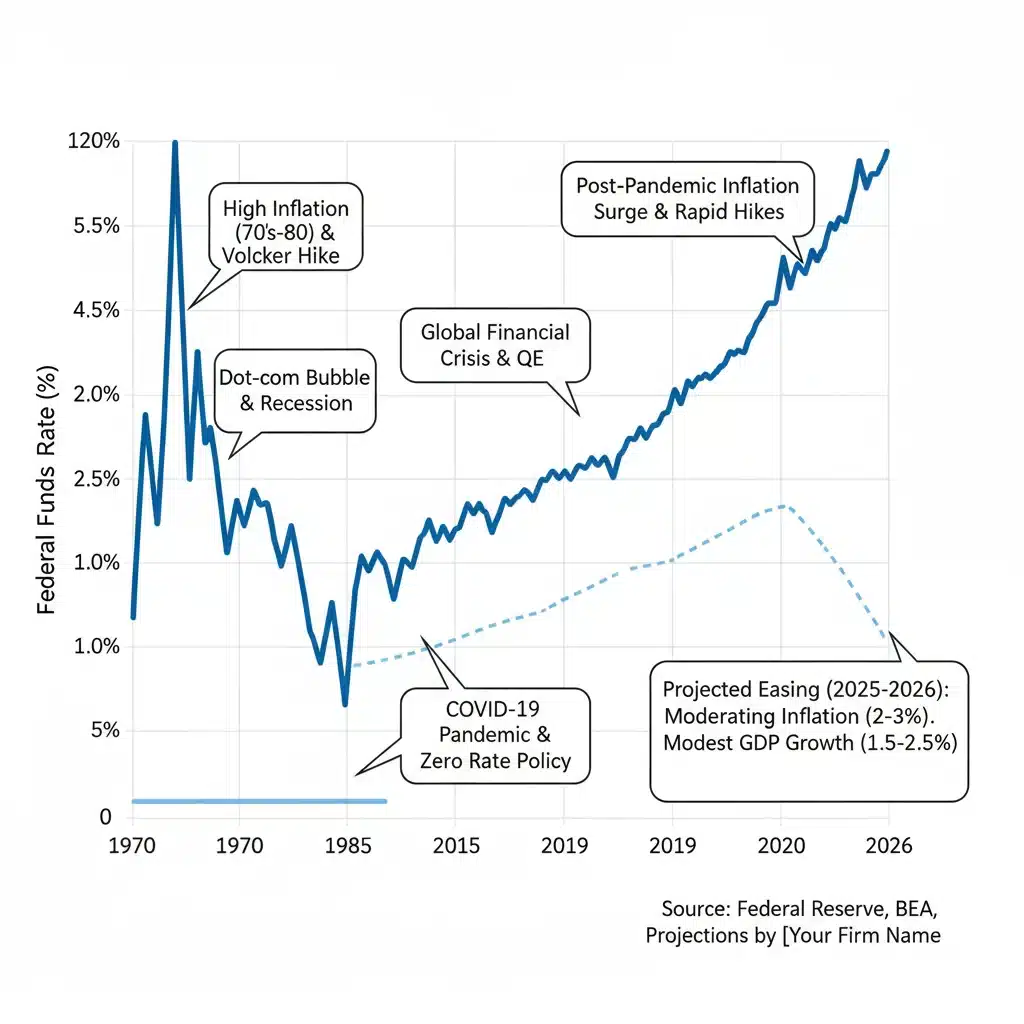
While specific 2026 Fed Rate Projections are subject to change, current indications and historical patterns allow us to outline potential scenarios. Generally, the Fed aims for a “neutral” interest rate that neither stimulates nor restricts economic growth, typically around 2-3% in real terms. However, the path to this neutral rate can be bumpy, influenced by inflation persistence and labor market dynamics.
One scenario anticipates a gradual return to a more normalized interest rate environment, where rates stabilize at a level that supports sustainable economic growth without reigniting inflationary pressures. This would imply a period of moderate rate adjustments, allowing businesses time to adapt their investment strategies. In this scenario, the cost of capital would be predictable, fostering long-term planning.
Another scenario involves a more aggressive stance by the Fed if inflation proves more stubborn than expected. This could lead to higher-than-anticipated interest rates in 2026, significantly increasing borrowing costs and potentially dampening investment appetite. Conversely, an unexpected economic slowdown or recession could prompt the Fed to cut rates, making borrowing cheaper and encouraging investment.
The market’s interpretation of these Fed Rate Projections is also crucial. Financial markets often price in anticipated rate changes well in advance, affecting bond yields and equity valuations. Businesses must not only consider the Fed’s explicit guidance but also the market’s implied expectations, as these influence investor sentiment and access to capital.
Sector-Specific Impacts of Future Rate Changes
The impact of the 2026 Fed Rate Projections will not be uniform across all sectors. Some industries are inherently more sensitive to interest rate fluctuations than others. Understanding these differential impacts is vital for targeted strategic planning.
- Technology Sector: Growth-oriented tech companies often rely heavily on venture capital and debt financing to fund rapid expansion and R&D. Higher interest rates can increase their cost of capital, potentially slowing innovation and market entry for new products. However, established, cash-rich tech giants might be less affected and could even find acquisition opportunities more attractive as smaller competitors face funding challenges.
- Real Estate and Construction: These sectors are highly sensitive to interest rates. Higher mortgage rates dampen housing demand, affecting residential construction. Commercial real estate development also becomes more expensive due to increased financing costs, potentially leading to a slowdown in new projects. Businesses in these areas will need to carefully manage their leverage and project pipelines.
- Manufacturing: Manufacturers often make significant long-term investments in machinery and plant upgrades. Higher interest rates can make these capital expenditures less attractive, potentially delaying modernization efforts. Those with international supply chains could also face challenges from a stronger dollar.
- Financial Services: Banks and other financial institutions can see mixed effects. Higher rates can increase net interest margins, benefiting profitability. However, they also increase the risk of loan defaults and can reduce demand for new loans, especially mortgages.
- Retail and Consumer Goods: These sectors are indirectly affected by consumer spending patterns. If higher interest rates lead to reduced consumer discretionary income, retail sales could slow. Businesses in this area might focus on cost efficiencies and inventory management.
- Utilities and Infrastructure: These sectors often involve large, long-term capital projects financed through debt. While essential, the cost of financing these projects will rise with interest rates, potentially impacting project feasibility and consumer utility costs.
Each sector must conduct its own granular analysis of how the 2026 Fed Rate Projections will specifically influence their operational costs, revenue streams, and competitive landscape. Diversification of funding sources and hedging strategies can mitigate some of these risks.
Strategic Implications for U.S. Businesses
Navigating the anticipated interest rate environment of 2026 requires proactive and adaptive strategies. Businesses that fail to account for the Fed Rate Projections risk being caught off guard, potentially impacting their growth trajectory and profitability. Here are key strategic implications:
Capital Allocation and Investment Decisions
With potentially higher borrowing costs, businesses will need to be more discerning about their capital allocation. This means rigorous project evaluation, prioritizing investments with strong, demonstrable returns and shorter payback periods. Companies might favor internal funding over external debt where possible. The focus could shift from aggressive expansion to optimizing existing assets and improving efficiency.
For businesses contemplating mergers and acquisitions, the cost of financing these deals will be a significant factor. Higher rates could lead to fewer, but more strategic, M&A activities, with a greater emphasis on synergy and immediate value creation. Private equity firms, which often rely on leveraged buyouts, will also need to adjust their models.
Debt Management and Financing Strategies
Businesses with existing debt should review their loan portfolios. Those with significant variable-rate debt might consider refinancing into fixed-rate instruments to lock in current rates and mitigate future interest rate risk, depending on the anticipated trajectory of the Fed Rate Projections. Companies planning new debt issuance will need to factor in potentially higher interest expenses.
Exploring alternative financing options, such as equity financing, convertible debt, or even government grants and incentives, could become more attractive. Strengthening balance sheets by retaining earnings and reducing leverage will provide greater flexibility in a rising rate environment.
Operational Efficiency and Cost Control
In an environment where capital is more expensive, operational efficiency becomes paramount. Businesses will need to scrutinize their cost structures, identify areas for reduction, and invest in technologies that enhance productivity and automation. This includes optimizing supply chains, streamlining processes, and leveraging data analytics to make more informed decisions.
Energy costs, labor costs, and raw material prices also play a role. While not directly tied to interest rates, these costs can exacerbate the impact of higher financing expenses. A holistic approach to cost control will be essential for maintaining profitability.
Innovation and Research & Development
While higher interest rates can increase the cost of funding R&D, innovation remains a critical driver of long-term growth and competitive advantage. Businesses may need to be more strategic in their R&D investments, focusing on projects with clear market potential and a higher probability of success. Collaborative R&D, partnerships, and leveraging external expertise could become more prevalent to share costs and risks.
The Fed Rate Projections should not deter innovation but rather encourage a more disciplined approach to it, ensuring that R&D spending aligns with strategic objectives and delivers tangible value.

Risk Management and Scenario Planning
Effective risk management is crucial when facing uncertain economic conditions influenced by future Fed Rate Projections. Businesses should engage in robust scenario planning, developing strategies for a range of possible interest rate outcomes. This involves:
- Sensitivity Analysis: Assessing how different interest rate levels would impact financial statements, cash flow, and key performance indicators.
- Contingency Planning: Developing predefined responses for adverse scenarios, such as a sharper-than-expected increase in rates or a sudden economic downturn.
- Hedging Strategies: Exploring financial instruments like interest rate swaps or options to mitigate the risk of adverse rate movements, particularly for businesses with significant debt exposure.
- Diversification: Diversifying revenue streams, customer bases, and geographic markets can reduce overall business risk and make companies more resilient to sector-specific or regional economic shocks.
Regularly reviewing and updating these plans based on the latest economic data and the Fed’s communications will ensure businesses remain agile and prepared for evolving conditions. The 2026 Fed Rate Projections are a moving target, and adaptability will be a key differentiator.
The Role of Global Economic Factors
It’s important to remember that the Federal Reserve operates within a global economic context. International events, such as geopolitical tensions, commodity price fluctuations, and the monetary policies of other major central banks, can all influence the U.S. economy and, consequently, the Fed’s decisions regarding interest rates. For instance, a significant slowdown in global growth could prompt the Fed to adopt a more dovish stance, even if domestic inflation remains somewhat elevated.
U.S. businesses with international operations or those heavily involved in global trade must also consider the interplay between domestic interest rates, currency exchange rates, and global economic trends. A strong dollar, driven by higher U.S. interest rates, can impact the profitability of foreign subsidiaries and make U.S. goods less competitive abroad. Conversely, it can make imported inputs cheaper.
Therefore, when analyzing the 2026 Fed Rate Projections, it’s not enough to look solely at domestic factors. A comprehensive understanding requires an appreciation of the broader global economic landscape and its potential influence on the Fed’s policy path.
Communication and Transparency from the Federal Reserve
The Federal Reserve has increasingly emphasized transparency in its communication, aiming to provide clear forward guidance to market participants. Regular speeches by Fed officials, minutes from FOMC meetings, and the Summary of Economic Projections (SEP) are all valuable resources for businesses seeking to understand the Fed’s thinking. These communications help to manage expectations and reduce market volatility, although surprises can still occur.
Businesses should actively monitor these communications, not just for the explicit Fed Rate Projections, but also for the underlying rationale and any shifts in the Fed’s assessment of economic risks. Subtle changes in language or emphasis can signal a change in policy direction, providing an early warning for businesses to adjust their strategies.
Conclusion: Preparing for the Future with Informed Decisions
The Federal Reserve’s 2026 interest rate projections are more than just numbers; they are a powerful signal that will shape the economic environment for U.S. business investments. While the precise path of interest rates remains uncertain, a proactive and informed approach can help businesses mitigate risks and capitalize on opportunities.
By understanding the Fed’s mandate and forecasting framework, analyzing the potential sector-specific impacts, and implementing robust strategic planning for capital allocation, debt management, and operational efficiency, businesses can position themselves for resilience and growth. Staying attuned to global economic factors and the Fed’s transparent communications will further enhance their ability to adapt.
The future is not entirely predictable, but with careful analysis of the 2026 Fed Rate Projections and a commitment to strategic agility, U.S. businesses can navigate the evolving financial landscape with confidence, turning potential challenges into pathways for sustainable success. The time to prepare for 2026 is now, ensuring that investment decisions today are aligned with the anticipated economic realities of tomorrow.