Gig Economy 2026: Financial Impact & Future Opportunities for US Workforce

The Gig Economy in 2026: Financial Impact and New Opportunities for 25% of the US Workforce
The landscape of work is undergoing a profound transformation, and at the forefront of this revolution is the gig economy. Once considered a niche alternative, the gig economy has rapidly evolved into a significant pillar of the global workforce. By 2026, it is projected that a staggering 25% of the US workforce will be actively engaged in gig work, a statistic that underscores its pervasive reach and undeniable influence. This monumental shift brings with it a complex array of financial implications and opens up a wealth of new opportunities, while simultaneously presenting unique challenges for individuals, businesses, and policymakers alike. Understanding the gig economy financial impact is no longer a matter of academic interest but a crucial imperative for anyone navigating the modern professional world.
The allure of the gig economy is multifaceted. For many, it represents a pathway to greater autonomy, flexibility, and the ability to dictate one’s own terms of employment. The traditional 9-to-5 model is increasingly being supplanted by a desire for work-life balance, diversified income streams, and the pursuit of passion projects. However, this freedom often comes with a trade-off, particularly concerning financial stability, benefits, and career progression paths that are typically associated with conventional employment. As we delve deeper into the gig economy financial impact, we will explore both the bright prospects and the inherent complexities of this evolving economic model.
This comprehensive article aims to shed light on the multifaceted dimensions of the gig economy in 2026, focusing specifically on its financial impact and the new opportunities it presents for a significant portion of the US workforce. We will examine the economic drivers behind its growth, assess the financial realities faced by gig workers, highlight emerging trends, and offer practical strategies for success in this dynamic environment. Whether you are a current gig worker, considering a transition, an employer adapting to new workforce models, or simply an observer of economic trends, understanding the gig economy financial impact is essential for informed decision-making.
Defining the Gig Economy: More Than Just a Side Hustle
Before we can fully appreciate the gig economy financial impact, it’s crucial to establish a clear definition. The term ‘gig economy’ refers to a labor market characterized by the prevalence of short-term contracts or freelance work, as opposed to permanent jobs. Individuals engaged in this work are often referred to as independent contractors, freelancers, temporary workers, or ‘gig workers.’ This encompasses a vast spectrum of activities, from driving for rideshare services and delivering food, to offering professional services like graphic design, writing, consulting, and software development on project-by-project bases.
What distinguishes the gig economy from traditional contract work is often its reliance on digital platforms that connect workers with clients or consumers. These platforms, such as Uber, Lyft, DoorDash, Upwork, and Fiverr, act as intermediaries, facilitating transactions and often setting the terms of engagement. This digital infrastructure has significantly lowered barriers to entry for many types of work, enabling individuals to quickly find opportunities and monetize their skills. The ease of access and the immediate gratification of earning for completed tasks contribute significantly to its widespread adoption.
The growth of the gig economy is not accidental; it is driven by several converging factors. Technological advancements, particularly the widespread adoption of smartphones and high-speed internet, have made it easier to coordinate and execute tasks remotely or on demand. Changing generational attitudes towards work, with a greater emphasis on flexibility and purpose, also play a significant role. Furthermore, economic pressures, including the rising cost of living and the desire for supplemental income, push many into gig work. The COVID-19 pandemic also accelerated this trend, as many sought alternative income sources and businesses adapted to remote and flexible staffing models. Understanding these foundational elements is key to comprehending the profound gig economy financial impact.
The Economic Drivers Behind Gig Economy Growth
The burgeoning size of the gig economy, particularly its projected reach of 25% of the US workforce by 2026, is not merely a statistical anomaly but a reflection of powerful underlying economic forces. Several key drivers are fueling this expansion, each contributing to the transformative gig economy financial impact we are witnessing.
Technological Innovation and Platform Proliferation
At the heart of the gig economy’s surge is technological innovation. The proliferation of digital platforms acts as the central nervous system, connecting supply and demand with unprecedented efficiency. These platforms leverage algorithms and mobile technology to match workers with tasks, process payments, and manage reputations. For businesses, this means access to a flexible, on-demand workforce without the overheads associated with traditional employment. For workers, it means lower barriers to entry and the ability to find work quickly and efficiently. This technological backbone is indispensable to the scale and reach of the gig economy, profoundly shaping the gig economy financial impact for millions.
Shifting Workforce Demographics and Preferences
The demographics of the US workforce are changing, and with them, so are preferences regarding employment. Younger generations, in particular, often prioritize flexibility, autonomy, and work-life balance over the traditional corporate ladder. The gig economy offers an attractive alternative, allowing individuals to set their own hours, choose their projects, and work from anywhere. This aligns with a growing desire for personalized career paths and the ability to integrate work more seamlessly into personal lives. Moreover, the aging population also finds value in gig work, offering a way to stay engaged and earn income post-retirement without the demands of full-time employment. These evolving preferences are a major contributor to the growing gig economy financial impact.
Economic Pressures and the Need for Supplemental Income
For many, the gig economy is not a choice driven solely by preference but by necessity. Rising costs of living, stagnant wages in some sectors, and the desire to pay down debt or save for future goals compel individuals to seek supplemental income. Gig work provides a readily accessible means to achieve this, allowing people to earn extra money in their spare time or between traditional jobs. The ability to quickly generate income on demand is a powerful incentive, making the gig economy a crucial financial safety net or growth engine for many households. The economic imperative to earn more is a significant factor amplifying the gig economy financial impact across diverse socioeconomic groups.
Business Adaptation and Cost Efficiency
From an employer perspective, the gig economy offers substantial benefits, primarily in terms of cost efficiency and agility. Businesses can scale their workforce up or down as needed, reducing fixed labor costs associated with full-time employees, such as benefits, office space, and training. This flexibility is particularly attractive in volatile economic climates or for project-based work. Companies can tap into a global talent pool, accessing specialized skills without the geographical constraints of traditional hiring. This strategic advantage for businesses further solidifies the gig economy’s role and its overall gig economy financial impact on the broader economy.
The Financial Realities for Gig Workers: Opportunities and Challenges
The projected growth of the gig economy to encompass 25% of the US workforce by 2026 underscores its increasing relevance. However, understanding the gig economy financial impact requires a nuanced look at the opportunities it presents alongside the inherent challenges faced by gig workers.
Opportunities: Flexibility, Autonomy, and Diversified Income
One of the most appealing aspects of the gig economy is the unprecedented level of flexibility it offers. Gig workers can often set their own hours, choose their projects, and work from locations that suit them. This autonomy can lead to improved work-life balance, allowing individuals to pursue personal interests, care for family, or manage other commitments. The ability to be one’s own boss, to dictate the terms of engagement, and to avoid traditional workplace politics is a powerful motivator for many. This flexibility is a significant component of the positive gig economy financial impact for those who value control over their schedule.
Furthermore, the gig economy enables income diversification. Instead of relying on a single employer, gig workers can engage with multiple clients or platforms, spreading their financial risk. If one income stream falters, others can often compensate. This can provide a greater sense of financial security than traditional employment, where the loss of a single job can be catastrophic. The potential to leverage various skills across different projects also enhances earning potential and fosters continuous learning and adaptation. This diversification strategy is a key aspect of managing the gig economy financial impact.
For skilled professionals, the gig economy can offer higher earning potential than traditional employment, especially for specialized services in high demand. Freelancers with unique expertise can command premium rates, and the ability to take on more projects can significantly boost overall income. This direct correlation between effort and reward is a strong financial incentive for many to enter and thrive in the gig economy. The direct control over pricing and workload directly influences the gig economy financial impact on individual earnings.
Challenges: Income Instability, Lack of Benefits, and Career Progression
Despite the opportunities, the gig economy financial impact is also marked by significant challenges. One of the most pressing concerns is income instability. Unlike employees with fixed salaries, gig workers’ income can fluctuate wildly based on demand, client availability, and their own capacity to work. This unpredictability makes budgeting, saving, and financial planning much more difficult. Periods of low demand can lead to significant financial stress, undermining the perceived benefits of flexibility. Addressing this income volatility is central to mitigating the negative gig economy financial impact.
A major drawback for many gig workers is the absence of traditional employment benefits. This includes health insurance, paid time off, retirement plans, and unemployment benefits. Gig workers are responsible for funding these themselves, which can be a substantial financial burden. The cost of health insurance, in particular, can eat into earnings, and the lack of a safety net like unemployment insurance leaves workers vulnerable during economic downturns or periods of illness. The absence of these benefits represents a significant negative gig economy financial impact that individuals must actively plan for.

Another challenge lies in career progression. While gig work offers opportunities for skill development and portfolio building, the traditional career ladder often doesn’t exist. Gig workers must proactively manage their careers, seek out learning opportunities, and build their personal brand to advance. This requires a high degree of self-motivation and entrepreneurial spirit. The lack of structured mentorship or clear promotional paths can make it difficult for some to envision long-term career growth, impacting their long-term gig economy financial impact and overall professional trajectory.
Finally, gig workers often face increased administrative burdens. They are responsible for managing their own taxes (including self-employment taxes), invoicing, marketing, and client acquisition. This administrative overhead can consume valuable time that could otherwise be spent earning, further complicating the overall gig economy financial impact on their net income.
Strategies for Thriving in the Gig Economy: Maximizing Financial Well-being
As the gig economy continues its expansion, with 25% of the US workforce expected to participate by 2026, developing effective strategies to navigate its unique financial landscape becomes paramount. Maximizing the positive gig economy financial impact and mitigating its inherent risks requires proactive planning and a strategic approach.
Financial Planning and Budgeting for Income Volatility
Given the inherent income instability in gig work, robust financial planning and budgeting are non-negotiable. Gig workers must adopt a mindset of treating their income as unpredictable and plan accordingly. This involves creating a detailed budget that accounts for fluctuating monthly earnings and expenses. A crucial strategy is to build a substantial emergency fund, ideally covering 6-12 months of living expenses, to buffer against periods of low work or unexpected costs. This financial cushion is vital for managing the gig economy financial impact effectively.
It is also advisable to set aside a percentage of every payment specifically for taxes, as gig workers are responsible for self-employment taxes, which include Social Security and Medicare contributions. Tools and apps designed for freelancers can help track income and expenses, making tax season less daunting. Consistent savings, even small amounts, can accumulate over time, providing a sense of security and enabling future investments. Proactive financial management is the bedrock of a stable gig economy financial impact.
Diversifying Income Streams and Skill Sets
To counteract income volatility and enhance overall earning potential, gig workers should actively diversify their income streams. Relying on a single platform or client can be risky. Instead, explore opportunities across multiple platforms, engage in different types of gig work, or even combine gig work with part-time traditional employment. This multi-pronged approach spreads risk and increases the likelihood of consistent earnings, positively influencing the gig economy financial impact.
Furthermore, continuously developing and diversifying skill sets is critical. The gig economy rewards adaptability and specialized expertise. Investing in ongoing education, acquiring new certifications, or mastering emerging technologies can open doors to higher-paying projects and a wider range of opportunities. Being a generalist with a few specialized niches can make a gig worker highly marketable and resilient to market changes, thereby enhancing their long-term gig economy financial impact.
Building a Professional Network and Personal Brand
In the absence of a traditional corporate structure, a strong professional network and a compelling personal brand are invaluable assets for gig workers. Networking, both online and offline, can lead to direct client referrals, collaborative opportunities, and access to industry insights. Platforms like LinkedIn, industry-specific forums, and local meetups are excellent avenues for connecting with potential clients and peers. A robust network can significantly reduce the time spent searching for work, directly impacting income stability and growth within the gig economy.
Developing a strong personal brand is equally important. This involves consistently delivering high-quality work, maintaining a professional online presence, and actively marketing one’s skills and expertise. A well-curated portfolio, testimonials from satisfied clients, and a clear articulation of one’s value proposition can attract premium clients and command better rates. A strong brand builds trust and credibility, which are essential for sustained success and a positive gig economy financial impact.
Understanding Legal and Tax Implications
Navigating the legal and tax landscape as an independent contractor can be complex, but it is crucial for financial well-being. Gig workers must understand their classification (e.g., independent contractor vs. employee) as it impacts tax obligations, benefits eligibility, and legal protections. Consulting with tax professionals specializing in self-employment can help ensure compliance and identify potential deductions that can reduce taxable income. For instance, business expenses such as home office deductions, equipment purchases, and professional development can often be written off. Proactive engagement with these aspects is vital for managing the overall gig economy financial impact.
Additionally, understanding contract terms, intellectual property rights, and payment schedules is essential before engaging in any project. Clear communication and written agreements with clients can prevent disputes and ensure timely compensation. Being informed about these legal and tax considerations is a cornerstone of financial security in the gig economy. Neglecting these areas can lead to significant negative gig economy financial impact.
The Role of Technology and Platforms in Shaping the Gig Economy
The ubiquity of technology and the rise of digital platforms are not just enablers of the gig economy; they are its architects, fundamentally shaping its structure, accessibility, and the overall gig economy financial impact. As we look towards 2026, their influence will only continue to grow, introducing new opportunities and challenges.
Efficiency, Access, and Market Reach
Digital platforms have revolutionized how work is found, executed, and compensated. They efficiently connect workers with demand, often on a real-time basis, drastically reducing the friction traditionally associated with job searching and hiring. For a rideshare driver, the app instantly matches them with a passenger; for a freelance writer, platforms like Upwork or Fiverr provide a global marketplace for their skills. This efficiency translates directly into increased earning opportunities and a broader client base for gig workers, thereby enhancing the positive gig economy financial impact.
Moreover, these platforms democratize access to work. Individuals who might face barriers in the traditional job market—due to geographical location, disability, or caregiving responsibilities—can find viable earning opportunities through gig platforms. This expanded market reach benefits both workers and businesses, creating a more dynamic and inclusive labor pool. The ability to access a global market for services significantly amplifies the potential gig economy financial impact for many.
Algorithmic Management and Its Implications
While platforms offer unparalleled access, they also introduce a new layer of management: algorithmic control. Algorithms often determine task allocation, pricing, worker ratings, and even performance monitoring. This can lead to a lack of transparency and control for gig workers, who may find it difficult to understand why they are being offered certain tasks or why their ratings fluctuate. The impersonal nature of algorithmic management can also make it challenging to address disputes or seek redress, potentially impacting earning stability and job satisfaction. The implications of algorithmic management are a critical aspect of the gig economy financial impact that requires ongoing scrutiny.
Furthermore, the data collected by these platforms can be used to optimize operations, but also to potentially influence worker behavior or earnings. The balance between platform efficiency and worker autonomy is a continuous tension point that will evolve as the gig economy matures. Understanding and adapting to these algorithmic realities is crucial for maximizing the gig economy financial impact for individual workers.
Emerging Technologies: AI, Automation, and the Future of Gig Work
Looking ahead to 2026 and beyond, emerging technologies like Artificial Intelligence (AI) and further automation will profoundly reshape the gig economy. AI can enhance platform efficiency, personalize work recommendations, and even automate certain tasks, potentially freeing up gig workers for higher-value activities. For example, AI-powered tools can assist freelancers with content generation, data analysis, or customer support, making them more productive and competitive. This integration of AI can lead to an improved gig economy financial impact for workers who leverage these tools effectively.
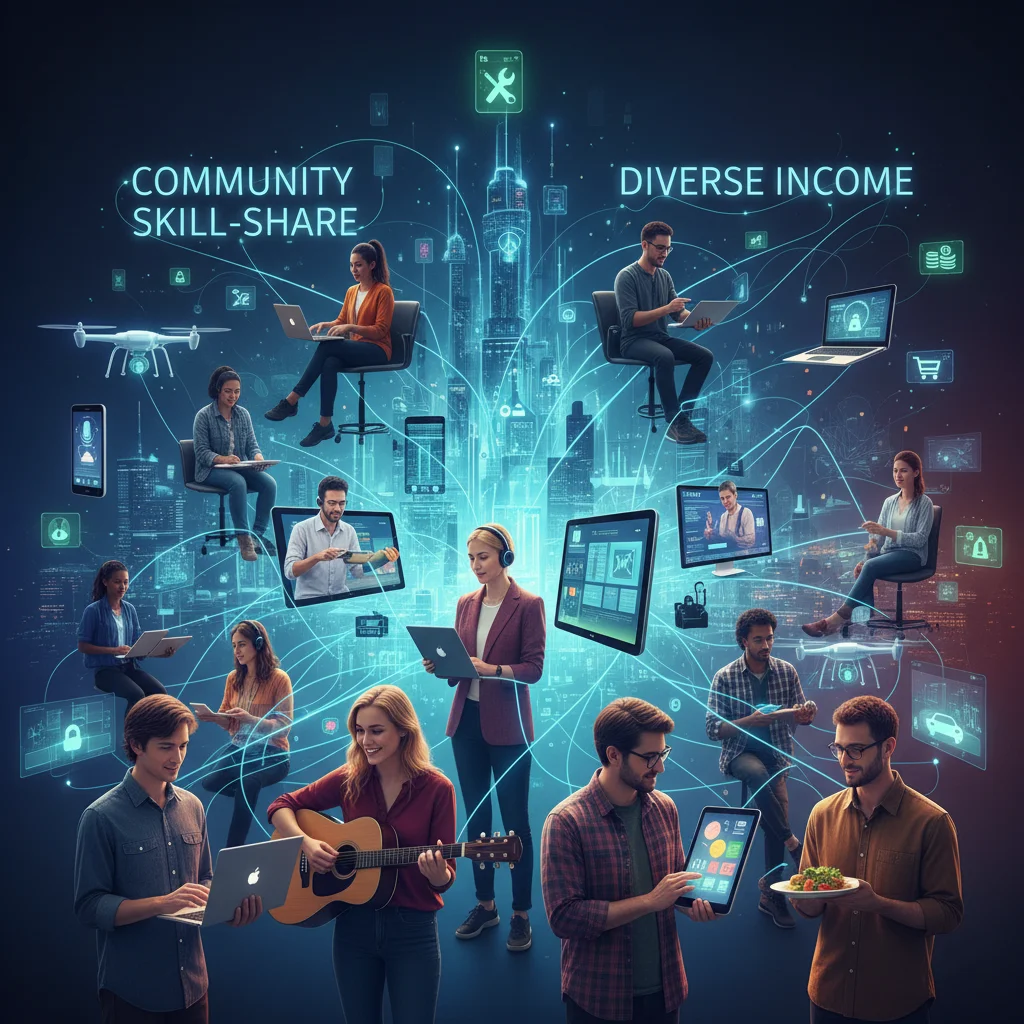
However, automation also presents a challenge, as some gig tasks may become entirely automated, displacing human workers. The key for gig workers will be to focus on skills that are complementary to AI, such as creativity, critical thinking, emotional intelligence, and complex problem-solving—areas where human input remains indispensable. Continual upskilling and adapting to technological advancements will be vital for maintaining relevance and ensuring a positive gig economy financial impact in an increasingly automated world. The evolution of technology is an undeniable force in shaping the future gig economy financial impact.
The role of technology and platforms in the gig economy is a double-edged sword. While they offer unprecedented opportunities for flexibility and income, they also introduce new forms of control and potential for displacement. Navigating this technological landscape effectively will be crucial for the 25% of the US workforce expected to be engaged in gig work by 2026.
Policy and Regulatory Landscape: Adapting to the New Reality
The rapid expansion of the gig economy and its significant gig economy financial impact have not gone unnoticed by policymakers and regulators. As 25% of the US workforce moves into gig roles by 2026, the existing legal and social frameworks designed for traditional employment are proving increasingly inadequate. Adapting to this new reality is a complex but necessary undertaking to ensure fair practices, protect workers, and foster sustainable economic growth.
Worker Classification: The Core Debate
At the heart of the regulatory challenge is the issue of worker classification. Are gig workers employees or independent contractors? This distinction has profound implications for benefits, labor protections, and tax obligations. If classified as employees, gig workers would be entitled to minimum wage, overtime pay, unemployment insurance, workers’ compensation, and the right to unionize. If classified as independent contractors, platforms are generally relieved of these responsibilities, and workers bear the full burden of self-employment. The ongoing debate, exemplified by legislation like California’s AB5, highlights the struggle to fit a new work model into old legal definitions. The outcome of these classification battles will dramatically shape the gig economy financial impact for both workers and platforms.
Various proposals are being considered, including a ‘third category’ of worker that would offer some benefits and protections without fully classifying gig workers as employees. This middle ground aims to strike a balance between flexibility for platforms and essential safeguards for workers. The financial implications of reclassification for platforms could be substantial, potentially leading to increased costs and changes in business models. For workers, it could mean greater financial security, but possibly at the cost of some flexibility. The resolution of worker classification is central to defining the future gig economy financial impact.
Portable Benefits and Social Safety Nets
Given the lack of traditional employer-provided benefits in the gig economy, there is a growing call for portable benefits systems. These systems would allow benefits like health insurance, retirement savings, and paid time off to be tied to the individual worker rather than a specific employer or platform. This would provide gig workers with crucial safety nets without requiring them to be classified as employees. Various models are being explored, including industry-wide funds contributed to by multiple platforms, or government-led initiatives. Implementing such systems would significantly alleviate one of the major negative gig economy financial impact factors for workers.
Beyond benefits, there is also a need to re-evaluate and potentially adapt social safety nets, such as unemployment insurance, to better accommodate the unpredictable nature of gig work. Ensuring that gig workers have access to support during economic downturns or periods of illness is vital for overall economic stability and social equity. Policy changes in this area would directly improve the long-term gig economy financial impact on individual workers and their families.
Fair Algorithms and Data Transparency
As algorithmic management becomes more prevalent, regulators are also starting to scrutinize issues of fairness, transparency, and accountability in platform algorithms. Concerns include discriminatory practices in task allocation, opaque pricing models, and the lack of recourse for workers who feel unjustly treated by an algorithm. Future regulations may focus on requiring greater transparency in how algorithms operate and ensuring mechanisms for human oversight and appeal. Addressing these issues is crucial for fostering trust and ensuring that the gig economy financial impact is equitable for all participants.
The regulatory landscape for the gig economy is still very much in flux. The decisions made in the coming years regarding worker classification, benefits, and algorithmic governance will have a profound and lasting gig economy financial impact on the 25% of the US workforce that will depend on it by 2026. Striking the right balance between innovation, worker protection, and economic growth will be the ultimate challenge for policymakers.
The Future Outlook: Predictions for the Gig Economy in 2026 and Beyond
As we project towards 2026, the gig economy is not just a trend but a foundational shift in how work is structured and perceived. With 25% of the US workforce expected to be engaged in gig work, its future outlook is rich with potential, but also fraught with evolving challenges. Understanding these predictions is key to grasping the full gig economy financial impact.
Continued Growth and Specialization
The gig economy’s growth trajectory is likely to continue, driven by technological advancements, changing workforce preferences, and businesses’ ongoing need for flexible talent. We can anticipate further specialization within the gig economy, moving beyond general tasks to highly skilled, niche services. Platforms catering to specific industries (e.g., healthcare, advanced engineering, specialized consulting) will likely emerge, offering targeted opportunities for professionals and a more structured approach to gig work. This specialization will enhance the gig economy financial impact for those with unique expertise, allowing them to command higher rates.
The lines between traditional employment and gig work will also continue to blur. Hybrid models, where individuals combine part-time traditional jobs with gig projects, or where companies offer ‘gig-like’ flexibility to their employees, will become more common. This convergence will reshape expectations around benefits, work-life balance, and career development, further influencing the gig economy financial impact on individuals and organizations.
Increased Focus on Worker Well-being and Protections
As the gig workforce grows, so too will the pressure to address issues of worker well-being, benefits, and protections. We can expect to see more legislative efforts aimed at providing gig workers with some form of social safety net, whether through portable benefits models, sector-specific regulations, or a new legal classification that acknowledges their unique status. Companies may also voluntarily offer enhanced benefits or support services to attract and retain top gig talent, recognizing that a healthy and secure workforce is more productive. These developments will aim to mitigate the negative gig economy financial impact and foster a more equitable working environment.
The push for greater transparency in algorithmic management and data usage will also intensify. Workers and advocacy groups will demand clearer explanations for how tasks are assigned, how pay is determined, and how performance is evaluated. This increased scrutiny could lead to platforms adopting more human-centric design principles and offering better conflict resolution mechanisms, ultimately improving the gig economy financial impact on worker satisfaction and stability.
Technological Advancements and AI Integration
AI will play an increasingly prominent role, not just in automating tasks but in enhancing the gig work experience. AI-powered tools could offer personalized skill development pathways, intelligent job matching, and even automated administrative support for gig workers. This could free up time, increase efficiency, and open up new earning avenues. However, the ethical implications of AI in hiring and management will require careful consideration and regulatory oversight to prevent bias and ensure fair access to opportunities. The smart integration of AI will be a critical determinant of the future gig economy financial impact.
Blockchain technology could also emerge as a significant player, offering decentralized platforms for gig work that could potentially reduce intermediary fees, increase transparency in payments, and provide workers with greater control over their data and reputation. While still nascent, the potential for blockchain to reshape the platform model and empower gig workers is considerable, promising a more direct and potentially more lucrative gig economy financial impact for participants.
The “Creator Economy” and Niche Platforms
The rise of the ‘creator economy,’ where individuals monetize their content, skills, and communities directly, is a powerful parallel to the broader gig economy. Platforms like Patreon, Substack, and YouTube enable individuals to build their own audiences and generate income without traditional employers. This trend will continue to grow, offering new entrepreneurial avenues for individuals to leverage their passions and expertise. The convergence of the gig economy and the creator economy will provide even more diverse ways for individuals to generate income, further broadening the gig economy financial impact.
In conclusion, the gig economy in 2026 will be more mature, specialized, and regulated. While challenges related to financial instability and benefits will persist, concerted efforts from policymakers, platforms, and workers themselves will aim to create a more sustainable and equitable ecosystem. The future gig economy financial impact will depend heavily on adaptation, continuous learning, and a willingness to embrace the evolving nature of work.
Conclusion: Navigating the Evolving Gig Economy Financial Impact
The gig economy is undeniably reshaping the fabric of the US workforce, with projections indicating that a quarter of all American workers will be engaged in gig work by 2026. This monumental shift brings with it a complex and multifaceted gig economy financial impact, presenting both unprecedented opportunities and new challenges for millions of individuals. From the allure of flexibility and autonomy to the realities of income instability and lack of traditional benefits, the landscape is dynamic and demands careful navigation.
We’ve explored the economic drivers fueling this growth, from technological innovation and shifting workforce demographics to economic pressures and business adaptations. The digital platforms that underpin the gig economy offer unparalleled efficiency and market reach, yet also introduce complexities related to algorithmic management and data transparency. For gig workers, the ability to thrive hinges on proactive financial planning, strategic income diversification, continuous skill development, and robust personal branding. Understanding the legal and tax implications is not merely an administrative task but a crucial component of financial resilience.
Looking ahead, the gig economy will likely see further specialization, a continued blurring of lines with traditional employment, and an increased focus on worker well-being and protections through policy and regulatory adaptations. Emerging technologies like AI and blockchain stand poised to further transform the landscape, offering both efficiencies and new competitive pressures. The rise of the creator economy also signals a broader trend towards individualized monetization of skills and passions.
For individuals, embracing the gig economy means cultivating an entrepreneurial mindset, continuously learning, and proactively managing their financial future. For businesses, it entails adapting talent strategies, understanding the evolving regulatory environment, and potentially rethinking how they engage with their workforce. For policymakers, the challenge lies in crafting frameworks that foster innovation while ensuring fairness, security, and a robust social safety net for a growing segment of the population. The gig economy financial impact is not a static phenomenon; it is an ongoing evolution that requires constant attention and adaptation from all stakeholders.
As we move towards 2026, the gig economy will continue to be a powerful force shaping economic activity and individual livelihoods. Understanding its nuances, embracing its opportunities, and collectively addressing its challenges will be key to harnessing its full potential and ensuring a positive and sustainable gig economy financial impact for the US workforce as a whole.