Future of Digital Entertainment: Platforms & Experiences 2024
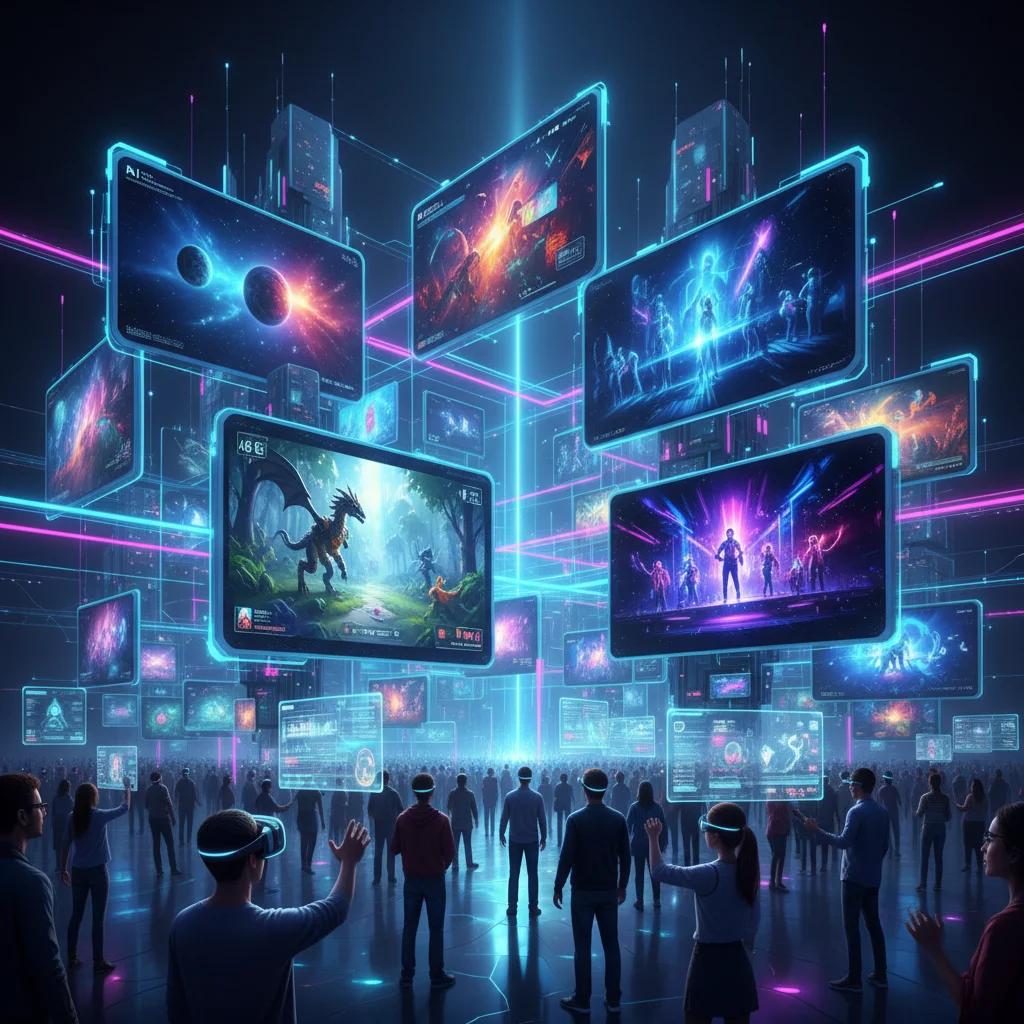
The landscape of digital entertainment future is undergoing a seismic shift, evolving at an unprecedented pace. What was once confined to television screens and gaming consoles has exploded into a multifaceted universe of immersive experiences, interactive narratives, and personalized content. As we look ahead to the next 12 months, the trends point towards an even more dynamic and engaging environment, driven by technological advancements and changing consumer expectations. This article will delve deep into the exciting developments shaping the digital entertainment future, exploring the new platforms, innovative experiences, and underlying technologies that are set to redefine how we consume and interact with media.
The Rise of Hyper-Personalized Streaming and Content Curation
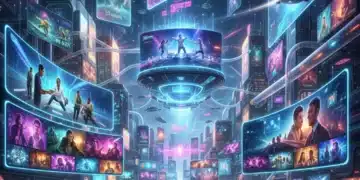
Gone are the days of passive content consumption. The digital entertainment future is all about personalization. Streaming platforms are no longer just repositories of films and series; they are becoming sophisticated ecosystems that understand individual preferences with remarkable accuracy. Expect to see even more advanced algorithms that not only recommend content based on past viewing but also anticipate future interests, cross-referencing data from social media, gaming habits, and even smart home devices (with appropriate privacy considerations, of course). This hyper-personalization will manifest in several ways:
- Dynamic Content Feeds: Beyond simple ‘recommended for you’ rows, platforms will offer dynamic feeds that adapt in real-time, highlighting content relevant to your current mood, time of day, or even recent news events.
- Interactive Storytelling: While choose-your-own-adventure narratives have existed, the next wave will be more seamless and integrated, allowing viewers to subtly influence plotlines or character development within traditional-looking films and series.
- Micro-Genre Specialization: The proliferation of niche content will continue, with platforms catering to increasingly specific tastes, moving beyond broad genres to micro-genres like ‘Nordic Noir with strong female leads’ or ‘sci-fi comedies set in dystopian futures.’
- AI-Generated Summaries and Previews: AI will be instrumental in generating personalized summaries, trailers, and even short-form content snippets designed to hook viewers based on their known preferences, optimizing discovery in an overcrowded market.
This push for personalization isn’t just about convenience; it’s about maximizing engagement and retention. In a world with an overwhelming amount of content, the ability to cut through the noise and deliver precisely what a user wants, when they want it, is the ultimate competitive advantage for platforms shaping the digital entertainment future.
Immersive Experiences: Virtual Reality, Augmented Reality, and the Metaverse
Perhaps no area embodies the digital entertainment future more than immersive technologies. Virtual Reality (VR) and Augmented Reality (AR) are maturing rapidly, moving beyond niche gaming applications to mainstream entertainment. The concept of the metaverse, a persistent, interconnected virtual world, is also gaining traction, promising entirely new ways to socialize, play, and experience content.
Virtual Reality: Beyond the Headset
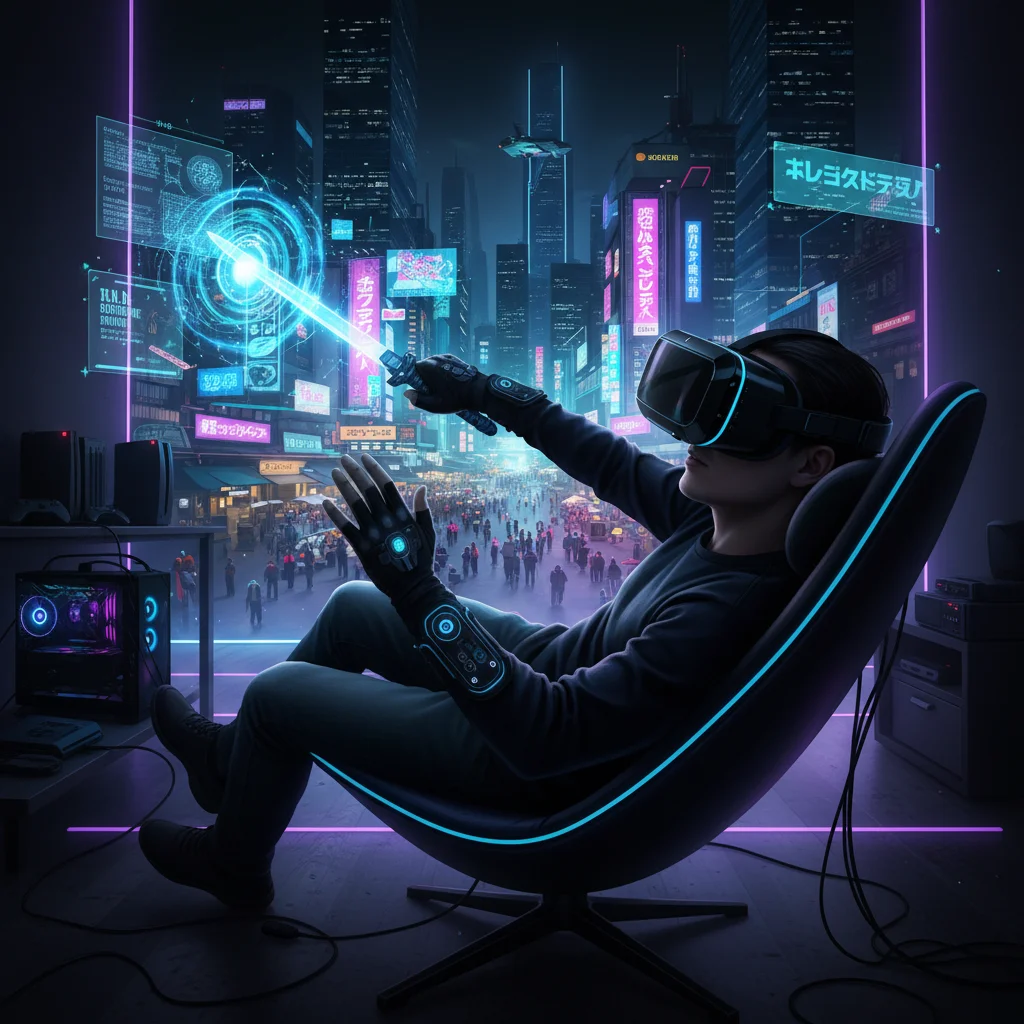
VR is no longer just about clunky headsets and motion sickness. Newer generations of VR devices are lighter, more comfortable, and offer significantly improved visual fidelity and reduced latency. The next 12 months will see:
- Mainstream VR Gaming: With more powerful standalone headsets and a growing library of high-quality titles, VR gaming will attract a broader audience, offering unparalleled immersion. Expect more social VR games and competitive eSports.
- VR Concerts and Live Events: Virtual concerts, festivals, and sporting events will become more commonplace and sophisticated, offering unique camera angles, interactive elements, and social spaces for attendees to engage with each other.
- Interactive VR Narratives: Storytelling in VR will evolve, allowing users to not just watch a story unfold but to actively participate in it, making choices that impact the narrative and exploring detailed virtual environments.
- Fitness and Wellness in VR: Gamified fitness applications and meditative VR experiences will continue to grow, blending entertainment with personal well-being.
Augmented Reality: Blending Digital and Physical
AR, which overlays digital information onto the real world, has even greater potential for everyday integration. While VR transports you, AR enhances your existing reality. Over the next year, we can anticipate:
- AR-Enhanced Live Events: Imagine attending a concert where digital effects appear on stage, visible only through your AR glasses, or a sports game where real-time player stats and replays are projected onto your field of vision.
- Interactive Advertising and Shopping: AR will make advertising more engaging, allowing consumers to virtually try on clothes, place furniture in their homes, or interact with product demonstrations in their physical space.
- Educational and Experiential AR: Museums, historical sites, and educational institutions will increasingly use AR to bring exhibits to life, offering interactive overlays and contextual information.
- Mobile AR Evolution: Smartphone-based AR experiences will become more sophisticated, offering richer graphics and more precise tracking, paving the way for everyday AR applications.
The Expanding Metaverse: A New Frontier for Digital Entertainment
The metaverse, while still in its nascent stages, represents a bold vision for the digital entertainment future—a persistent, interconnected digital world where users can interact as avatars, create content, play games, attend events, and even conduct commerce. Key developments will include:
- Interoperability: Efforts to make metaverse platforms more interoperable, allowing digital assets and avatars to move between different virtual spaces, will intensify.
- User-Generated Content (UGC): The metaverse thrives on UGC. Expect more accessible tools for users to create their own experiences, games, and digital items, fostering a vibrant creator economy.
- Brand Presence: Major brands will continue to establish their presence in the metaverse, hosting virtual stores, brand experiences, and marketing campaigns to engage with new demographics.
- Social and Collaborative Experiences: The metaverse will serve as a hub for social interaction, offering new ways for friends and communities to gather, play, and co-create, blurring the lines between online and offline social lives.
AI’s Transformative Role in Content Creation and Consumption
Artificial Intelligence (AI) is not just a tool; it’s a co-creator and a curator in the digital entertainment future. Its influence spans from the genesis of ideas to the final delivery and personalization of content.
AI in Content Creation: The Creative Partner
AI is rapidly becoming an invaluable asset for artists, writers, musicians, and developers:
- Scriptwriting and Story Generation: AI can assist in generating plot outlines, character dialogues, and even full scripts, serving as a creative sparring partner for writers. It can analyze vast datasets of successful narratives to identify compelling story structures.
- Visual and Audio Generation: From generating realistic CGI elements for films to composing background music and creating voiceovers, AI tools are streamlining production processes and opening new creative avenues for the digital entertainment future.
- Game Development: AI can design level layouts, create realistic NPC behaviors, and even generate entire game worlds, significantly reducing development times and costs.
- Personalized Content Adaptation: AI can dynamically adjust content (e.g., difficulty in games, pacing in interactive stories) based on individual user performance and preferences, making experiences more engaging.

AI in Content Curation and Discovery: The Intelligent Guide
Beyond creation, AI enhances how we find and consume content:
- Advanced Recommendation Engines: As mentioned, AI-powered recommendations will become even more sophisticated, understanding nuanced preferences and predicting what users will love before they even know it.
- Sentiment Analysis: AI can analyze audience reactions (e.g., social media comments, reviews) to provide creators with real-time feedback, helping them refine content and understand audience engagement.
- Automated Content Summarization: For busy consumers, AI can generate concise summaries of long-form content, allowing for quick information absorption or decision-making on what to watch next.
- Accessibility Enhancements: AI is improving accessibility by generating accurate captions, audio descriptions, and even translating content in real-time, making entertainment more inclusive.
Gaming: Evolution into Social Hubs and Interactive Storytelling
Gaming has long been a cornerstone of digital entertainment future, but its evolution in the coming year is set to transcend traditional boundaries. It’s no longer just about playing; it’s about living, socializing, and creating within virtual worlds.
Cloud Gaming and Accessibility
Cloud gaming services will continue to mature, reducing the need for expensive hardware and making high-fidelity gaming accessible across a wider range of devices, from smart TVs to smartphones. This democratizes access and expands the potential audience for complex games.
Gaming as a Social Platform
Games like Fortnite, Roblox, and Minecraft have already demonstrated the power of gaming as a social hub. This trend will intensify, with games offering:
- Integrated Social Features: Enhanced voice chat, in-game communities, and seamless friend-finding functionalities will make games feel more like virtual meeting places.
- Persistent Worlds: More games will adopt persistent world models, where player actions have lasting impacts and communities can build and evolve over time.
- Cross-Platform Play: The ability for players on different devices and consoles to play together will become standard, fostering larger and more diverse communities.
Interactive Narratives and Player Agency
The line between games and interactive cinema will blur further. Expect more games with branching storylines, meaningful player choices, and narratives that adapt dynamically to individual playstyles. AI will play a crucial role in creating believable non-player characters (NPCs) with complex behaviors and dialogue, enhancing immersion.
Creator Economy and Decentralization: Empowering the Individual
The digital entertainment future is increasingly being shaped by individual creators. The creator economy, fueled by platforms like YouTube, Twitch, TikTok, and Patreon, is booming, and new technologies are set to empower creators even further.
NFTs and Digital Ownership
While the initial hype around NFTs has settled, their underlying technology (blockchain) offers new paradigms for digital ownership and monetization. Expect to see more practical applications in digital entertainment:
- Fan Engagement: NFTs can provide exclusive access to content, behind-the-scenes material, or even voting rights on creative decisions, fostering deeper fan connections.
- Digital Collectibles: In-game items, digital art, and unique experiences can be tokenized, allowing creators to monetize their work and fans to own verifiable digital assets.
- Royalty Systems: Blockchain can automate royalty payments to creators and rights holders, ensuring fair compensation across various platforms and secondary markets.
Decentralized Platforms
The concept of decentralized entertainment platforms, built on blockchain technology, aims to give creators more control over their content, data, and monetization. These platforms could offer:
- Direct Creator-Fan Relationships: Reducing intermediaries, allowing creators to interact and transact directly with their audience.
- Transparent Monetization: Clearer and more equitable revenue sharing models, potentially giving creators a larger share of earnings.
- Censorship Resistance: A more resilient infrastructure against arbitrary content removal or platform de-platforming.
Convergence of Technologies: The Seamless Entertainment Ecosystem
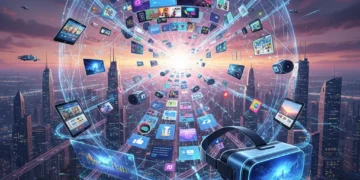
The most significant aspect of the digital entertainment future is not just the emergence of individual technologies but their convergence into a seamless, interconnected ecosystem. Think of it as a fluid transition between different forms of entertainment, driven by user intent rather than platform limitations.
- Cross-Platform Continuity: Start watching a movie on your smart TV, switch to your tablet for a quick break, and then continue on your VR headset for an immersive scene, all without missing a beat.
- Integrated Experiences: A live concert might have an AR overlay for venue attendees, a VR experience for remote viewers, and interactive elements accessible via a mobile app for everyone.
- Smart Home Integration: Your smart home devices could anticipate your entertainment needs, adjusting lighting, sound, and even temperature to create the perfect viewing or gaming environment.
- AI-Driven Personal Assistants: Voice-activated AI will become central to navigating this complex ecosystem, allowing users to effortlessly discover, launch, and control their entertainment experiences with natural language commands.
This convergence aims to remove friction, making access to entertainment effortless and intuitive, further embedding digital experiences into our daily lives.
Challenges and Ethical Considerations in the Digital Entertainment Future
While the digital entertainment future promises incredible advancements, it also presents significant challenges and ethical considerations that must be addressed.
Data Privacy and Security
As platforms gather more data to personalize experiences, ensuring user privacy and data security becomes paramount. Robust regulations and transparent data handling practices will be crucial to maintain trust.
Digital Divide and Accessibility
The rapid advancement of technology risks widening the digital divide, leaving behind those without access to high-speed internet, expensive hardware, or the necessary digital literacy. Efforts to make these new experiences more accessible and affordable are vital.
Ethical AI and Content Moderation
The increasing role of AI in content creation raises questions about authorship, copyright, and potential biases embedded in AI models. Furthermore, effective content moderation in vast, immersive digital spaces like the metaverse will be a complex challenge.
Mental Well-being and Digital Addiction
As digital entertainment becomes more immersive and engaging, concerns about screen time, digital addiction, and its impact on mental health will grow. Platforms and creators have a responsibility to design experiences that promote healthy engagement.
Conclusion: A Glimpse into Tomorrow’s Entertainment
The next 12 months promise to be a pivotal period for the digital entertainment future. From hyper-personalized streaming and deeply immersive VR/AR experiences to the pervasive influence of AI and the rise of the creator economy, the ways we engage with content are becoming richer, more interactive, and more interconnected than ever before. While challenges such as privacy, accessibility, and ethical AI remain, the trajectory is clear: digital entertainment is moving towards a future where experiences are tailored, boundaries are blurred, and imagination is the only limit. Get ready to explore a world of entertainment that is truly personalized, participatory, and profoundly engaging.