Future of US Education: Top 3 Tech Integrations by 2026
The Future of US Education: Top 3 Tech Integrations Expected to Impact 80% of K-12 Classrooms by 2026 (RECENT UPDATES)
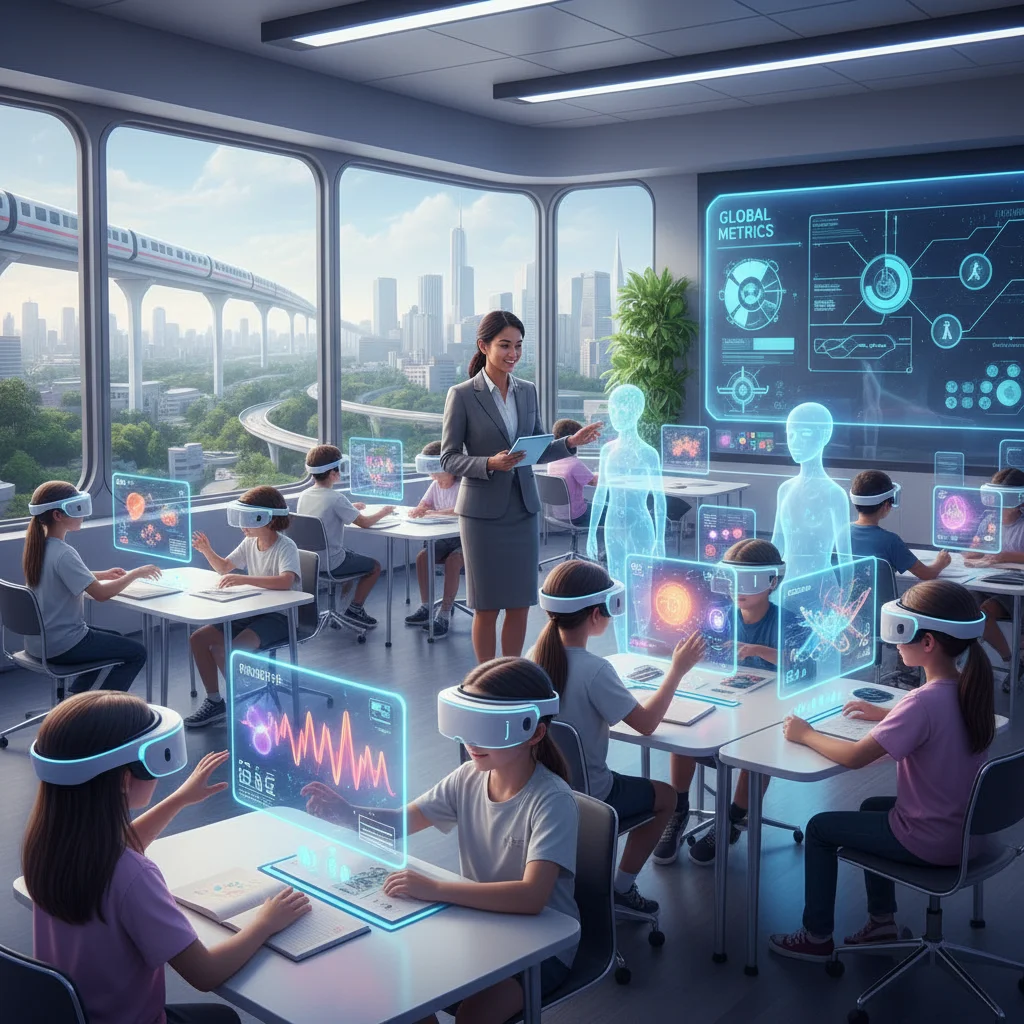
The landscape of education is in a constant state of evolution, driven by societal needs, pedagogical advancements, and, perhaps most significantly, technological innovation. In the United States, K-12 education is on the cusp of a profound transformation, with recent updates indicating that by 2026, an astounding 80% of classrooms are expected to see the deep integration of specific technological advancements. This isn’t merely about adding computers to classrooms; it’s about fundamentally reshaping how students learn, how teachers teach, and how educational outcomes are measured and improved. The acceleration of digital transformation, partly spurred by recent global events, has pushed educational institutions to adopt and adapt at an unprecedented pace. From personalized learning pathways to immersive virtual experiences, the future classroom promises to be more dynamic, inclusive, and effective than ever before. This article delves into the three most impactful tech integrations that are poised to redefine K-12 education in the US, exploring their potential, challenges, and the exciting prospects they hold for the next generation of learners.
The imperative for this rapid adoption of technology stems from several factors. Firstly, the digital native generation of students expects and thrives in environments rich with interactive and immediate feedback mechanisms. Secondly, the need to address diverse learning styles and paces more effectively has become paramount. Traditional one-size-fits-all models are increasingly recognized as insufficient. Thirdly, the global competitiveness landscape demands that students are equipped with 21st-century skills, many of which are inherently digital. Therefore, the strategic integration of advanced technologies is not a luxury but a necessity for the future success of US education. Our focus will be on the three pillars of this coming revolution: Artificial Intelligence (AI) for personalized learning and administrative efficiency, Augmented Reality (AR) and Virtual Reality (VR) for immersive and experiential learning, and advanced data analytics coupled with adaptive learning platforms to create truly tailored educational journeys. Each of these technologies brings a unique set of capabilities that, when combined, promise a synergistic effect on learning outcomes and pedagogical practices. Understanding these shifts is crucial for educators, policymakers, parents, and students alike, as we navigate this exciting new chapter in educational history.
1. Artificial Intelligence (AI): The Personalized Learning Revolution
Artificial Intelligence (AI) is arguably the most transformative technology making inroads into K-12 education, setting the stage for a truly personalized learning revolution. By 2026, its influence is expected to be pervasive, impacting everything from instructional delivery to administrative tasks. The core promise of AI in education lies in its ability to adapt to individual student needs, offering customized learning paths that were previously unattainable at scale. Imagine a system that understands a student’s strengths, weaknesses, learning pace, and preferred learning style, then dynamically adjusts content, exercises, and feedback to optimize their engagement and comprehension. This is the power of AI-driven personalized learning.
Adaptive Learning Platforms and Intelligent Tutoring Systems
At the forefront of AI integration are adaptive learning platforms and intelligent tutoring systems. These sophisticated tools use algorithms to analyze student performance data in real-time, identifying areas where a student is struggling or excelling. Based on this analysis, the system can recommend supplementary materials, provide targeted practice problems, or accelerate a student to more advanced topics. For example, an AI tutor might notice a student consistently makes errors in algebraic equations involving fractions; it could then generate a series of interactive lessons and practice problems specifically designed to address that gap, complete with step-by-step explanations and immediate feedback. This level of individualized attention mimics the benefits of a one-on-one tutor but can be scaled to an entire classroom or school district, making high-quality, tailored instruction accessible to many more students.
Moreover, AI can help students develop critical thinking and problem-solving skills by presenting complex scenarios and guiding them through the process of inquiry and discovery. These systems are not merely digital textbooks; they are interactive learning companions that foster deeper understanding and retention. The impact on student engagement is profound, as learners are no longer passive recipients of information but active participants in their educational journey, receiving relevant and timely support that keeps them motivated and on track. This shift from a standardized, uniform approach to a highly individualized one holds immense potential for closing achievement gaps and fostering a love for learning.
Automating Administrative Tasks and Data Analytics
Beyond direct instruction, AI is also poised to significantly streamline administrative tasks for educators, freeing up valuable time that can be redirected towards direct student interaction and pedagogical development. AI can assist with grading objective assignments, providing automated feedback on essays (focusing on grammar, structure, and clarity, while teachers still assess content and critical thinking), and even generating reports on student progress. This automation reduces the burden of repetitive tasks, allowing teachers to focus on the more nuanced and human-centric aspects of their profession, such as mentorship, emotional support, and fostering classroom community.
Furthermore, AI-powered data analytics tools can aggregate and interpret vast amounts of student performance data, offering educators and administrators actionable insights. These insights can help identify trends, predict potential learning difficulties, and inform instructional strategies at both individual and systemic levels. For instance, an AI system could flag a group of students consistently struggling with a particular concept across different subjects, prompting educators to intervene early with targeted support. This proactive approach to student support, driven by intelligent data analysis, represents a significant leap forward in educational effectiveness. The ability to quickly identify and address learning challenges before they become entrenched is a game-changer for student success and overall school improvement. The ethical implications of data privacy and algorithmic bias must, of course, be carefully considered and managed as these systems become more prevalent, ensuring equitable and secure implementation.
2. Augmented Reality (AR) and Virtual Reality (VR): Immersive Learning Experiences
The second major tech integration set to transform K-12 education is the widespread adoption of Augmented Reality (AR) and Virtual Reality (VR). These immersive technologies move beyond traditional two-dimensional learning by placing students directly into interactive, three-dimensional environments. By 2026, AR/VR is expected to transcend niche applications and become a mainstream pedagogical tool, offering unparalleled opportunities for experiential learning that was once limited by budget, safety, or logistical constraints.
Bringing Abstract Concepts to Life
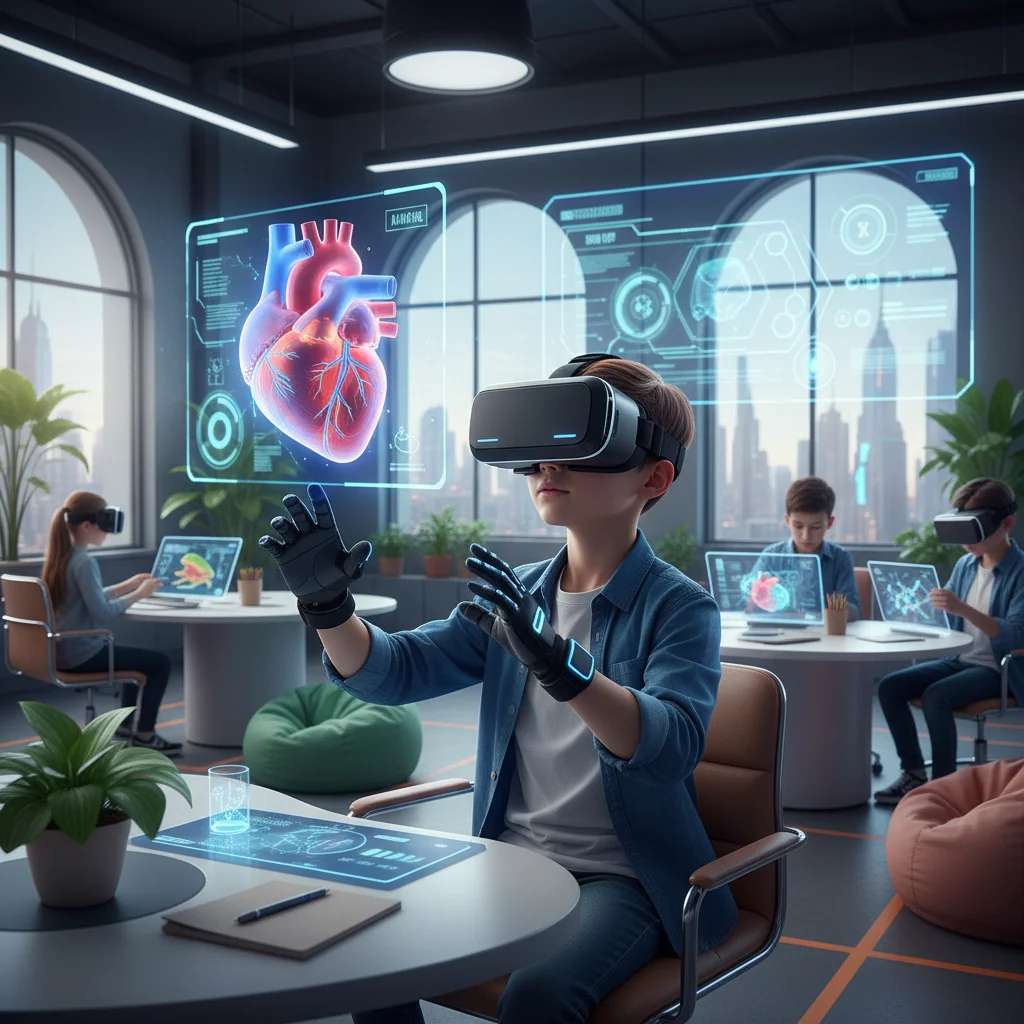
AR and VR excel at making abstract and complex concepts tangible and understandable. Imagine a biology class where students don VR headsets to embark on a virtual tour inside a human cell, observing organelles in action and understanding their functions firsthand. Or a history lesson where students can walk through ancient Rome, interacting with historical figures and witnessing pivotal events as if they were there. In science, students can conduct virtual experiments that would be too dangerous, expensive, or time-consuming in a traditional lab setting, allowing them to explore hypotheses and observe outcomes in a safe, controlled digital environment. This hands-on, immersive approach significantly enhances comprehension and retention, transforming passive learning into active exploration.
AR, in particular, has the potential to overlay digital information onto the real world. Students could use tablets or smartphones to scan a textbook page and see 3D models pop up, or point their device at a historical landmark to access interactive information about its past. This allows for a blended learning experience, where the physical classroom or environment is enhanced with digital content, making learning more dynamic and engaging. The ability to visualize and interact with complex models, from molecular structures to architectural designs, bridges the gap between theoretical knowledge and practical understanding, preparing students for real-world applications of their learning.
Virtual Field Trips and Skill Development
One of the most exciting applications of AR/VR is the democratization of experiences through virtual field trips. Schools in underserved areas, or those with limited travel budgets, can now provide students with access to museums, historical sites, natural wonders, and even other countries without leaving the classroom. This levels the playing field, ensuring all students have opportunities to explore and learn from diverse environments. A class could virtually visit the Great Barrier Reef to study marine biology, or tour the Louvre Museum to analyze art history, fostering a global perspective and enriching their cultural understanding.
Beyond exploration, AR/VR is also proving invaluable for skill development. Vocational training, for instance, can utilize VR simulations to teach complex procedures in fields like mechanics, healthcare, or engineering, allowing students to practice repeatedly without risk or the need for expensive equipment. This hands-on practice in a virtual environment builds confidence and competence, preparing students for future careers. The kinesthetic and visual nature of AR/VR learning caters to a wide range of learning styles, making education more accessible and effective for all students, including those who may struggle with traditional text-based instruction. The immersive nature of these technologies also helps to reduce distractions and maintain student focus, creating a more engaging and productive learning environment.
3. Advanced Data Analytics and Adaptive Learning Platforms: Tailoring the Educational Journey
While AI provides the intelligence and AR/VR offer immersive experiences, the third critical integration for K-12 education by 2026 involves advanced data analytics coupled with sophisticated adaptive learning platforms. This synergistic combination is about more than just personalizing content; it’s about fundamentally tailoring the entire educational journey for each student, ensuring optimal progression and mastery. This approach moves beyond simple feedback loops to create dynamic, responsive learning environments that evolve with the student.
Holistic Student Profiles and Predictive Analytics
Advanced data analytics enables the creation of holistic student profiles, compiling data from various sources: classroom performance, online activities, assessment results, engagement levels, and even socio-emotional indicators. This comprehensive data gives educators an unprecedented understanding of each student’s learning trajectory, strengths, weaknesses, and potential barriers to success. Unlike traditional static reports, these profiles are dynamic, constantly updating to reflect the student’s current state.
With this rich data, predictive analytics can come into play. Machine learning algorithms can analyze patterns in student data to identify early warning signs of disengagement, academic struggle, or even potential dropout risks. For example, if a student’s engagement with an online learning module suddenly drops, or their performance on formative assessments begins to decline, the system can alert the teacher. This allows for timely interventions, whether it’s providing additional support, adjusting the curriculum, or connecting the student with counseling resources, before minor issues escalate into major problems. This proactive approach to student support is a monumental shift from reactive measures, ensuring that every student has the best possible chance to succeed.
Dynamic Curriculum Adjustment and Skill-Based Progression
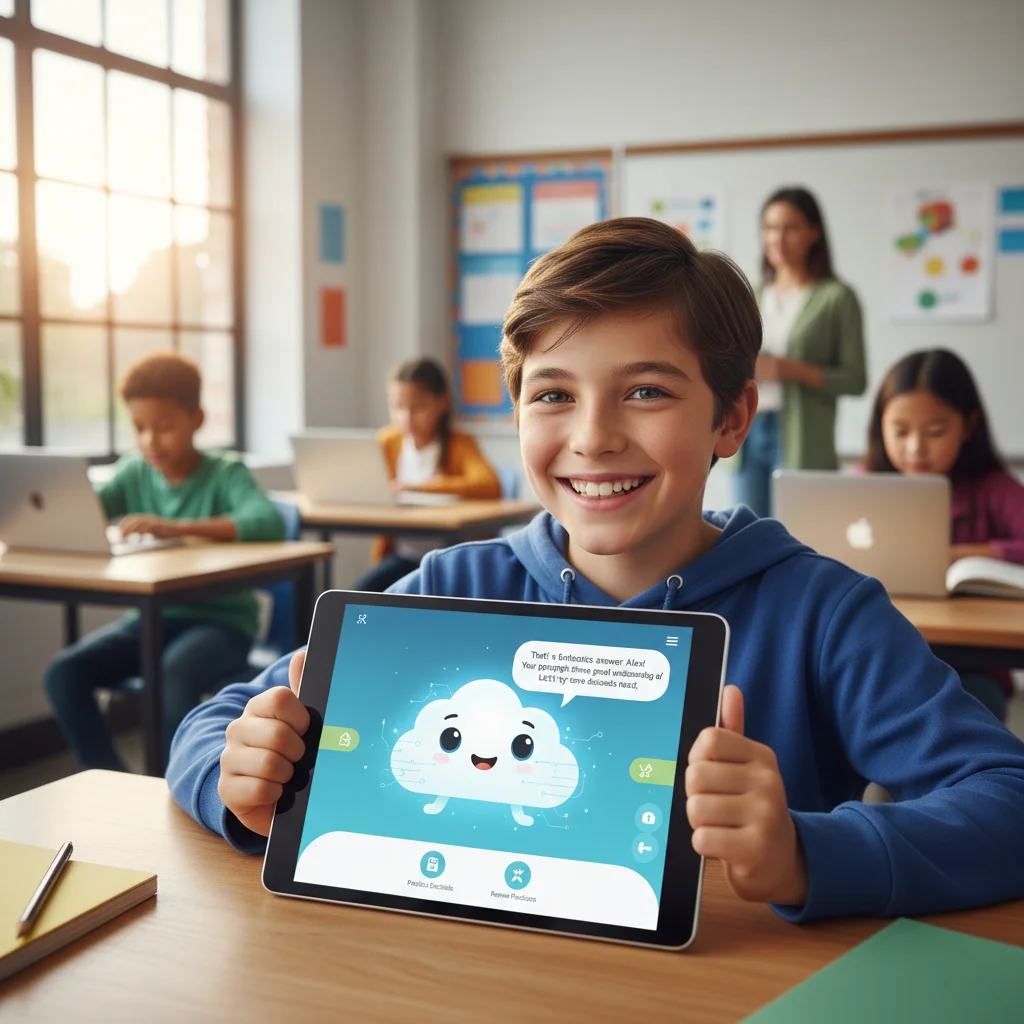
Adaptive learning platforms, powered by these advanced analytics, can then dynamically adjust the curriculum and instructional strategies in real-time. Instead of a fixed sequence of topics, students progress based on demonstrated mastery of skills and concepts. If a student quickly grasps a concept, the platform can automatically present more challenging material or offer opportunities for deeper exploration. Conversely, if a student struggles, the platform can provide alternative explanations, different formats of content (e.g., video instead of text), or additional practice exercises until mastery is achieved. This ensures that no student is left behind, nor is any student held back by the pace of the class.
This skill-based progression encourages a mastery-oriented approach to learning, where the emphasis is on deep understanding rather than simply moving through content. Furthermore, these platforms can recommend resources and activities tailored to a student’s individual interests, making learning more relevant and motivating. For instance, a student interested in environmental science might be presented with math problems framed around ecological data, or writing prompts related to climate change. This level of customization fosters intrinsic motivation and helps students connect their learning to real-world applications and their personal passions. The teacher’s role evolves from a dispenser of information to a facilitator, mentor, and guide, leveraging the platform’s insights to provide targeted support and enrich the learning experience. This powerful combination of data-driven insights and flexible learning pathways promises to unlock the full potential of every K-12 student in the US.
Challenges and Ethical Considerations in Education Tech Integration
While the promise of these tech integrations for K-12 education is immense, their widespread adoption by 2026 will not be without challenges. Addressing these hurdles proactively is crucial for successful and equitable implementation across all US classrooms. One of the primary concerns revolves around equitable access. The digital divide, which often mirrors socioeconomic disparities, means that not all students or schools have equal access to the necessary hardware, reliable internet connectivity, or the technical support required to leverage these technologies effectively. Ensuring that these advanced tools do not exacerbate existing inequalities will require significant investment in infrastructure, devices, and digital literacy programs, particularly in rural and low-income areas.
Another significant challenge is teacher training and professional development. Integrating AI, AR/VR, and advanced adaptive platforms isn’t just about providing the tools; it’s about re-skilling educators to effectively utilize them, understand the data they generate, and adapt their pedagogical practices. Teachers will need ongoing support, training, and opportunities to experiment with these technologies to feel confident and competent in their use. Resistance to change, fear of technology, or a lack of understanding regarding its benefits can hinder adoption, making comprehensive and sustained professional development a critical component of any successful integration strategy. This also includes training on how to seamlessly blend traditional teaching methods with new technological approaches to create a truly hybrid learning environment.
Ethical considerations are paramount, especially concerning data privacy and algorithmic bias. AI systems collect vast amounts of student data, raising questions about who owns this data, how it is stored, and how it is used. Robust data security protocols and clear privacy policies are essential to protect student information. Furthermore, AI algorithms, if not carefully designed and monitored, can perpetuate or even amplify existing biases, potentially leading to inequitable outcomes for certain student populations. Developers and educators must work collaboratively to ensure that AI tools are fair, transparent, and promote equity rather than hinder it. The responsible and ethical deployment of these technologies must be a guiding principle throughout the integration process to build trust and ensure positive impacts for all learners.
The cost of implementing and maintaining these advanced technologies is also a substantial factor. Schools and districts will require significant funding for hardware, software licenses, infrastructure upgrades, and ongoing support. Creative funding models, public-private partnerships, and federal initiatives will be necessary to make these integrations feasible on a broad scale. Finally, the rapid pace of technological change means that educational institutions must develop agile strategies for continuous evaluation and adaptation, ensuring that the chosen technologies remain relevant and effective in an ever-evolving digital landscape. Overcoming these challenges will require a concerted effort from all stakeholders, but the potential rewards for student learning and future readiness are well worth the investment.
The Broader Impact on Teaching and Learning Methodologies
The integration of AI, AR/VR, and advanced adaptive learning platforms will not merely add tools to the existing educational framework; it will fundamentally reshape teaching and learning methodologies. This shift moves away from a teacher-centric, content-delivery model towards a student-centered, facilitated learning environment. Teachers will transition from being primary disseminators of information to becoming guides, coaches, and mentors who leverage technology to personalize instruction and foster deeper engagement. This evolution in the teacher’s role is perhaps one of the most significant long-term impacts of education tech integration.
One key shift will be the increased emphasis on project-based learning and inquiry-based approaches. With AI handling much of the foundational knowledge delivery and assessment, teachers can dedicate more time to facilitating collaborative projects, encouraging critical thinking, and nurturing creativity. AR/VR can provide immersive contexts for these projects, allowing students to design virtual solutions to real-world problems or explore complex scenarios in a safe, interactive space. This approach fosters essential 21st-century skills such as collaboration, communication, critical thinking, and creativity, which are vital for success in a rapidly changing world.
Furthermore, these technologies will enable a more flexible and fluid learning environment. The traditional classroom walls will become less rigid, with learning extending beyond school hours and into diverse settings. Students can access personalized content and support anytime, anywhere, fostering a culture of lifelong learning. This flexibility also supports differentiated instruction more effectively, allowing teachers to cater to a wider range of learning needs within a single classroom. The focus will shift from standardized outcomes to individual growth and mastery, celebrating each student’s unique learning journey.
The role of assessment will also transform. Instead of relying solely on summative tests, adaptive platforms and AI tools can provide continuous, formative assessment, offering real-time insights into student understanding. This allows for immediate feedback and adjustments, making assessment an integral part of the learning process rather than a separate event. This continuous feedback loop helps students understand their progress, identify areas for improvement, and take ownership of their learning. The goal is to create a dynamic, responsive ecosystem where technology empowers both educators and learners to achieve their full potential, paving the way for a truly future-ready generation.
Conclusion: A Glimpse into the K-12 Classroom of 2026
The transformative power of technology is undeniable, and its impact on K-12 education in the US is set to be profound by 2026. The deep integration of Artificial Intelligence (AI) for personalized learning, Augmented Reality (AR) and Virtual Reality (VR) for immersive experiences, and advanced data analytics with adaptive learning platforms will redefine what it means to learn and teach. These aren’t isolated innovations but interconnected pillars forming a new educational paradigm focused on individual student needs, engagement, and mastery. We anticipate a future where 80% of classrooms are dynamic, responsive, and tailored to unlock the full potential of every learner.
The journey towards this future, however, requires careful navigation of challenges related to equitable access, comprehensive teacher training, and robust ethical frameworks for data privacy and algorithmic fairness. Successfully addressing these issues will be paramount to ensuring that the benefits of these technological advancements are realized by all students, regardless of their background or location. The classroom of 2026 will be a place where learning is not just about absorbing facts, but about active exploration, critical thinking, and creative problem-solving, all facilitated by intelligent and immersive technologies. Educators will evolve into expert facilitators, guiding students through personalized pathways, while students become empowered, self-directed learners equipped with the skills and knowledge needed to thrive in an increasingly complex world. The future of US education is bright, promising a more engaging, effective, and equitable learning experience for the next generation.