The Future of Remote Work: 4 Emerging Technologies Reshaping Your Digital Day by 2026
The Future of Remote Work: How 4 Emerging Technologies Will Reshape Your Digital Day by 2026
The landscape of work has undergone a seismic shift in recent years, with remote work transitioning from a niche perk to a mainstream operational model. As we look towards 2026, the evolution of remote work is poised for another transformative leap, driven by the relentless march of technological innovation. The Future Remote Work isn’t just about working from home; it’s about redefining how we interact, collaborate, and create value across geographical boundaries. This article delves into four pivotal emerging technologies that will fundamentally reshape your digital day by 2026: Virtual Reality (VR), Augmented Reality (AR), Artificial Intelligence (AI), and 5G connectivity.
The global pandemic accelerated the adoption of remote work, forcing businesses to adapt rapidly. What emerged was a new understanding of productivity, flexibility, and the importance of digital infrastructure. Now, with established remote and hybrid models, the focus shifts to optimization and enhancement. How can we make remote work not just feasible, but genuinely more engaging, efficient, and equitable than traditional office environments? The answer lies in harnessing the power of these cutting-edge technologies.
By 2026, the lines between physical and digital workspaces will blur further, creating a more integrated and immersive experience for remote employees. This isn’t science fiction; it’s the inevitable progression of digital transformation. Understanding these trends now is crucial for individuals and organizations alike to prepare for, and thrive in, the evolving world of work. Let’s explore how these four technologies will drive the next wave of remote work innovation.
1. Virtual Reality (VR): Immersive Collaboration and Training
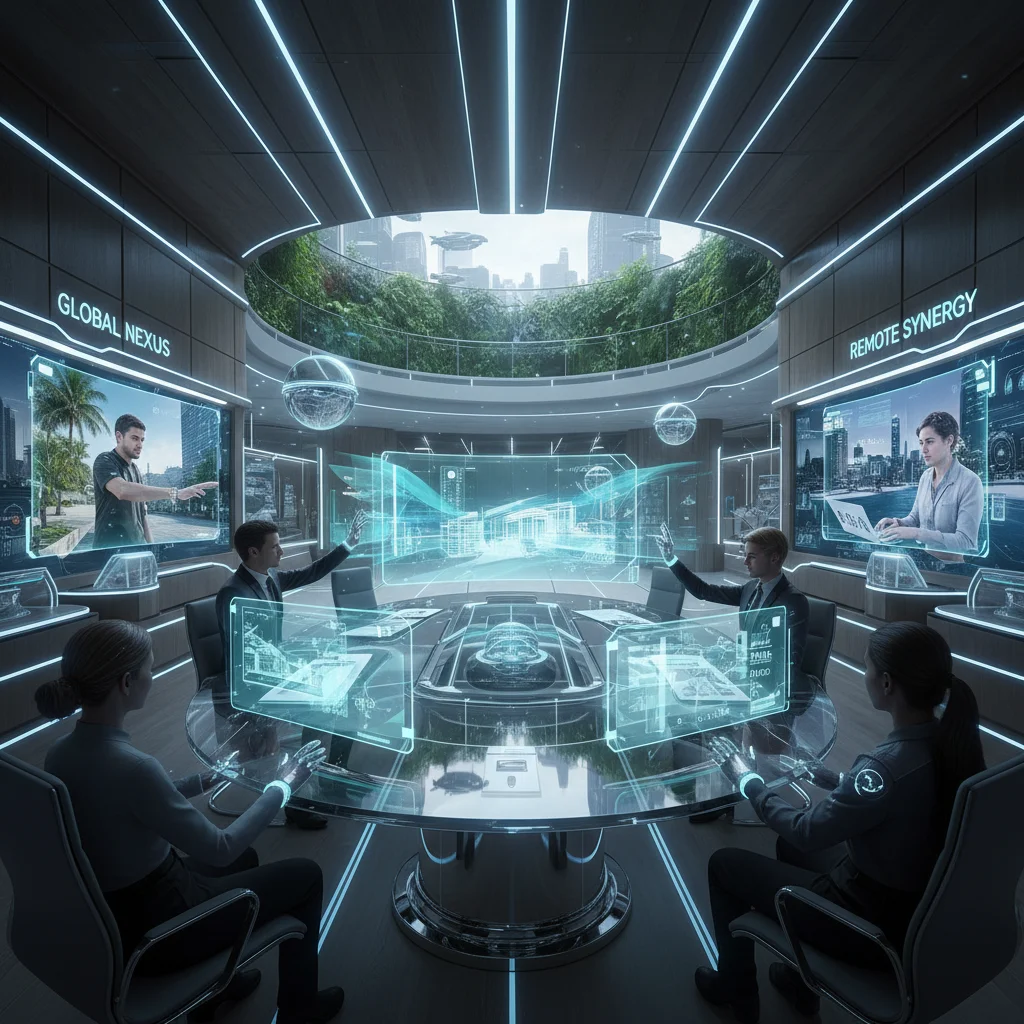
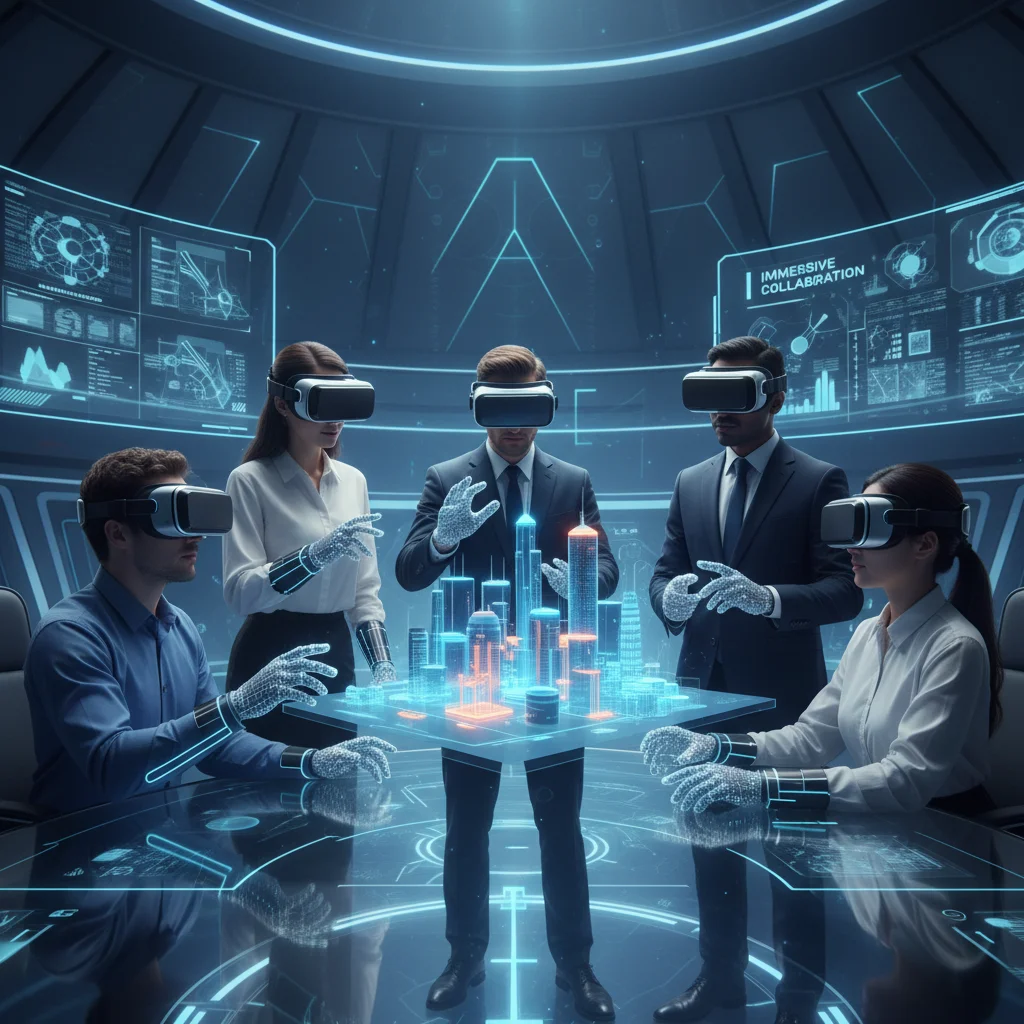
Imagine stepping into a virtual meeting room where you can interact with colleagues from around the globe as if you were physically present, share 3D models, and even take a virtual tour of a new product design. This is the promise of Virtual Reality for the Future Remote Work. While VR has long been associated with gaming, its enterprise applications are rapidly expanding, particularly in the realm of remote collaboration and training.
By 2026, VR headsets will become more affordable, comfortable, and sophisticated, offering higher resolution displays and more intuitive interaction methods. This accessibility will pave the way for widespread adoption in professional settings. Instead of flat video calls, teams will convene in persistent virtual spaces, fostering a sense of presence and connection that traditional communication tools often lack. These virtual environments can be customized to mimic real-world offices, project sites, or even entirely new creative spaces, breaking down the psychological barriers of distance.
Enhanced Collaboration Beyond 2D Screens
Current remote collaboration tools, while effective, often fall short in replicating the spontaneity and nuances of in-person interactions. VR bridges this gap by providing a shared, immersive environment. Teams can brainstorm on virtual whiteboards, manipulate 3D objects together, and conduct design reviews in a way that feels natural and intuitive. This is particularly beneficial for industries like architecture, engineering, manufacturing, and product design, where visualizing and interacting with physical objects is paramount. A designer in New York could collaborate with an engineer in Tokyo on a prototype, both ‘holding’ and examining the same virtual object in real-time.
Revolutionizing Remote Training and Onboarding
Beyond meetings, VR will revolutionize remote training and onboarding. Instead of static presentations or video tutorials, new employees can experience simulated work environments, practice complex procedures, and receive hands-on training in a safe and controlled virtual space. For example, a new factory worker could learn to operate machinery without any risk, or a surgeon could practice intricate procedures before performing them on a patient. This immersive learning accelerates skill acquisition, reduces training costs, and ensures a higher level of preparedness for remote teams.
The ability to simulate real-world scenarios with high fidelity makes VR an invaluable tool for continuous professional development. Companies can offer immersive workshops, leadership training, and technical skill development, all accessible from anywhere in the world. This democratizes access to high-quality training, empowering a more skilled and adaptable remote workforce.
The integration of haptic feedback devices will further enhance the VR experience, allowing users to ‘feel’ virtual objects, adding another layer of realism and engagement to remote interactions. As VR technology matures, it will transform the very nature of remote work, making it more engaging, productive, and human-centric.
2. Augmented Reality (AR): Bridging the Digital and Physical Divide
While VR transports you to an entirely new digital world, Augmented Reality overlays digital information onto your real-world environment. This distinction makes AR particularly powerful for practical, context-aware applications in the Future Remote Work. By 2026, AR smart glasses and mobile AR applications will become common tools, enabling remote workers to interact with digital content in a more intuitive and integrated manner within their physical surroundings.
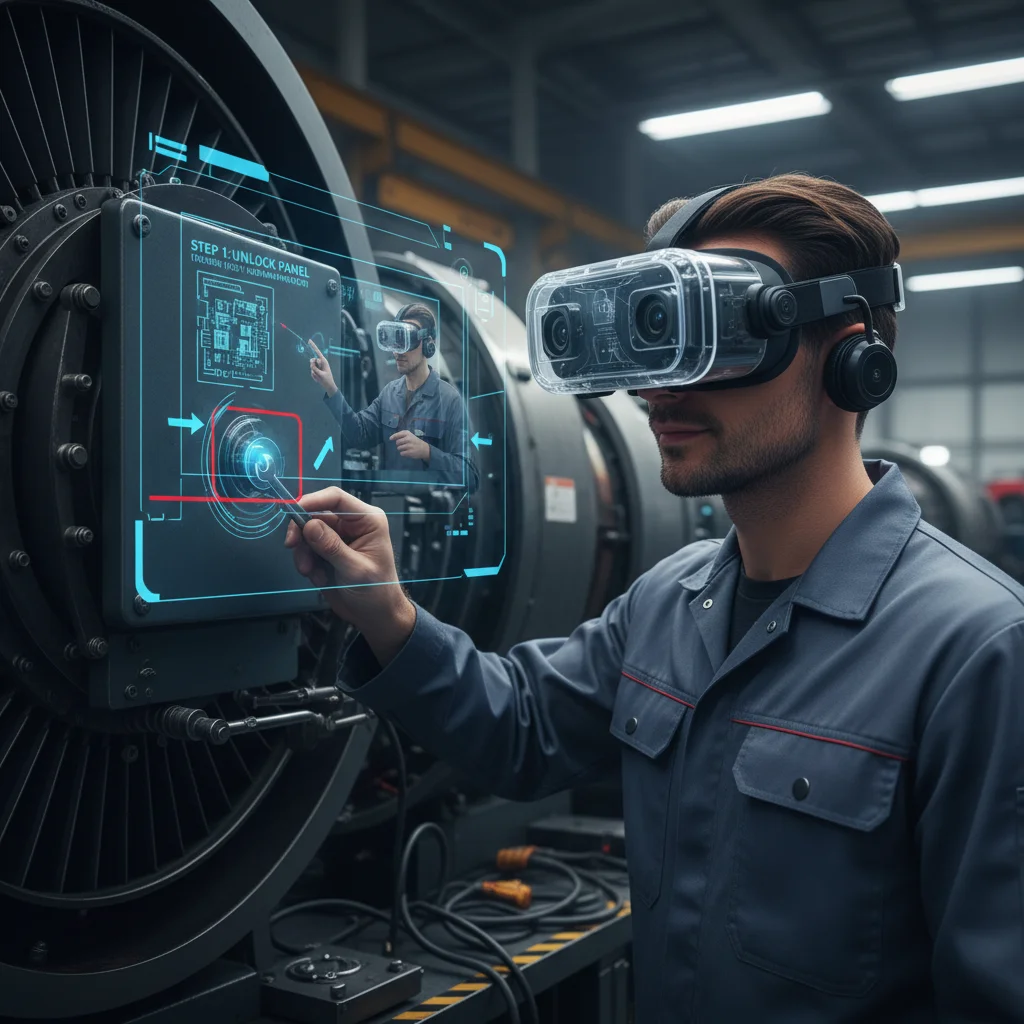
The applications of AR in remote work are vast, ranging from enhanced field service and maintenance to interactive presentations and personalized learning experiences. Imagine a technician performing a complex repair on a piece of machinery. With AR glasses, they could see digital instructions, diagrams, and real-time data overlaid directly onto the equipment, guided by an expert located thousands of miles away. This significantly reduces downtime, improves accuracy, and minimizes the need for on-site travel.
Remote Assistance and Expert Guidance
One of the most immediate and impactful uses of AR in remote work is for remote assistance. Field service technicians, healthcare professionals, and even home-based employees can receive real-time visual guidance from experts. An expert can draw annotations, highlight specific components, or provide step-by-step instructions that appear directly in the user’s field of view. This minimizes errors, accelerates problem-solving, and democratizes expertise, making specialized knowledge accessible regardless of location.
For example, a remote IT support specialist could guide an employee through a hardware troubleshooting process by highlighting the exact ports or buttons to press on their computer, all through a live AR feed. This level of precision and visual communication surpasses what is possible with traditional video calls alone.
Interactive Data Visualization and Training
AR also offers new ways to visualize data and deliver training. Instead of looking at a spreadsheet on a screen, a remote analyst could see dynamic charts and graphs projected into their physical workspace, allowing for a more immersive and contextual understanding of complex information. Similarly, training modules can leverage AR to provide interactive overlays on real-world objects, making learning more engaging and practical.
For industries requiring hands-on experience, AR can simulate dangerous or expensive scenarios without risk. Trainees can practice assembly lines, medical procedures, or equipment operation with digital guidance appearing directly on their real-world actions. This blended reality approach enhances learning retention and practical skill development, crucial for maintaining a highly competent remote workforce.
As AR technology becomes more sophisticated, it will integrate seamlessly into our daily routines, offering a new dimension of interaction with our digital tools and physical environment. This convergence will make remote work more efficient, precise, and less constrained by physical limitations.
3. Artificial Intelligence (AI): The Smart Assistant for Remote Productivity
Artificial Intelligence is not a single technology but a broad field encompassing machine learning, natural language processing, computer vision, and more. For the Future Remote Work by 2026, AI will act as an omnipresent smart assistant, optimizing workflows, automating mundane tasks, and providing intelligent insights to boost productivity and well-being for remote employees.
AI’s impact will be felt across various facets of the remote workday, from scheduling and communication to data analysis and personalized support. It will free up human capital from repetitive tasks, allowing teams to focus on higher-value, creative, and strategic work. This shift will redefine job roles and empower remote workers to achieve more with less effort.
Automating Repetitive Tasks and Optimizing Workflows
AI-powered tools will increasingly automate administrative and repetitive tasks that often consume a significant portion of a remote worker’s day. This includes intelligent email management, automated report generation, scheduling assistance that considers time zones and availability, and even proactive identification of potential project roadblocks. For example, AI can analyze meeting transcripts to generate summaries and action items, saving valuable time and ensuring accountability.
Beyond individual tasks, AI will optimize entire workflows. Project management tools will leverage AI to predict timelines, allocate resources efficiently, and identify dependencies, providing remote teams with a clear roadmap and early warnings about potential delays. This predictive capability is invaluable for distributed teams managing complex projects.
Intelligent Communication and Collaboration
AI will also enhance remote communication and collaboration. Natural Language Processing (NLP) will power more sophisticated translation tools, breaking down language barriers in global teams. AI will analyze communication patterns to suggest optimal times for meetings, identify key discussion points, and even moderate virtual discussions to ensure inclusivity and engagement.
AI-driven virtual assistants will become more commonplace in the remote workspace, providing instant access to company knowledge bases, answering frequently asked questions, and even offering personalized coaching and feedback. This reduces the burden on human support staff and ensures remote employees have immediate access to the information they need.
Personalized Productivity and Well-being Insights
Perhaps one of the most transformative applications of AI for remote work is its ability to provide personalized insights into productivity and well-being. AI algorithms can analyze work patterns, identify periods of high focus, suggest optimal break times, and even detect early signs of burnout. This data, when used ethically and with employee consent, can empower individuals to manage their energy levels more effectively and maintain a healthy work-life balance.
AI can also personalize learning paths, recommending relevant training modules or resources based on an employee’s performance, goals, and interests. This continuous learning environment is crucial for keeping remote teams skilled and adaptable in a rapidly changing world.
4. 5G Connectivity: The Backbone of Ubiquitous Remote Work
While VR, AR, and AI provide the capabilities, 5G connectivity is the essential infrastructure that will enable these technologies to truly flourish and redefine the Future Remote Work. By 2026, 5G will be far more widespread, offering unprecedented speeds, ultra-low latency, and massive capacity, making seamless, high-performance remote work a reality in virtually any location.
The limitations of current internet infrastructure often hinder the adoption of advanced remote work technologies. High-resolution VR experiences, real-time AR overlays, and complex AI computations all require robust and reliable connectivity. 5G addresses these challenges head-on, providing the necessary bandwidth and responsiveness to power the next generation of digital workspaces.
Unlocking True Mobility and Edge Computing
The high speeds and low latency of 5G will unlock true mobility for remote workers. Imagine conducting a high-fidelity VR meeting from a park, or performing a critical AR-guided repair from a remote construction site, all without interruption or lag. 5G makes this possible by ensuring that even data-intensive applications run smoothly, regardless of location.
Furthermore, 5G’s capabilities will accelerate the adoption of edge computing. This means that data processing can occur closer to the source (e.g., on a local device or a nearby server), rather than relying solely on distant cloud data centers. For remote work, this translates to faster response times for AI applications, more fluid AR experiences, and reduced strain on centralized networks. Edge computing, powered by 5G, will enable a new class of real-time, context-aware remote work applications.
Reliable Connectivity for Critical Applications
For many remote roles, a stable and reliable internet connection is non-negotiable. 5G’s enhanced reliability and capacity will ensure that critical business applications, video conferencing, and cloud-based tools operate flawlessly. This reduces frustration, improves productivity, and minimizes the risk of communication breakdowns that can plague remote teams with less robust connectivity.
The massive capacity of 5G networks also means that more devices can be connected simultaneously without compromising performance. This is crucial as remote workspaces incorporate more IoT devices, smart sensors, and connected equipment, all contributing to a more intelligent and responsive work environment.
Enabling the Metaverse for Work
The concept of the metaverse, a persistent shared virtual space, is heavily reliant on advanced connectivity. 5G will be the foundational layer that allows for the creation and seamless interaction within professional metaverses. These virtual worlds could host entire digital offices, collaborative design studios, or even virtual factories, all accessible and highly responsive thanks to 5G’s capabilities. This will be a significant step towards a fully immersive and interconnected Future Remote Work experience.
The Converging Impact: A Holistic Remote Work Ecosystem
While each of these four technologies—VR, AR, AI, and 5G—offers significant advancements individually, their true transformative power lies in their convergence. By 2026, they will intertwine to create a holistic remote work ecosystem that is more intelligent, immersive, and efficient than anything we’ve experienced before.
Imagine this scenario in the Future Remote Work: You start your day by donning lightweight AR glasses (enabled by 5G). Your AI assistant projects your personalized dashboard onto your desk, showing your schedule, priority tasks, and relevant news updates. You then join a VR meeting with colleagues scattered across continents. In this virtual space, you collaborate on a new product design, manipulating a 3D model that an AI algorithm helped optimize overnight. If a critical issue arises on a factory floor, an AR overlay guides a remote technician through the repair, with an AI bot providing real-time diagnostics and an expert supervising via a shared AR feed. All of this is powered by ubiquitous, low-latency 5G connectivity, ensuring smooth, uninterrupted experiences.
This integrated approach will lead to:
- Enhanced Productivity: AI automates mundane tasks, VR/AR improve collaboration, and 5G ensures seamless access to tools and data.
- Greater Flexibility and Accessibility: Work can truly happen anywhere, breaking down geographical barriers and enabling more inclusive hiring practices.
- More Engaging Experiences: Immersive VR/AR environments combat feelings of isolation and foster stronger team cohesion.
- Reduced Costs and Environmental Impact: Less business travel and optimized resource utilization contribute to both financial savings and sustainability.
- Continuous Learning and Development: AI-powered personalized training and immersive VR/AR simulations keep skills sharp and relevant.
The challenges, of course, will involve addressing issues of digital equity, ensuring data privacy and security in these new environments, and managing the ethical implications of advanced AI. However, the benefits of these technologies for the future of remote work are too significant to ignore.
Preparing for the Remote Work Revolution
For individuals, staying abreast of these technological advancements is crucial. Experimenting with early versions of VR/AR, understanding how AI tools can enhance your productivity, and leveraging 5G-enabled devices will provide a significant advantage. Developing skills in digital collaboration, virtual communication, and data literacy will be paramount.
For organizations, preparation involves strategic investment in infrastructure, pilot programs for emerging technologies, and a commitment to fostering a culture of innovation and adaptability. It also means rethinking traditional HR policies, cybersecurity strategies, and employee engagement models for a truly distributed workforce. The businesses that embrace these technologies proactively will be the ones that attract and retain top talent, drive innovation, and maintain a competitive edge in the rapidly evolving global economy.
The Future Remote Work isn’t just about adapting to a new normal; it’s about actively shaping a better, more connected, and more productive way of working. By 2026, VR, AR, AI, and 5G will not merely be tools, but integral components of our daily digital lives, transforming how we work, learn, and interact in profound and exciting ways.
Conclusion: A Glimpse into the Digital Workday of 2026
The trajectory of remote work is undeniably upward, and the innovations unfolding in VR, AR, AI, and 5G are the primary drivers of its next phase. By 2026, the digital workday will be characterized by immersive collaboration, intelligent assistance, and ubiquitous connectivity, fundamentally altering how we perceive and execute our professional responsibilities.
These technologies promise to dismantle geographical barriers even further, making global talent pools more accessible and fostering diverse, distributed teams. They will empower individuals with tools that enhance creativity, automate monotony, and provide personalized support, leading to a more engaged and satisfied workforce. Companies that strategically integrate these emerging technologies will not only optimize operational efficiency but also cultivate a dynamic, future-proof work environment.
Embracing the Future Remote Work means preparing for a world where your office might be a virtual reality space, your colleagues appear as holograms, and your tasks are intelligently managed by AI. It’s a future where productivity is not measured by physical presence, but by seamless digital interaction and innovation. The journey has already begun, and by 2026, these advancements will have cemented their place as essential elements of our professional lives, making remote work not just an alternative, but often, the superior way to work.