AI’s Creative Impact: A 2026 Look at American Artistic Expression
The Impact of AI on Creativity: A 2026 Look at American Artistic Expression
The year is 2026, and the landscape of American artistic expression is more dynamic, complex, and exhilarating than ever before. At the heart of this transformation lies Artificial Intelligence (AI). What once seemed like a distant sci-fi concept has firmly embedded itself into the creative process, reshaping how artists conceive, produce, and present their work. This deep dive explores the profound AI Creativity Impact on American art, music, literature, and design, examining the opportunities it presents, the challenges it poses, and the ethical considerations that have emerged.
The integration of AI into creative fields isn’t merely about automation; it’s about augmentation. AI tools are not replacing human artists but rather acting as powerful collaborators, extending the boundaries of imagination and technical execution. From generating novel visual styles to composing intricate musical pieces, AI is pushing the envelope, forcing us to redefine what creativity means in the 21st century.
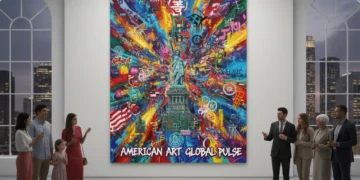
American artists, renowned for their innovation and willingness to embrace new technologies, have been at the forefront of this AI revolution. They are experimenting with algorithms that can mimic artistic styles, generate entirely new forms, and even respond to audience sentiment in real-time. This exploration is leading to a renaissance of sorts, where traditional artistic boundaries are blurring, giving rise to hybrid forms of expression that were unimaginable just a decade ago.
AI as a Muse: Redefining Artistic Inspiration
For centuries, the muse has been depicted as an external force inspiring artists. In 2026, AI has taken on a new role as a digital muse, offering artists unprecedented avenues for inspiration. Generative Adversarial Networks (GANs) and other advanced AI models can now produce endless variations of images, sounds, and texts based on vast datasets. This capability allows artists to explore concepts, aesthetics, and themes that might otherwise remain undiscovered.
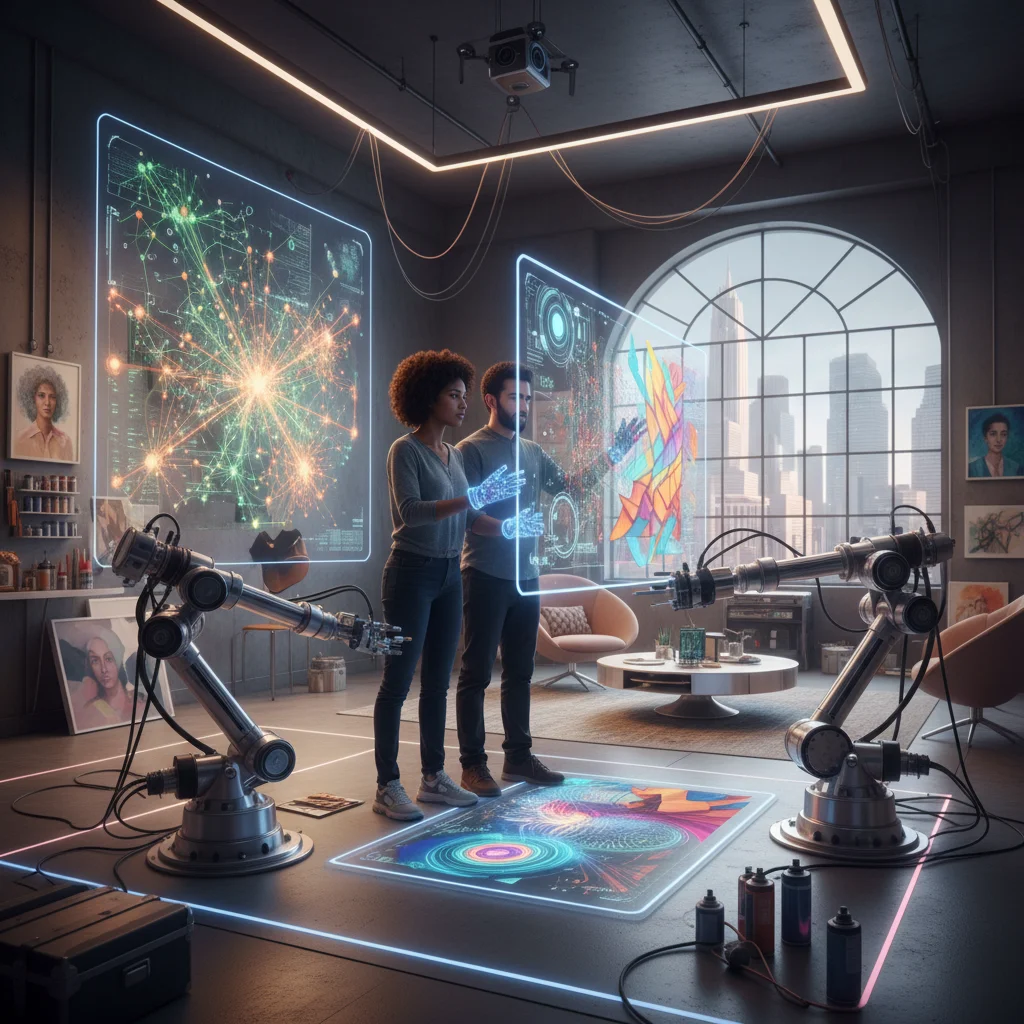
Consider the visual arts. Painters and digital artists are using AI to generate preliminary sketches, experiment with color palettes, or even create entire compositions that serve as starting points for their human-led refinements. An artist might feed an AI a collection of their previous works, and the AI can then generate new pieces in a similar style but with novel elements, effectively expanding the artist’s own creative vocabulary. This isn’t about AI creating the final masterpiece, but about AI acting as a brainstorming partner, a tireless assistant that can quickly iterate through countless ideas.
The AI Creativity Impact extends to conceptual art as well. Artists are using AI to explore complex data sets, turning abstract information into tangible artistic experiences. Imagine an AI analyzing global climate data and translating it into a dynamic, evolving sculpture, or interpreting social media trends into a poignant, interactive digital installation. These applications challenge traditional notions of art, blurring the lines between science, technology, and pure creative expression.
Furthermore, AI-powered tools are democratizing access to complex artistic techniques. Aspiring artists, who might lack years of training in traditional mediums, can now leverage AI to achieve sophisticated results, thereby lowering the barrier to entry for creative fields. This doesn’t diminish the value of human skill but rather allows for a broader spectrum of voices to participate in the artistic dialogue. The result is a more diverse and vibrant American art scene, rich with varied perspectives and innovative approaches.
The Symphony of Algorithms: AI in Music Composition and Performance
The music industry has perhaps felt one of the most significant AI Creativity Impact shifts. In 2026, AI is not just assisting in mastering and production; it’s composing, arranging, and even performing. AI-powered music generators can create original melodies, harmonies, and rhythms in a multitude of genres, from classical to experimental electronic.
Human composers are employing AI as a compositional aid, feeding it thematic ideas or specific emotional parameters, and receiving back complex musical structures that they can then refine and personalize. This collaboration allows composers to overcome creative blocks, explore unfamiliar musical territories, and accelerate the often-laborious process of orchestration. For instance, an AI might generate counterpoints or chord progressions that a human composer might not have considered, leading to truly innovative and unexpected sonic landscapes.
Live performances are also being transformed. AI can generate dynamic background music that adapts in real-time to a performer’s improvisation or audience interaction. AI-powered virtual instruments are becoming increasingly sophisticated, offering musicians new sonic palettes and interactive experiences. Some artists are even experimenting with AI-generated vocals, creating synthetic voices that possess unique qualities and emotional ranges, challenging our perceptions of what constitutes a ‘singer.’
The ethical debate around AI-generated music is robust. Questions of authorship, copyright, and the soul of music are frequently discussed. Is a piece of music truly ‘creative’ if an algorithm generated it? Most artists and critics agree that the human element of selection, curation, and emotional intent remains paramount. AI provides the tools and possibilities, but the artistic vision and final emotional resonance still largely stem from human direction and interpretation.
Beyond traditional music, AI is fostering entirely new forms of sonic art. Sound artists are using AI to create immersive, generative soundscapes that respond to environmental data or human presence, turning public spaces into dynamic auditory experiences. This expansion of musical expression demonstrates the profound and multifaceted AI Creativity Impact on the auditory realm.

Narrative Evolution: AI in Literature and Storytelling
The literary world, traditionally seen as one of the most human-centric creative domains, is also experiencing the pervasive AI Creativity Impact. AI is not writing best-selling novels entirely on its own (yet), but it is playing an increasingly significant role in various aspects of storytelling.
Writers are utilizing AI for brainstorming plot ideas, generating character backstories, or even crafting dialogue snippets. AI language models can analyze vast libraries of literature, identify common tropes, and suggest novel narrative arcs that can surprise and engage readers. For screenwriters, AI can help in pacing, scene structuring, and even predicting audience reception based on historical data, though this remains a controversial application.
Poetry, with its inherent subjectivity and emotional depth, is also being explored by AI. While AI-generated poems often lack the nuanced emotional resonance of human-crafted works, they can offer interesting linguistic patterns, unexpected metaphors, and unique structural experiments. Some poets are using AI as a prompt generator, taking AI-created lines or stanzas and weaving them into their own human-authored pieces, creating a fascinating dialogue between machine and human poetic expression.
The rise of interactive fiction and adaptive storytelling has also been significantly boosted by AI. AI can create branching narratives that respond to reader choices, generating personalized storylines and character interactions in real-time. This opens up entirely new forms of literary engagement, where the reader becomes an active participant in shaping the narrative, experiencing a story that is uniquely tailored to their decisions.
However, the ethical considerations here are particularly acute. Questions of originality, plagiarism, and the very definition of authorship are central. If an AI generates a significant portion of a text, who owns the copyright? How do we distinguish between AI assistance and AI authorship? These are complex legal and philosophical questions that are actively being debated in literary circles and legislative bodies in 2026. Despite these challenges, the AI Creativity Impact on literature is undeniable, pushing the boundaries of narrative form and reader engagement.
Designing the Future: AI in Fashion, Architecture, and Product Design
Beyond the traditional arts, the AI Creativity Impact is profoundly felt in design disciplines. From fashion to architecture and product development, AI is streamlining processes, optimizing aesthetics, and enabling unprecedented levels of customization.
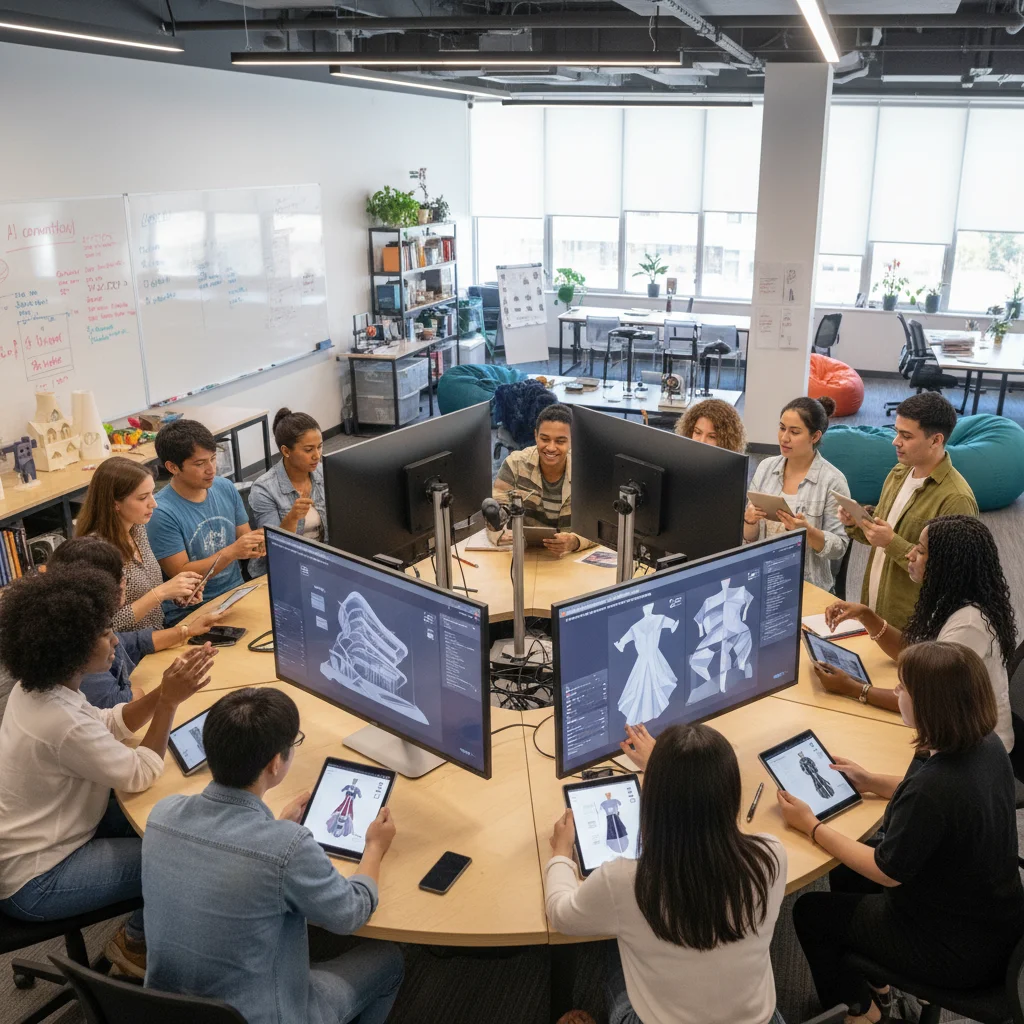
In fashion, AI can analyze current trends, predict future styles, and even generate novel garment designs. Designers are using AI to create patterns, experiment with fabric textures, and visualize how clothing will look on different body types without the need for physical prototypes. This not only speeds up the design cycle but also reduces waste and allows for highly personalized fashion lines. Imagine an AI-powered personal stylist that can design a unique outfit for you based on your body measurements, preferred styles, and even your mood, then have it 3D-printed or custom-made.
Architects are leveraging AI for generative design, where algorithms explore thousands of possible building layouts and structural forms based on specified parameters like energy efficiency, material cost, and aesthetic preferences. AI can optimize space utilization, identify structural weaknesses, and even simulate how natural light will interact with a building throughout the day. This allows architects to consider a much broader range of solutions and arrive at more innovative and sustainable designs.
Product designers are using AI to optimize ergonomics, predict user interaction, and even generate new product concepts based on market needs and manufacturing constraints. AI can analyze vast amounts of consumer data to identify unmet needs and then propose design solutions that are both functional and aesthetically pleasing. This rapid prototyping and iteration capability significantly accelerates the product development cycle, bringing innovative products to market faster.
The design fields benefit immensely from AI’s ability to handle complexity and iterate quickly. While human intuition and aesthetic judgment remain crucial, AI handles the computational heavy lifting, allowing designers to focus on creativity and conceptualization. This collaborative approach ensures that the functional and aesthetic aspects of design are harmonized effectively, leading to more efficient, beautiful, and user-centric creations across America.
Challenges and Ethical Dilemmas in AI-Driven Creativity
While the AI Creativity Impact offers immense opportunities, it also brings a host of challenges and ethical dilemmas that American society and the global creative community are grappling with in 2026.
Authenticity and Originality
One of the most pressing concerns is the question of authenticity. When an AI generates a piece of art, music, or text, how do we define its originality? Is it an original work, or merely a sophisticated pastiche of existing human creations? This debate challenges our fundamental understanding of what it means to be a ‘creator’ and whether true originality can emerge from algorithmic processes.
Copyright and Ownership
The legal framework surrounding AI-generated content is still evolving. Who owns the copyright to a painting created by an AI? Is it the programmer, the artist who trained the AI, or the AI itself? These questions have significant implications for intellectual property law and the livelihoods of human artists. Current laws, largely designed for human creators, are struggling to keep pace with the rapid advancements in AI capabilities.
Bias and Representation
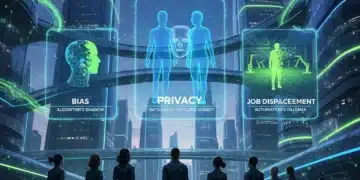
AI models are trained on vast datasets, and if these datasets contain biases (e.g., historical underrepresentation of certain groups or perpetuation of stereotypes), the AI-generated output will reflect and amplify those biases. This can lead to AI creating art or narratives that are exclusionary, stereotypical, or even harmful. Ensuring diverse and unbiased training data is a critical ethical imperative for developers and artists alike.
The Value of Human Skill
There’s a fear that AI could devalue human creative skills or even lead to job displacement in creative industries. While many argue that AI augments rather than replaces human creativity, the economic implications for artists, musicians, and writers are a significant concern. The challenge lies in finding ways for human and AI creators to coexist and collaborate, ensuring that human ingenuity remains at the forefront.
Deepfakes and Misinformation
The advanced capabilities of generative AI also raise concerns about deepfakes and the potential for creating highly realistic but entirely fabricated artistic or narrative content. This has implications for misinformation, propaganda, and the erosion of trust in visual and auditory media. Developing robust detection methods and ethical guidelines for AI usage is paramount.
Addressing these challenges requires a multi-faceted approach involving technologists, artists, ethicists, policymakers, and the public. Open dialogue, transparent AI development, and the establishment of clear ethical frameworks are essential to harness the positive AI Creativity Impact while mitigating its potential downsides.
The Future of American Artistic Expression with AI in 2026 and Beyond
Looking ahead from 2026, the trajectory of AI’s influence on American artistic expression points towards an increasingly integrated and symbiotic relationship. We are moving beyond the initial novelty of AI-generated art to a more mature phase where AI is seen as a fundamental tool in the artist’s toolkit, much like a brush, a camera, or a synthesizer.
One significant trend is the rise of personalized art experiences. AI will enable art to be tailored to individual preferences, moods, and even physiological responses. Imagine an AI-curated art exhibition that changes its presentation based on your emotional state, or a piece of music that dynamically adapts to your heart rate. This level of personalization could create deeper, more intimate connections between art and its audience.
Cross-modal creativity will also flourish. AI’s ability to translate concepts between different mediums will lead to unprecedented artistic syntheses. A poem might be instantly transformed into a visual animation, or a piece of music into a dynamic architectural design. This fluidity between art forms will foster entirely new genres and creative expressions, driven by the unique capabilities of AI.
Education in the arts will also undergo profound changes. Art schools and universities are already incorporating AI literacy into their curricula, teaching aspiring artists how to effectively collaborate with AI tools. The focus is shifting from mastering purely manual techniques to understanding how to prompt, guide, and refine AI outputs, effectively becoming ‘AI whisperers’ in their respective fields.
Furthermore, the debate around the ‘soul’ of AI-generated art will continue to evolve. As AI becomes more sophisticated, capable of generating works that evoke genuine emotion and intellectual curiosity, the line between human and machine creativity will blur even further. This will force a deeper philosophical inquiry into the nature of consciousness, emotion, and what truly constitutes artistic genius.
The AI Creativity Impact is not a static phenomenon; it is a continuously evolving dialogue between human ingenuity and technological advancement. American artists, with their historical penchant for pushing boundaries, will undoubtedly continue to lead this conversation, exploring the vast, uncharted territories of AI-enhanced creativity. The future promises a vibrant, challenging, and endlessly fascinating artistic landscape where the collaboration between humans and machines unlocks new dimensions of expression.
Conclusion: Embracing the AI Renaissance
In 2026, the AI Creativity Impact on American artistic expression is undeniable and transformative. AI has moved beyond being a mere tool to becoming a co-creator, a muse, and a catalyst for innovation across visual arts, music, literature, and design. While it presents complex ethical questions regarding authenticity, ownership, and bias, its potential to democratize creativity, foster new artistic forms, and enhance human imagination is immense.
The American creative landscape is currently in a state of renaissance, driven by the dynamic interplay between human vision and artificial intelligence. Artists are learning to navigate this new paradigm, leveraging AI’s capabilities to explore uncharted creative territories and redefine the very essence of artistic production. The ongoing dialogue between technology and humanity will continue to shape the future of art, leading to a richer, more diverse, and profoundly innovative era of creative expression for generations to come. Embracing this AI-driven evolution, with a keen eye on its ethical dimensions, is crucial for preserving and advancing the vibrant spirit of American creativity.