U.S. Manufacturing Resurgence: 3 Key Economic Shifts Driving a 15% Increase in Domestic Production by 2026
The landscape of global economics is constantly shifting, and one of the most compelling narratives emerging is the significant resurgence of U.S. manufacturing. After decades of offshoring and a perceived decline, American industry is not just recovering; it’s thriving, with projections indicating a remarkable 15% increase in domestic production by 2026. This isn’t merely a cyclical upturn; it’s a fundamental transformation driven by strategic economic shifts. Understanding these shifts is crucial for businesses, policymakers, and anyone interested in the future of the American economy. This article will delve into the three pivotal economic forces propelling this US Manufacturing Growth: the pervasive trend of reshoring, robust government incentives and strategic investments, and the transformative power of technological advancements and automation.
The Reshoring Revolution: Bringing Production Back Home
One of the most impactful drivers of US Manufacturing Growth is the accelerating trend of reshoring. For years, companies sought lower labor costs and less stringent regulations abroad, leading to a significant exodus of manufacturing jobs and capabilities. However, a confluence of factors has reversed this tide, making domestic production increasingly attractive. The COVID-19 pandemic served as a stark wake-up call, exposing the fragility of global supply chains and the risks associated with over-reliance on foreign suppliers. Disruptions in shipping, factory closures overseas, and geopolitical tensions highlighted the critical need for supply chain resilience and proximity to end markets.
Beyond crisis-driven responses, the economics of reshoring are becoming more favorable. While labor costs in some Asian countries remain lower, the total cost of ownership (TCO) often paints a different picture. TCO calculations factor in hidden costs such as shipping expenses, tariffs, inventory holding costs, intellectual property risks, quality control issues, and the complexities of managing geographically dispersed operations. When these factors are considered, the perceived cost advantage of offshoring diminishes significantly. Furthermore, rising wages in traditionally low-cost manufacturing hubs are narrowing the gap, making the U.S. a more competitive option for certain industries.
Companies are also recognizing the strategic advantages of having production closer to their research and development teams and their customer base. This proximity fosters greater collaboration, accelerates innovation cycles, and allows for quicker responses to market demands and changes in consumer preferences. The ability to pivot rapidly, customize products, and maintain tighter quality control has become a competitive differentiator. Industries like semiconductors, pharmaceuticals, and critical minerals, which are deemed vital for national security and economic stability, are at the forefront of this reshoring wave, demonstrating a clear commitment to strengthening domestic capabilities and ensuring a reliable supply of essential goods. This shift is not just about bringing back old jobs; it’s about creating new, often higher-skilled, jobs that contribute to a more robust and resilient American economy, directly fueling US Manufacturing Growth.
Government Incentives and Strategic Investments: Fueling the Future
The U.S. government has recognized the strategic importance of a strong domestic manufacturing base and has responded with a suite of powerful incentives and significant investments designed to catalyze US Manufacturing Growth. These policies are not merely reactive; they are proactive measures aimed at re-establishing American leadership in key industries and fostering long-term economic stability. Legislation such as the CHIPS and Science Act and the Inflation Reduction Act are prime examples of this commitment, pouring billions of dollars into critical sectors and creating a more attractive environment for domestic production.
The CHIPS and Science Act, for instance, is a landmark piece of legislation allocating over $50 billion to boost domestic semiconductor research, development, and manufacturing. This investment is crucial for national security and economic competitiveness, as semiconductors are the foundational technology for virtually all modern electronics. By incentivizing companies like Intel, Samsung, and TSMC to build new fabrication plants (fabs) in the U.S., the act aims to reduce reliance on foreign supply chains and ensure a stable supply of these vital components. These investments not only create thousands of construction jobs but also high-tech manufacturing positions, driving innovation and securing America’s technological future.
Similarly, the Inflation Reduction Act includes substantial provisions to support clean energy manufacturing and advanced industries. Tax credits for electric vehicle production, renewable energy components, and energy-efficient technologies are designed to accelerate the transition to a green economy while simultaneously creating domestic manufacturing jobs. These incentives make it economically advantageous for companies to invest in U.S.-based production facilities, thereby bolstering the entire manufacturing ecosystem. Beyond direct financial incentives, the government is also investing in workforce development programs, apprenticeships, and vocational training to ensure a skilled labor pool is available to meet the demands of a growing and technologically advanced manufacturing sector. This holistic approach, combining financial incentives with human capital development, is a powerful engine for sustained US Manufacturing Growth.
Technological Advancements and Automation: The Smart Factory Revolution
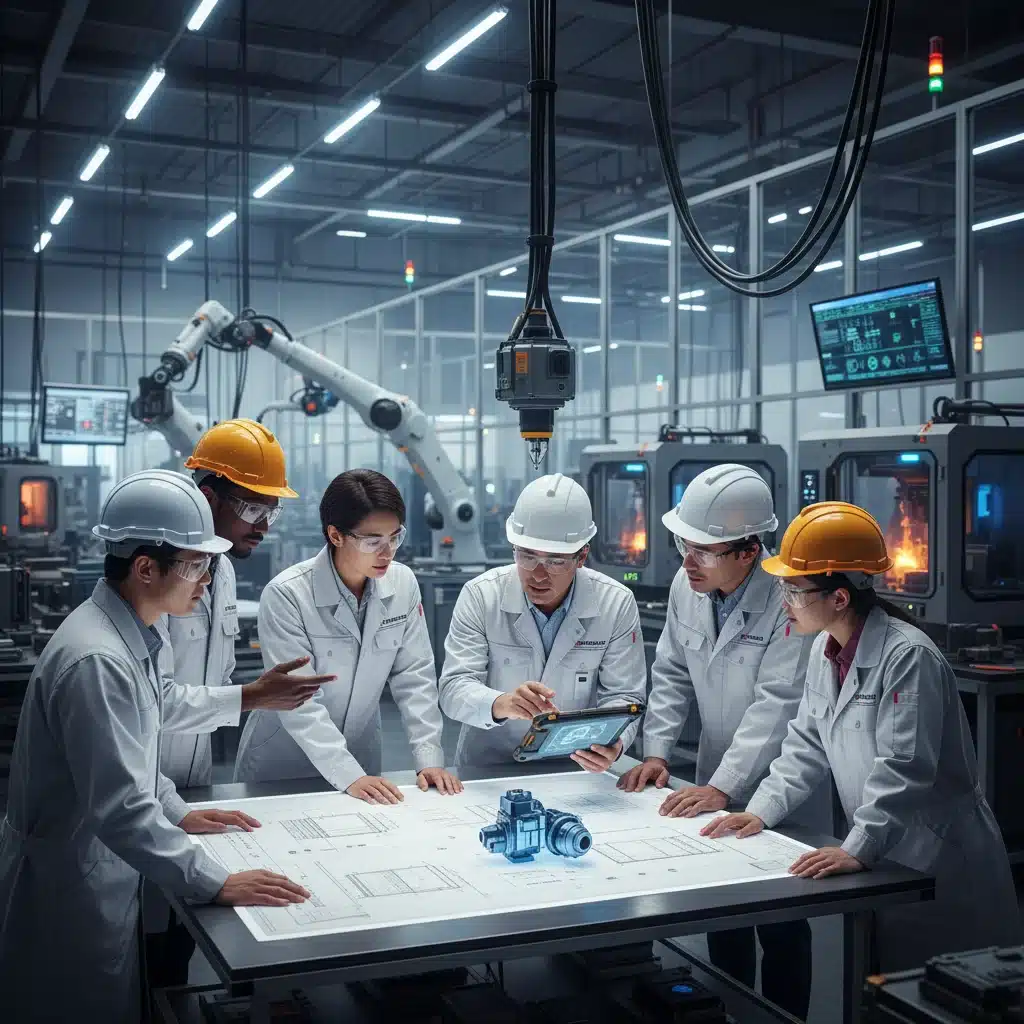
The third, and arguably most transformative, economic shift driving US Manufacturing Growth is the rapid adoption of advanced technologies and automation. This isn’t the automation of old, characterized by repetitive, low-skill tasks. Instead, it’s a new era of ‘smart factories’ powered by Industry 4.0 principles, where connectivity, data analytics, artificial intelligence (AI), robotics, and the Internet of Things (IoT) are integrated to create highly efficient, flexible, and responsive production systems.
Robotics, once a niche application, is now becoming ubiquitous across various manufacturing sectors. Collaborative robots (cobots) work alongside human operators, handling strenuous or repetitive tasks, thereby improving safety, precision, and productivity. Advanced robotics can execute complex operations with unparalleled accuracy, reducing waste and increasing output. This allows human workers to focus on higher-value tasks such as programming, maintenance, quality assurance, and creative problem-solving, elevating the overall skill level of the manufacturing workforce.
The integration of AI and machine learning into manufacturing processes is revolutionizing everything from predictive maintenance to quality control and supply chain optimization. AI algorithms can analyze vast datasets from sensors on factory floors, identifying potential equipment failures before they occur, thus minimizing downtime and maximizing operational efficiency. In quality control, AI-powered vision systems can detect flaws with greater speed and accuracy than human inspectors, ensuring consistent product quality. Furthermore, AI is enabling more sophisticated demand forecasting and inventory management, leading to leaner operations and reduced costs.
The Internet of Things (IoT) connects machines, sensors, and systems across the factory floor, generating real-time data that provides unprecedented insights into production processes. This connectivity allows for continuous monitoring, remote diagnostics, and agile adjustments to production schedules. Cloud computing provides the infrastructure to store and process this massive amount of data, making it accessible for analytics and decision-making. Additive manufacturing, or 3D printing, is also playing a significant role, enabling rapid prototyping, customized production, and the creation of complex geometries that were previously impossible, further enhancing the agility and innovation capabilities of U.S. manufacturers. These technological leaps are not just improving efficiency; they are fundamentally reshaping what is possible in manufacturing, making the U.S. a leader in advanced production techniques and driving substantial US Manufacturing Growth.
Addressing Challenges and Sustaining Momentum
While the trajectory for US Manufacturing Growth is undeniably positive, it’s important to acknowledge and address potential challenges to sustain this momentum. One primary concern is the skilled labor gap. As manufacturing becomes more technologically advanced, the demand for workers with STEM skills – science, technology, engineering, and mathematics – increases. Bridging this gap requires ongoing investment in education and training programs, fostering partnerships between industry and educational institutions, and promoting manufacturing careers to attract a new generation of talent. Reskilling and upskilling existing workers will also be vital to ensure they can adapt to new technologies and processes.
Another challenge lies in the capital intensity of advanced manufacturing. Investing in new factories, robotics, and AI systems requires significant capital outlays. While government incentives help, access to financing and supportive financial policies will be crucial for smaller and medium-sized manufacturers (SMMs) to participate fully in this resurgence. Ensuring a level playing field and providing resources for SMMs to adopt new technologies is essential for broad-based US Manufacturing Growth.
Energy costs and environmental regulations also present ongoing considerations. While the U.S. has abundant natural gas, fluctuations in energy prices can impact manufacturing competitiveness. Furthermore, balancing industrial growth with environmental sustainability goals requires continued innovation in clean manufacturing processes and renewable energy adoption. Addressing these challenges proactively will be key to ensuring the long-term health and competitiveness of the U.S. manufacturing sector and sustaining the impressive US Manufacturing Growth we are currently witnessing.
The Future Outlook for US Manufacturing Growth
The confluence of reshoring initiatives, supportive government policies, and groundbreaking technological advancements paints a very optimistic picture for US Manufacturing Growth. The projected 15% increase in domestic production by 2026 is not an arbitrary number but a reflection of deep-seated structural changes that are making the U.S. an increasingly attractive and competitive location for manufacturing. This resurgence goes beyond mere economic statistics; it represents a renewed commitment to innovation, resilience, and job creation within the American economy. It signifies a shift towards a more diversified and robust industrial base, less vulnerable to external shocks and more capable of driving sustainable prosperity.
As companies continue to prioritize supply chain security and efficiency, and as the U.S. continues to invest in its industrial infrastructure and workforce, the momentum for domestic production is likely to grow. The integration of advanced technologies will further enhance productivity and competitiveness, allowing American manufacturers to compete effectively on a global scale not just on cost, but on quality, innovation, and speed to market. This transformative period in U.S. manufacturing is creating exciting opportunities for businesses, driving economic development in communities across the nation, and solidifying America’s position as a global leader in advanced industrial production. The future of US Manufacturing Growth looks bright, promising a more resilient, innovative, and prosperous economic landscape for years to come.
Conclusion: A New Era of American Industry
The narrative of U.S. manufacturing is being rewritten. The combined forces of a global reassessment of supply chain risks leading to significant reshoring, substantial and strategic government investment through acts like the CHIPS and Science Act and the Inflation Reduction Act, and the revolutionary integration of advanced technologies such as AI, robotics, and IoT are creating an unprecedented era of US Manufacturing Growth. These three economic shifts are not merely incremental changes; they represent a fundamental reshaping of the industrial landscape, promising a more robust, resilient, and technologically advanced manufacturing sector.
The projected 15% increase in domestic production by 2026 is a testament to the power of these combined forces. It signals a future where American factories are not only producing more goods but are doing so with greater efficiency, higher quality, and increased innovation. While challenges related to workforce development and capital investment remain, the proactive steps being taken by both the public and private sectors indicate a strong commitment to overcoming these hurdles. The resurgence of U.S. manufacturing is more than an economic trend; it’s a strategic imperative that will strengthen the nation’s economy, enhance its security, and create a wealth of opportunities for future generations. The new era of American industry is here, and it’s built on a foundation of innovation, resilience, and sustained US Manufacturing Growth.