Reclaiming Public Discourse: New Platforms for Constructive Dialogue in 2026 America

In the year 2026, the American social and political landscape often feels like a mosaic of fractured narratives, each piece fiercely defended, rarely understood by the adjacent ones. The cacophony of online shouting matches, the deep-seated mistrust in traditional media, and the pervasive echo chambers have eroded the very foundations of what was once considered healthy public discourse. Yet, amidst this challenging environment, a glimmer of hope is emerging. Two innovative platforms are not just attempting but actively succeeding in fostering constructive public discourse, offering a much-needed antidote to the pervasive polarization that has gripped the nation.
This article delves into the transformative power of these platforms, exploring their unique methodologies, technological innovations, and the tangible impact they are having on communities across America. We will examine how they are meticulously designed to move beyond superficial exchanges, encouraging empathy, critical thinking, and a genuine search for common ground. The journey towards reclaiming meaningful dialogue is arduous, but these pioneers are demonstrating that it is far from impossible.
The Erosion of Constructive Public Discourse: A 2026 Snapshot
To truly appreciate the significance of these new platforms, it’s crucial to understand the depth of the challenge. By 2026, the digital age, while connecting us globally, has paradoxically contributed to a profound sense of isolation and division within national borders. Social media algorithms, designed to maximize engagement, inadvertently feed users content that confirms their existing biases, creating impenetrable echo chambers. These digital silos reinforce partisan identities, demonize opposing viewpoints, and make nuanced discussions nearly impossible.
Traditional media, struggling with dwindling trust and the constant pressure of a 24/7 news cycle, often sensationalizes conflicts rather than facilitating understanding. Political rhetoric has become increasingly adversarial, leaving little room for compromise or shared problem-solving. The result is a nation where citizens often talk past each other, their conversations devolving into accusations and moral posturing rather than genuine attempts at understanding or collaboration. This environment is not just unpleasant; it actively hinders progress on critical societal issues, from climate change and economic inequality to healthcare and education.
The consequences of this erosion of constructive public discourse are far-reaching. It undermines democratic processes, breeds social unrest, and prevents the collective intelligence of a diverse nation from being harnessed for the common good. It’s against this backdrop that the emergence of platforms dedicated to rebuilding this essential civic muscle becomes not just desirable, but absolutely vital for the future of American society.
Platform 1: BridgeIt – Structured Debate for Shared Understanding
One of the most promising new entrants in this space is ‘BridgeIt’. Launched in late 2025, BridgeIt isn’t just another forum; it’s a meticulously engineered ecosystem designed to facilitate constructive public discourse through structured, moderated debate. Its core philosophy is that genuine understanding begins when participants are required to articulate their positions clearly, listen actively, and acknowledge the validity of opposing viewpoints before refuting them.
How BridgeIt Works: A Deep Dive into its Mechanics
BridgeIt employs several innovative features that set it apart:
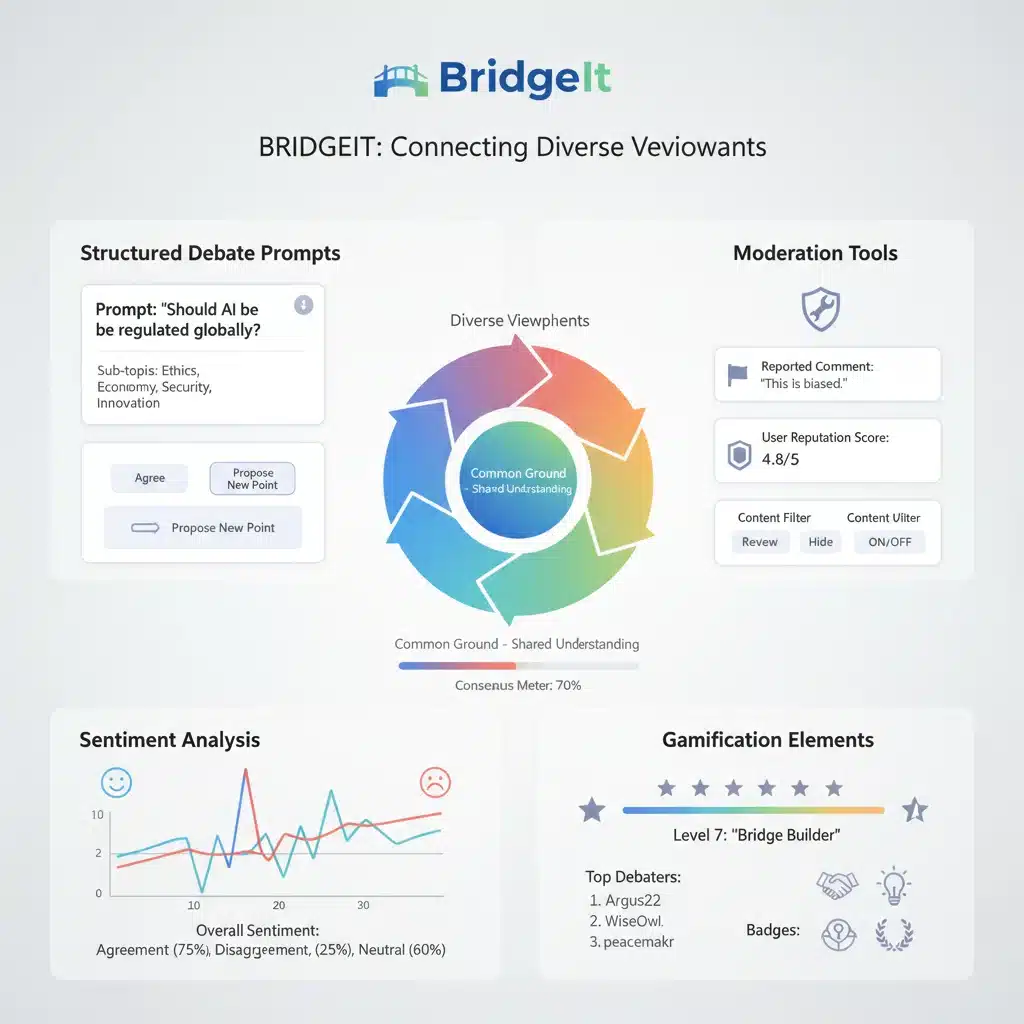
- Topic Curators and Neutral Framing: Every discussion on BridgeIt begins with a carefully curated topic, framed neutrally by a team of professional moderators and subject matter experts. This ensures that the initial premise is unbiased and encourages a wide range of perspectives.
- Argument Mapping and Visualization: Users don’t just post comments; they construct arguments using a visual argument mapping tool. This forces participants to break down their reasoning into premises, evidence, and conclusions. It also visually highlights areas of agreement and disagreement, making complex issues more digestible.
- "Acknowledge and Respond" Protocol: Before a user can post a rebuttal, they must first summarize the opposing argument to the satisfaction of the platform’s AI and, in some cases, human moderators. This "Acknowledge and Respond" protocol is a game-changer, ensuring that participants truly understand what they are arguing against, rather than simply dismissing it.
- Sentiment Analysis and Moderation AI: BridgeIt utilizes advanced AI to monitor the tone and sentiment of discussions. While not censoring opinions, it flags emotionally charged language, personal attacks, or logical fallacies for human moderators, who can then intervene with suggestions for rephrasing or temporary suspensions for repeat offenders.
- Empathy Building Exercises: Periodically, BridgeIt integrates "perspective-taking" exercises. Users might be prompted to argue a position they initially disagree with, or to articulate the strongest possible case for an opposing viewpoint. This encourages intellectual flexibility and empathy.
- Reputation and "Bridge Builder" Scores: Participants earn reputation points not just for posting insightful comments, but more importantly, for fostering constructive dialogue, asking clarifying questions, and helping to find common ground. High-scoring users are recognized as "Bridge Builders," incentivizing positive engagement.
Impact and Early Successes of BridgeIt
BridgeIt has seen remarkable success in its first year. Anecdotal evidence and preliminary data suggest a significant shift in user behavior compared to traditional social media platforms. Discussions on highly contentious issues, such as vaccine mandates or economic policy, often result in participants discovering shared values or identifying specific points of disagreement that can be further explored, rather than an outright ideological war.
For example, a recent BridgeIt discussion on climate change, a topic notorious for its divisiveness, saw participants from vastly different political spectrums converge on the idea of investing in renewable energy infrastructure, despite disagreeing on the urgency or primary causes of climate change. This ability to find actionable common ground is precisely what BridgeIt was designed for, demonstrating the power of structured constructive public discourse.
Platform 2: EchoChamber Breaker – Curated Exposure and Cross-Pollination
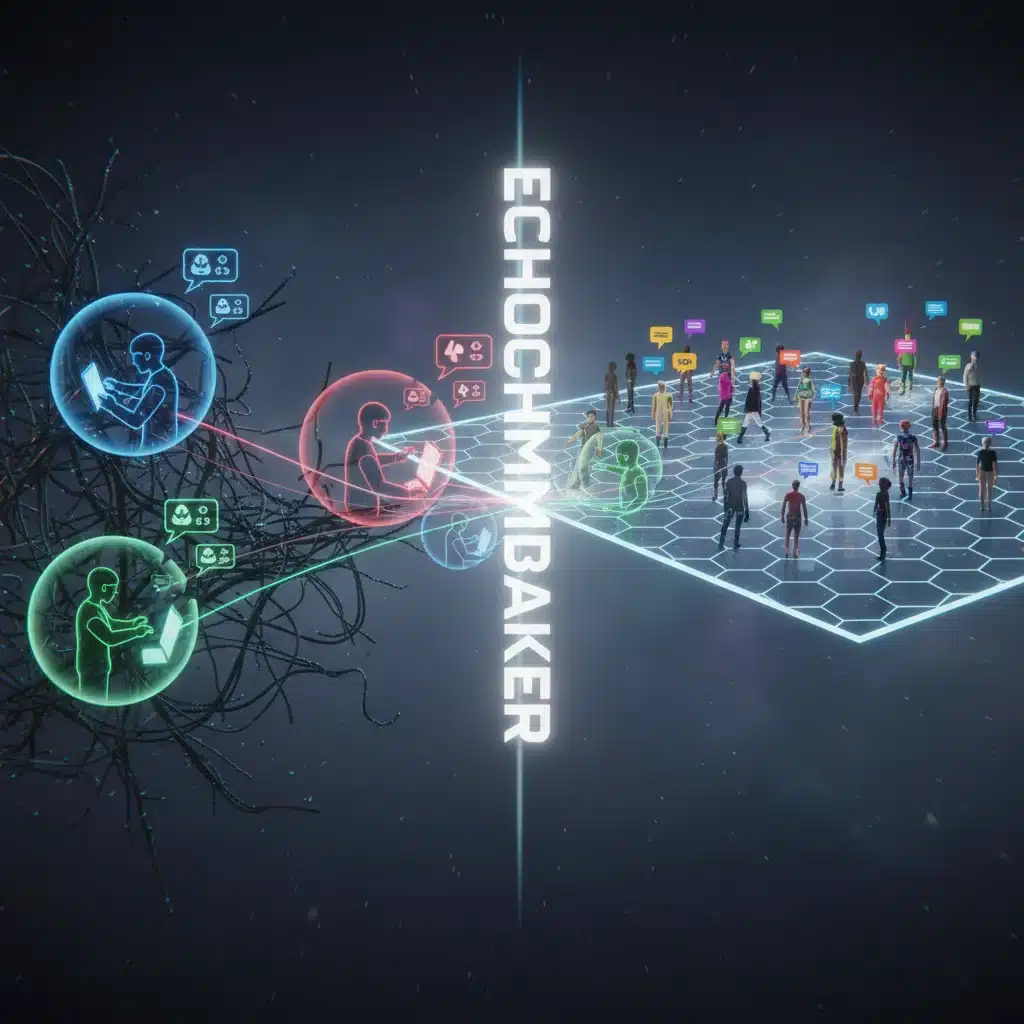
The second groundbreaking platform, ‘EchoChamber Breaker’ (ECB), tackles the problem of polarization from a different angle: by actively disrupting cognitive biases and exposing users to diverse perspectives they might otherwise never encounter. Launched slightly earlier than BridgeIt, in mid-2025, ECB focuses on breaking down the walls of self-reinforcing information bubbles.
Dismantling Digital Silos with EchoChamber Breaker
ECB’s approach is less about direct debate and more about curated exposure and the gentle nudging towards understanding. Key features include:
- Algorithmic "Perspective Pairing": After an initial onboarding process where users indicate their general leanings and interests, ECB’s sophisticated algorithm intentionally pairs them with content and, eventually, with other users who hold demonstrably different viewpoints. This isn’t random; it’s designed to introduce contrasting yet well-reasoned arguments.
- "Read Beyond Your Bubble" Challenges: ECB regularly presents users with challenges that encourage them to engage with news articles, research papers, and opinion pieces from sources they typically wouldn’t consume. These challenges come with prompts for reflection, encouraging users to identify biases in both their own thinking and the content they are consuming.
- Facilitated "Dialogue Circles": For those ready for more direct engagement, ECB offers opt-in "Dialogue Circles." These are small, moderated groups (often 4-6 people) with diverse viewpoints, who meet virtually for a series of structured conversations on specific topics. The focus is on active listening and asking open-ended questions, rather than winning an argument.
- Fact-Checking Integration and Source Transparency: Every piece of shared content on ECB is automatically cross-referenced with a network of independent fact-checkers. Users are also provided with transparent information about the source’s editorial stance, funding, and historical accuracy record, empowering them to critically evaluate information.
- "Understanding Scores": Instead of rewarding agreement, ECB rewards understanding. Users can earn "Understanding Scores" by demonstrating through quizzes or reflective essays that they accurately comprehend an opposing viewpoint, even if they don’t agree with it.
The Transformative Power of Exposure: ECB’s Contributions
EchoChamber Breaker has proven particularly effective in broadening users’ perspectives and reducing the "othering" of those with different views. A study conducted by a leading university in collaboration with ECB showed that users who consistently engaged with the platform for six months reported a significant decrease in negative stereotypes about opposing political groups and a greater willingness to engage in real-world conversations with people holding different opinions.
One user, a self-proclaimed staunch conservative, shared his experience: "I used to dismiss anything from ‘liberal media’ outright. ECB gently nudged me to read articles from sources I despised. I didn’t suddenly become liberal, but I started to see the nuances, the valid concerns, and even shared values I didn’t realize existed. It made me a more informed, and frankly, less angry person." This testimonial encapsulates the profound impact ECB is having on individuals and, by extension, on the broader landscape of constructive public discourse.
The Technology Behind the Dialogue: AI, UX, and Moderation
Both BridgeIt and EchoChamber Breaker rely heavily on cutting-edge technology, not to replace human interaction, but to enhance and guide it. Artificial Intelligence plays a crucial role in content curation, sentiment analysis, and moderation, allowing for scalability and consistency. Machine learning algorithms are constantly refining their ability to identify rhetorical patterns, flag misinformation, and suggest optimal pairings for diverse discussions.
However, the human element remains paramount. Teams of dedicated moderators, dispute resolvers, and community managers work tirelessly behind the scenes, providing oversight, intervening in complex situations, and ensuring that the platforms remain safe, respectful, and productive. The user experience (UX) design is also critical; both platforms prioritize clarity, ease of use, and features that reduce cognitive load while encouraging thoughtful engagement.
The success of these platforms underscores a vital principle: technology is a tool. In the right hands, and with the right ethical considerations, it can be leveraged to mend societal fractures rather than exacerbate them. The careful balance of algorithmic intelligence and human empathy is what makes these platforms so effective in fostering constructive public discourse.
Beyond the Platforms: Cultivating a Culture of Dialogue
While BridgeIt and EchoChamber Breaker are powerful tools, their long-term success hinges on something larger: a societal shift towards valuing constructive public discourse. These platforms are not just technological solutions; they are catalysts for cultural change. They model what healthy dialogue looks like and provide the guardrails necessary for it to flourish in an often-hostile online environment.
The lessons learned from these platforms can and should extend beyond their digital borders. Educators can adapt their structured debate techniques in classrooms. Community leaders can draw inspiration from their moderation strategies for town halls. Individuals can adopt the "Acknowledge and Respond" protocol in their personal and professional lives. The goal is to re-normalize the idea that disagreement is not a threat, but an opportunity for deeper understanding and collective growth.
Furthermore, the data these platforms collect – anonymized and aggregated, of course – offers invaluable insights into the dynamics of polarization, the effectiveness of different communication strategies, and the pathways to consensus. This research can inform public policy, media practices, and educational initiatives, creating a feedback loop that continually refines our approach to fostering a more cohesive society.
Challenges and the Road Ahead for Constructive Public Discourse
Despite their initial successes, BridgeIt and EchoChamber Breaker face significant challenges. Scaling these platforms while maintaining the quality of moderation and the integrity of discussions is a monumental task. Combating sophisticated misinformation campaigns, dealing with bad actors who seek to disrupt constructive dialogue, and ensuring accessibility for all demographics are ongoing battles.
Funding models also present a hurdle. Unlike traditional social media, which often relies on ad revenue driven by engagement (even negative engagement), these platforms thrive on quality interaction. Finding sustainable financial models that align with their mission – perhaps through subscriptions, philanthropic support, or partnerships with educational institutions – will be crucial for their longevity. Maintaining independence from partisan influence is also a constant vigilance.
Moreover, the ultimate goal is not just to create isolated pockets of constructive dialogue, but to integrate this ethos into the broader digital and real-world public sphere. This requires continuous innovation, adaptation, and a willingness to learn from both successes and failures. The road to a truly re-engaged and empathetic America is long, but these platforms represent vital steps in the right direction.
The Future of American Dialogue: A Hopeful Outlook
The year 2026 finds America at a crossroads. The forces of division are potent, but the desire for connection and understanding is equally strong. Platforms like BridgeIt and EchoChamber Breaker are not just technological marvels; they are embodiments of this inherent human yearning for meaningful interaction. They demonstrate that with thoughtful design, ethical technology, and dedicated human oversight, it is possible to cultivate spaces where people can disagree without being disagreeable, where diverse perspectives enrich rather than divide, and where the search for truth and common ground takes precedence over tribal loyalties.
The journey to reclaim constructive public discourse is an ongoing one, demanding patience, resilience, and a collective commitment. But as these new platforms continue to grow and evolve, they offer a powerful vision of a future where America’s strength lies not in uniformity, but in its ability to engage with its differences constructively, forging a more resilient, empathetic, and ultimately, a more unified society. Their success is a testament to the enduring power of dialogue and a beacon of hope for a brighter American future.
As these platforms expand their reach and refine their methodologies, the ripple effects could be transformative. Imagine a generation of citizens, accustomed to the norms of respectful debate and critical thinking fostered by these environments, carrying those skills into their daily lives, their workplaces, and their civic engagements. This is the promise that BridgeIt and EchoChamber Breaker hold – not just as apps on a screen, but as architects of a more engaged, understanding, and ultimately, more functional democracy.