American Entertainment: 4 New Consumption Patterns in 2026
The Shifting Landscape of American Entertainment: 4 New Consumption Patterns in 2026 (Insider Knowledge, Comparison/Analysis)
The American entertainment industry is a colossal, ever-evolving beast, constantly adapting to technological advancements, societal shifts, and the insatiable desires of its audience. As we hurtle towards 2026, the patterns of how Americans consume entertainment are undergoing profound transformations. These shifts aren’t merely incremental; they represent fundamental rewirings of consumer behavior, driven by innovation, convenience, and a demand for personalization. For industry veterans, emerging creators, and avid consumers alike, understanding these entertainment consumption patterns is not just beneficial – it’s crucial for navigating the future landscape.
Gone are the days when entertainment was a neatly packaged, one-size-fits-all offering. Today, it’s a tapestry woven with threads of interactivity, on-demand access, community engagement, and hyper-personalization. The traditional gatekeepers of content are finding their authority challenged by a burgeoning creator economy and the democratizing power of digital platforms. This deep dive into the four most impactful new entertainment consumption patterns of 2026 will provide insider knowledge, comparing current trends with projected future states and offering an incisive analysis of what lies ahead.
1. The Ascendance of Interactive & Immersive Experiences
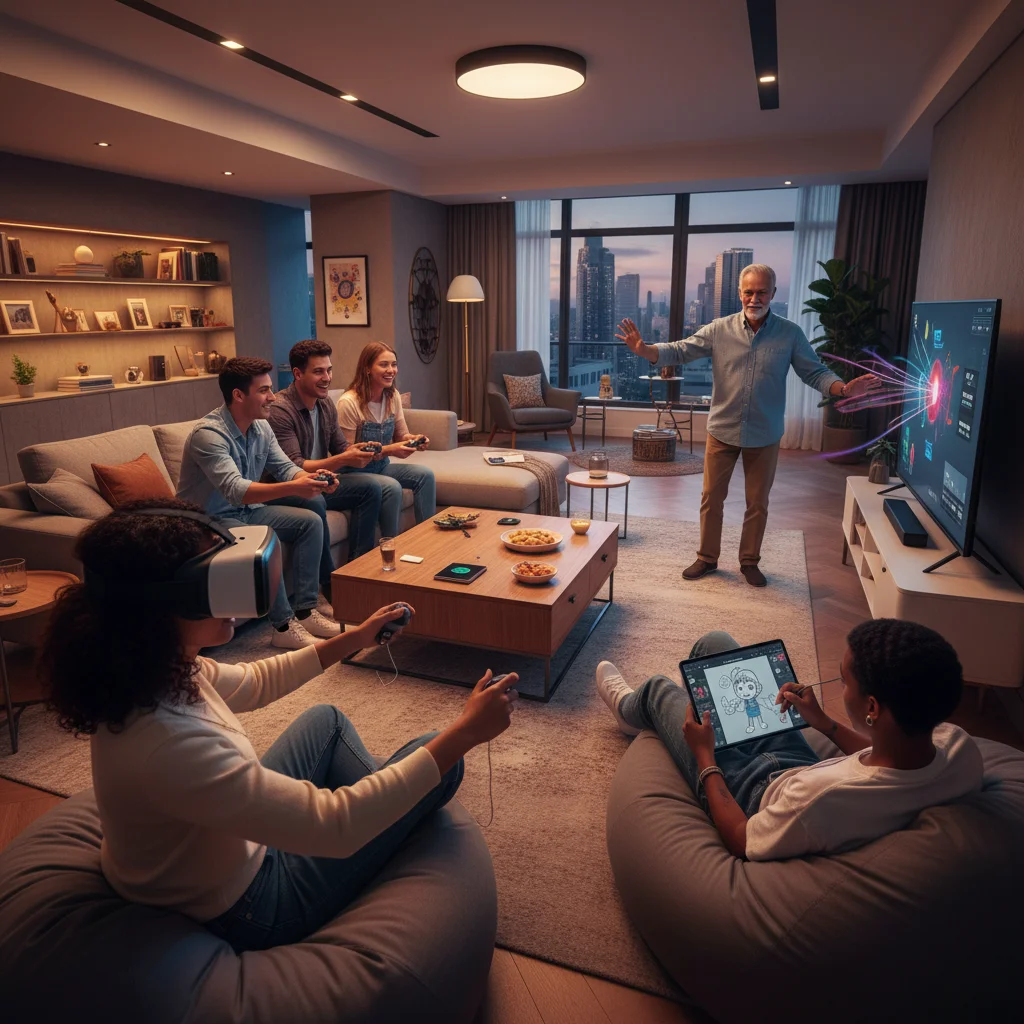
One of the most compelling and rapidly accelerating entertainment consumption patterns is the shift towards interactive and immersive experiences. This isn’t just about video games, though gaming remains a powerful vanguard of this trend. It encompasses a much broader spectrum, from live-streamed concerts with audience participation to choose-your-own-adventure narratives on streaming platforms, and the burgeoning metaverse. Consumers are no longer content to be passive recipients of content; they demand agency, influence, and a sense of presence within the entertainment they consume.
From Passive Viewing to Active Participation
Historically, entertainment largely operated on a broadcast model: content was created, distributed, and consumed. The audience’s role was primarily to watch, listen, or read. While this model still holds significant sway, particularly for traditional media like linear television and cinema, its dominance is waning. The younger generations, digital natives who have grown up with interactive technologies, inherently expect more. They want to influence storylines, interact with characters, and connect directly with creators and fellow fans.
Consider the evolution of live events. A traditional concert offered a one-way experience. Now, virtual concerts leverage augmented reality (AR) and virtual reality (VR) to place attendees virtually within the performance, allowing them to interact with the environment, other avatars, and even directly with the artists in some experimental formats. This move from spectating to participating is a cornerstone of the future of entertainment consumption patterns.
The Metaverse: A New Frontier for Entertainment
The concept of the metaverse, while still in its nascent stages, promises to be a transformative force in interactive entertainment. Imagine a persistent, shared, 3D virtual space where users can socialize, work, play games, attend concerts, and even create their own content. Platforms like Roblox, Fortnite, and Decentraland are already offering glimpses into this future, hosting virtual events, brand experiences, and user-generated worlds. By 2026, we anticipate more sophisticated and interconnected metaverse ecosystems, where entertainment experiences seamlessly blend virtual and physical realities.
However, the widespread adoption of the metaverse faces hurdles, including technological infrastructure, accessibility, and the development of compelling, user-friendly experiences. The companies that successfully navigate these challenges will be at the forefront of shaping this new entertainment consumption pattern. Investment in VR/AR hardware, haptic feedback technology, and advanced AI for personalized virtual interactions will be key.
Interactive Storytelling & Gamification
Streaming services are also experimenting with interactive storytelling, allowing viewers to make choices that affect the narrative. While still somewhat niche, these experiments lay the groundwork for a future where storytelling is less linear and more dynamic. Gamification – applying game-design elements and game principles in non-game contexts – is permeating various forms of entertainment, from educational apps to fitness programs, making engagement more rewarding and habit-forming. This blend of narrative and play is a powerful driver of new entertainment consumption patterns.
2. Hyper-Personalization & Algorithmic Curation
The second dominant entertainment consumption pattern is the relentless drive towards hyper-personalization, powered by sophisticated algorithms. In an era of overwhelming content abundance, consumers rely heavily on algorithms to filter, recommend, and curate their entertainment diets. This goes far beyond simple genre preferences; it delves into granular data points about viewing habits, emotional responses, social interactions, and even biometric data (with user consent, of course) to deliver an almost clairvoyant recommendation engine.
The Netflix Effect: Beyond Basic Recommendations
Netflix pioneered the personalized recommendation engine, but by 2026, this technology will have evolved significantly. AI will not just suggest the next show based on what you’ve watched; it will anticipate your mood, understand your daily schedule, and even predict what type of content might alleviate stress or stimulate creativity. This level of personalization creates a highly sticky user experience, making it harder for consumers to leave platforms that understand their preferences so intimately.
The challenge for content creators and distributors lies in balancing algorithmic curation with serendipitous discovery. While personalization is highly valued, consumers also appreciate stumbling upon something unexpected that broadens their horizons. The most successful platforms will master this delicate equilibrium, using algorithms to introduce novel content that aligns with, but also gently challenges, established preferences.
AI-Driven Content Creation & Adaptation
Hyper-personalization extends beyond recommendations to the content itself. We’re already seeing rudimentary forms of AI-generated music and art. By 2026, AI could play a more significant role in adapting existing content or even generating new content segments based on individual viewer preferences. Imagine a sports broadcast where the AI editor automatically highlights plays featuring your favorite player, or a news feed that customizes the depth of reporting based on your expressed interest level.
This raises ethical questions about creative ownership and the potential for filter bubbles, where individuals are only exposed to content that reinforces their existing beliefs. However, the commercial imperative for personalization is so strong that these developments in entertainment consumption patterns are inevitable. Companies will need to implement robust ethical guidelines and transparency measures to maintain consumer trust.
3. The Rise of the Creator Economy & Micro-Influencers
The third major entertainment consumption pattern is the continued and accelerated growth of the creator economy, with a particular emphasis on micro-influencers and niche content. The democratization of content creation tools and distribution platforms has empowered individuals to bypass traditional media gatekeepers and build direct relationships with their audiences. This shift fundamentally alters the power dynamics within the entertainment industry.
From Mass Media to Niche Communities
For decades, entertainment was dominated by large studios, record labels, and broadcast networks. While these entities still hold considerable power, they are increasingly competing with millions of independent creators across platforms like YouTube, TikTok, Twitch, and Patreon. These creators often specialize in highly specific niches, fostering deep engagement with their dedicated communities. This contrasts sharply with the broader, more generalized appeal sought by traditional mass media.
Consumers are increasingly seeking authentic, relatable voices. Micro-influencers, with their smaller but highly engaged followings, often wield more influence over their specific niche than macro-influencers do over a broader audience. This trend is driven by a desire for genuine connection and a sense of belonging to a community that shares similar interests. This focus on community-driven content is a defining characteristic of new entertainment consumption patterns.
Monetization Beyond Advertising
The creator economy is also driven by diverse monetization models beyond traditional advertising. Subscriptions (Patreon), direct donations, merchandise sales, and brand partnerships are becoming primary income streams for creators. This financial independence allows creators to maintain creative control and produce content that resonates deeply with their audience, rather than being beholden to advertiser demands or network executives. This shift empowers a wider array of voices and perspectives in the entertainment landscape.
For established entertainment companies, this trend presents both a threat and an opportunity. They can either view creators as competition or seek to collaborate with them, leveraging their authenticity and community reach. We’ll see more acquisitions of creator-led platforms and strategic partnerships between traditional media giants and successful independent creators, reflecting the evolving entertainment consumption patterns.
The ‘Snackable’ Content Phenomenon
Closely tied to the creator economy is the pervasive trend of ‘snackable’ content – short-form, highly engaging videos and audio clips designed for quick consumption. Platforms like TikTok have perfected this format, fostering a culture of rapid content creation and consumption. While long-form content still thrives, particularly in premium streaming and gaming, the ability to consume entertainment in bite-sized chunks to fill small gaps in one’s day is a critical entertainment consumption pattern. This impacts everything from social media feeds to news consumption and even educational content.
4. The Blurring Lines: Entertainment as a Service & Cross-Platform Synergy
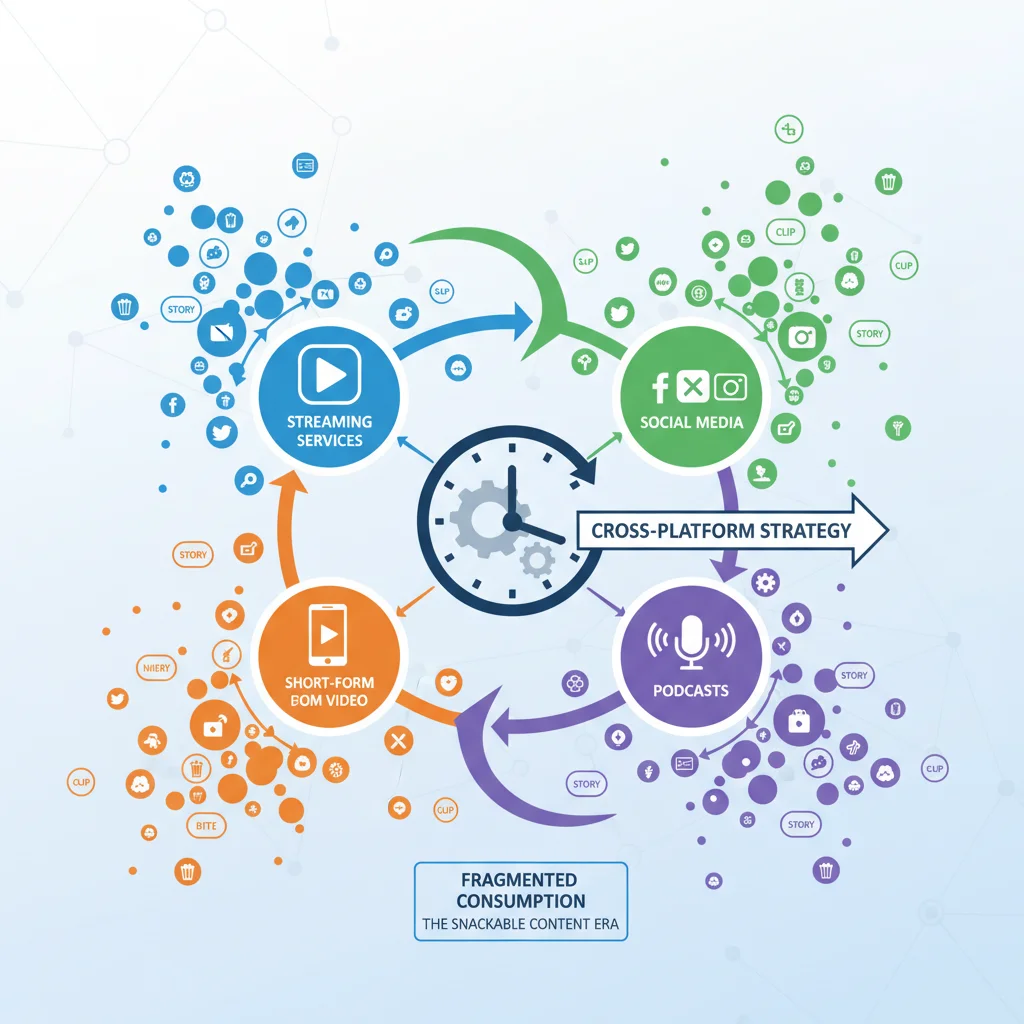
The final significant entertainment consumption pattern for 2026 is the increasing omnipresence of entertainment as a service (EaaS) and the imperative for seamless cross-platform synergy. Consumers expect their entertainment to be available on any device, at any time, and to transition smoothly between different platforms and formats without interruption. The concept of a singular entertainment product is giving way to an ecosystem of interconnected experiences.
Subscription Fatigue & The Bundle Wars
The proliferation of streaming services has led to a phenomenon known as ‘subscription fatigue.’ Consumers are overwhelmed by the number of individual subscriptions required to access all their desired content. This has led to the emergence of ‘bundle wars,’ where companies are offering aggregated packages of services, often including not just video but also music, gaming, news, and even e-commerce benefits. By 2026, we anticipate more sophisticated and customizable bundles, allowing consumers to select their preferred combination of services without paying for content they don’t use. This is a direct response to evolving entertainment consumption patterns.
The future of EaaS will also involve more flexible payment models, including ad-supported tiers, pay-per-view options for premium content, and even micro-transactions within larger entertainment ecosystems. The goal is to maximize accessibility and cater to varying consumer budgets and preferences.
Seamless Cross-Platform Experiences
Consumers expect their entertainment experience to be fluid and uninterrupted, regardless of the device they are using. Start watching a movie on your smart TV, pause it, and pick it up seamlessly on your tablet during your commute. Play a game on your console, then continue your progress on your phone. This cross-platform synergy is no longer a luxury but a fundamental expectation. Companies that fail to provide this level of integration will struggle to retain users.
This also extends to social integration. Sharing content, discussing shows with friends, and participating in online communities are integral parts of the modern entertainment experience. Platforms that facilitate these interactions across devices and services will have a distinct advantage in shaping future entertainment consumption patterns.
The Ubiquity of Entertainment
Entertainment is no longer confined to dedicated viewing times or specific devices. It’s integrated into daily life: podcasts during commutes, short-form videos during breaks, ambient music while working, and interactive games during social gatherings. Smart home devices, wearable technology, and even smart vehicles are becoming new conduits for entertainment consumption. The industry is moving towards an ‘always-on’ entertainment model, where content is curated and delivered contextually throughout the day.
This omnipresence requires robust content delivery networks, highly optimized user interfaces, and intelligent systems that can anticipate consumer needs and deliver relevant entertainment at the right moment. The companies that master this ubiquitous delivery will define the next generation of entertainment consumption patterns.
The Road Ahead: Navigating the New Entertainment Landscape
The four new entertainment consumption patterns – the ascendance of interactive and immersive experiences, hyper-personalization and algorithmic curation, the rise of the creator economy, and the blurring lines of EaaS and cross-platform synergy – are not isolated trends. They are interconnected forces, each influencing and amplifying the others. The convergence of these patterns creates a dynamic and complex environment for all stakeholders in the American entertainment industry.
For content creators, this means an unprecedented opportunity to connect directly with audiences and explore new forms of storytelling. However, it also demands adaptability, a willingness to experiment with new formats, and a keen understanding of platform dynamics. The ability to build and nurture a community around one’s work will be as important as the quality of the content itself.
For distributors and platforms, the challenge lies in providing seamless, personalized, and engaging experiences that transcend device limitations and avoid subscription fatigue. Investment in AI, robust technological infrastructure, and strategic partnerships will be critical. The ‘streaming wars’ will evolve into ‘ecosystem wars,’ where the most comprehensive and integrated offerings will emerge victorious.
For consumers, the future promises an unparalleled level of choice, control, and personalization. However, it also necessitates a degree of critical engagement to navigate algorithmic filter bubbles and discern authentic content from the noise. The power dynamics have shifted, placing more control in the hands of the individual, but with that power comes the responsibility to shape one’s own entertainment journey consciously.
As we move into 2026 and beyond, the entertainment industry will continue its rapid evolution. Staying informed about these core entertainment consumption patterns will be essential for anyone looking to thrive in this exciting and ever-changing landscape. The future of American entertainment is not just about what we watch, but how we engage, interact, and become part of the story itself.