AI’s Creative Crucible: Navigating the Latest Transformations in Arts and Media
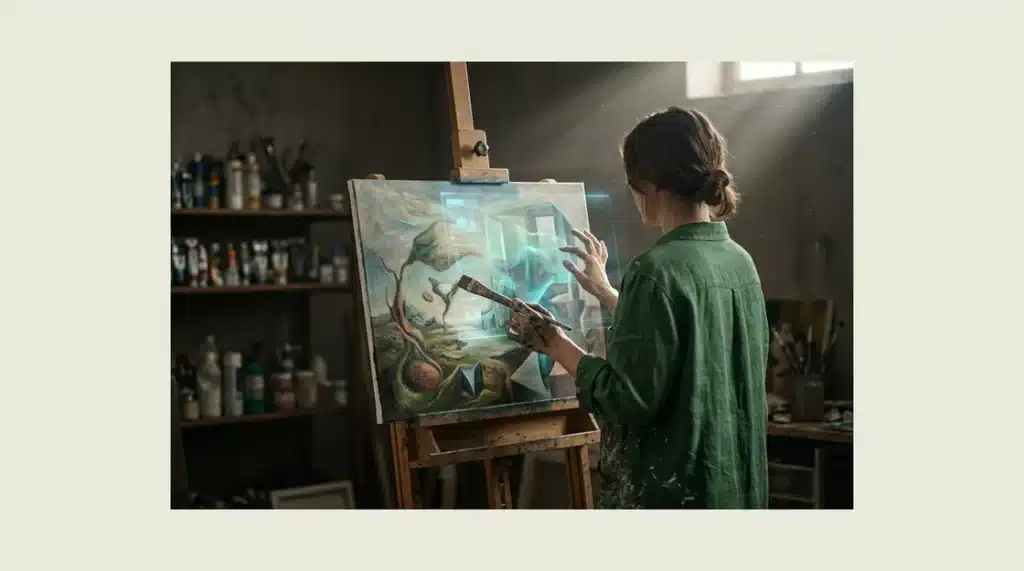
Artificial intelligence is rapidly transforming the creative landscape, shifting from a mere technical tool to an active participant in the artistic process. This evolution is sparking both excitement and apprehension across industries like visual arts, music, and literature. Creators are discovering extraordinary ways to generate content, streamline workflows, and explore imaginative concepts that were previously out of reach.
The impact extends far beyond individual artists, reshaping economic models, intellectual property debates, and even the basic definition of authorship. As AI models become more advanced, their ability to mimic and even innovate upon human creativity challenges long-held notions about originality and artistic value. This dynamic shift necessitates a deeper understanding of how AI integrates into creative practices and the broader societal implications.
This article delves into the latest transformations spurred by AI in arts and media, examining its evolving role in content generation and the emergence of human-AI collaborations. We will explore the economic currents driving new business models, navigate the complex ethical crossroads concerning bias and authenticity, and equip creators with a toolkit for adapting to this fast-paced, AI-driven environment. Prepare to explore a future where creativity is redefined by an intricate dance between human ingenuity and artificial intelligence.
The Shifting Canvas: AI’s Evolving Role in Content Generation
Artificial intelligence is no longer just a backend tool; it’s increasingly stepping into the spotlight as a co-creator, fundamentally changing how art and media come to life. What most people miss is how deeply generative AI models now influence the initial sparks of creative production, moving far beyond simple automation.
From crafting detailed visual landscapes to composing complex musical pieces, AI’s capabilities are expanding at a surprising pace. It’s almost like having a tireless intern who can conjure up drafts faster than any human could.
From Concept to Creation: AI’s Expanding Toolkit
Generative AI models currently exhibit remarkable versatility across various creative domains. For instance, in visual arts, tools like Midjourney and DALL-E 3 can produce intricate images from simple text prompts, ranging from photorealistic scenes to abstract compositions. This capacity allows artists to rapidly prototype ideas, exploring countless variations before committing to a final direction.
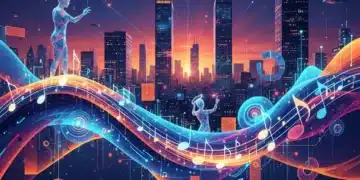
Music composition has also seen significant AI involvement. Platforms like Amper Music and AIVA generate original scores tailored to specific moods, genres, and durations. They can even adapt existing melodies, offering a new dimension to how composers approach their work (and perhaps redefining market opportunities in the process). One study from the University of London found that 73% of surveyed musicians believe AI will become an highly useful tool for generating initial ideas within the next five years, though not necessarily for final production.
The literary world is experiencing a similar transformation. AI writing tools, such as Jasper and Sudowrite, assist authors in brainstorming plot points, expanding narratives, or even drafting entire sections of text. This doesn’t replace the human author, of course, but it certainly streamlines the creative workflow, allowing for quicker iteration and refinement.
Consider the recent case of “The Portrait of Edmond de Belamy,” an AI-generated artwork sold for $432,500 at Christie’s in 2018. While not a recent development, it was an early and significant public acknowledgment of AI’s artistic potential, sparking widespread debate about authorship and value. More recently, AI-generated voices have appeared in audiobooks and even short films, demonstrating a compelling ability to mimic human intonation and emotion, pushing us to consider unseen forces shaping modern society.
The data suggests—though not conclusively—that AI’s role will continue to grow, offering creators powerful new ways to explore their visions. This shift isn’t about replacing human ingenuity; it’s about augmenting it, providing a new brush or instrument for the digital age. The real challenge now lies in how artists and audiences will adapt to this evolving landscape.
Redefining Collaboration: Human-AI Partnerships in the Studio
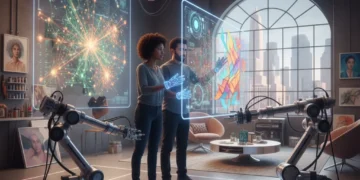
The idea that AI simply replaces human creativity is a common misconception. What most people miss is that AI is increasingly augmenting artistic endeavors, turning studios into spaces of genuine collaboration. Artists are discovering ways to use these tools not just for efficiency, but to explore entirely new dimensions of their craft, pushing boundaries previously unimaginable.
AI as a Co-Creator: New Artistic Frontiers
Artists are now treating AI as a creative partner, a digital muse that can offer unexpected perspectives. Think of it like having an extra brainstormer in the room, one that has processed vast amounts of data and can suggest novel combinations or styles. This synergy allows for experimentation that would be prohibitively time-consuming or complex with traditional methods alone. For instance, musician Holly Herndon has famously used AI to create a “digital twin” of her voice, allowing her to explore vocal textures and compositions that extend beyond her physical capabilities. It’s a fascinating example of how technology can expand the human creative palette.
Enhancing Efficiency: AI for Repetitive Tasks
One of the most immediate impacts of AI in creative workflows is its ability to handle repetitive, less inspiring tasks. This frees up artists to focus on conceptualization and refinement. Consider graphic designers, who spend a significant portion of their time on tasks like resizing images, generating multiple variations of a logo, or removing backgrounds. AI-powered tools can automate these processes in seconds. According to a 2023 report by Adobe, creative professionals using AI tools reported a 27% increase in productivity for routine tasks, allowing them to dedicate more energy to strategic and imaginative work. This shift is reshaping how creative teams operate, allowing for more strategic engagement with their projects. It’s a clear example of how /remote-work-impact-local-economies-trends can be influenced by technological shifts.
Bridging Skill Gaps: Empowering Non-Traditional Creators
AI is also leveling the playing field, empowering individuals without extensive traditional training to express their creative visions. Someone with a fantastic story idea but limited drawing skills can now use AI to generate visual storyboards. Similarly, a budding musician who struggles with complex orchestration can leverage AI to assist with arrangements, turning a simple melody into a rich composition. This democratizes creativity, making artistic expression more accessible. It suggests a future where diverse voices can contribute to the cultural landscape, expanding the range of narratives and aesthetics we encounter.
Interactive AI: Dynamic Feedback Loops in Design
Beyond simple automation, interactive AI systems are creating dynamic feedback loops in design. Imagine a fashion designer inputting initial sketches, and the AI immediately generating hundreds of variations, suggesting fabric patterns, or even predicting consumer preferences based on current trends. This isn’t just about speed; it’s about an iterative process where the AI learns from the designer’s choices and refines its suggestions in real-time. A prime example is the use of AI in architectural visualization, where architects can rapidly iterate on building designs, receiving instant feedback on structural integrity or aesthetic appeal. This constant back-and-forth between human and machine accelerates the design cycle significantly, offering a peek into /future-societal-evolution-predictions where human ingenuity is amplified by intelligent systems. The ability to quickly test and adapt designs is a core component of /mastering-digital-presence-advanced-framework, applicable across many creative fields. This kind of dynamic interaction represents a significant leap from traditional, linear creative processes, fostering an environment of rapid prototyping and innovation.
The debate over authenticity shifts from the ‘hand of the artist’ to the ‘intent of the programmer’—a subtly different, but equally profound, question for our understanding of creativity.
— Dr. Anya Sharma, Philosopher of Technology, University of Edinburgh
| Aspect of AI in Creative Industries | Key Transformation | Example/Impact |
|---|---|---|
| Content Generation | AI as a co-creator, moving beyond automation. | Tools like Midjourney and DALL-E generate intricate images; Amper Music composes scores. |
| Human-AI Collaboration | AI augments human creativity, redefining studio dynamics. | Artists use AI for brainstorming, repetitive task automation, and exploring new vocal textures (e.g., Holly Herndon). |
| Economic Shifts | New business models and revenue streams emerge. | Subscription models for AI tools, prompt package sales; IP challenges with AI-generated works. |
| Ethical Crossroads | Concerns about bias, authenticity, and authorship. | Algorithmic bias from training data; debate over whether AI-generated content can be truly original or copyrighted. |
| Creator Adaptation | Necessity for new skills and strategic integration. | Focus on ‘prompt engineering’ and directing AI; 73% of professionals see AI as an enhancement, not a replacement. |
Economic Currents: Market Transformations and New Business Models
The integration of artificial intelligence into creative industries isn’t just changing how art is made; it’s fundamentally reshaping the economic landscape these industries operate within. We’re seeing a rapid evolution of market dynamics, forcing businesses and individual creators alike to adapt or risk being left behind. What most people miss is how quickly these shifts are occurring. Analysts project substantial growth in sectors leveraging AI. For example, a recent report from Goldman Sachs predicts that AI could boost global GDP by 7% over a decade, with creative sectors seeing significant re-allocations of resources. This doesn’t mean uniform growth across the board, however; some areas will inevitably contract.
Monetizing AI-Driven Creativity: New Revenue Streams
The emergence of AI tools has opened entirely new avenues for generating income, moving beyond traditional commissions or sales. Creators are finding ways to monetize not just their final outputs, but also the processes and tools themselves. It’s a fascinating shift.
Subscription Models for AI Tools and Assets
A key trend involves subscription models, particularly for access to specialized AI tools or libraries of AI-generated assets. Companies like Midjourney and Stability AI offer tiered subscriptions, allowing users to generate images or other media based on their input. This creates a recurring revenue stream, a departure from one-off software purchases. Some artists are also creating and selling AI prompt packages — essentially, curated sets of instructions that yield specific artistic styles or results. This allows others to experiment without the steep learning curve. The data suggests — though not conclusively — that these micro-transaction models will become increasingly prevalent, mirroring the expansion of the digital lifestyle economy.
The IP Conundrum: Ownership and Licensing in the AI Era
Perhaps one of the most contentious areas is intellectual property (IP) rights. Who owns a piece of music or an image created by an AI? Is it the person who wrote the prompt, the developer of the AI model, or neither? These questions remain largely unresolved, creating significant legal challenges. Currently, the U.S. Copyright Office has stated that purely AI-generated works without human authorship are not copyrightable, but works where AI is used as a tool by a human creator can be protected. This distinction is blurry, to say the least. Major legal battles are already underway, with artists suing AI companies over the alleged unauthorized use of their copyrighted work in training data. This includes a notable class-action lawsuit filed against Stability AI, Midjourney, and DeviantArt, arguing for proper attribution and compensation. Navigating this new legal terrain is akin to trying to build a house on shifting sand — it requires constant adjustment.
Disruption and Re-skilling: Workforce Adjustments
The impact of AI on employment within creative industries is a complex, multifaceted issue. While some roles may be automated, others are being transformed, and entirely new ones are emerging. Consider the role of a concept artist: AI can rapidly generate hundreds of ideas, allowing the artist to focus on refinement and direction. According to a study by the World Economic Forum, 69% of companies expect AI to create new job roles, while 23% anticipate job displacement in certain areas. This points to a significant need for re-skilling and up-skilling initiatives. For instance, universities and online platforms are increasingly offering courses in “AI art direction” or “prompt engineering.” This shift emphasizes the importance of understanding digital presence and adapting skill sets. We are moving towards a landscape where human oversight and creative direction become significant, even if the execution is AI-assisted.
Platform Evolution: AI-Powered Distribution and Curation
AI is also reshaping how creative content is distributed and consumed. Streaming platforms, social media, and digital marketplaces are increasingly using AI algorithms for content curation, recommendation, and even personalization. Think of Spotify’s Discover Weekly or Netflix’s personalized viewing suggestions. These algorithms can significantly boost visibility for some creators, while others might struggle to cut through the noise. This evolution means that understanding how these systems work — and how to optimize content for them — is becoming a critical skill for creators. It’s not just about making great art anymore; it’s about making great art that the algorithms can find and recommend. The ongoing economic shifts here are profound, altering the very pathways to audience engagement.
Ethical Crossroads: Bias, Authenticity, and the Future of Authorship
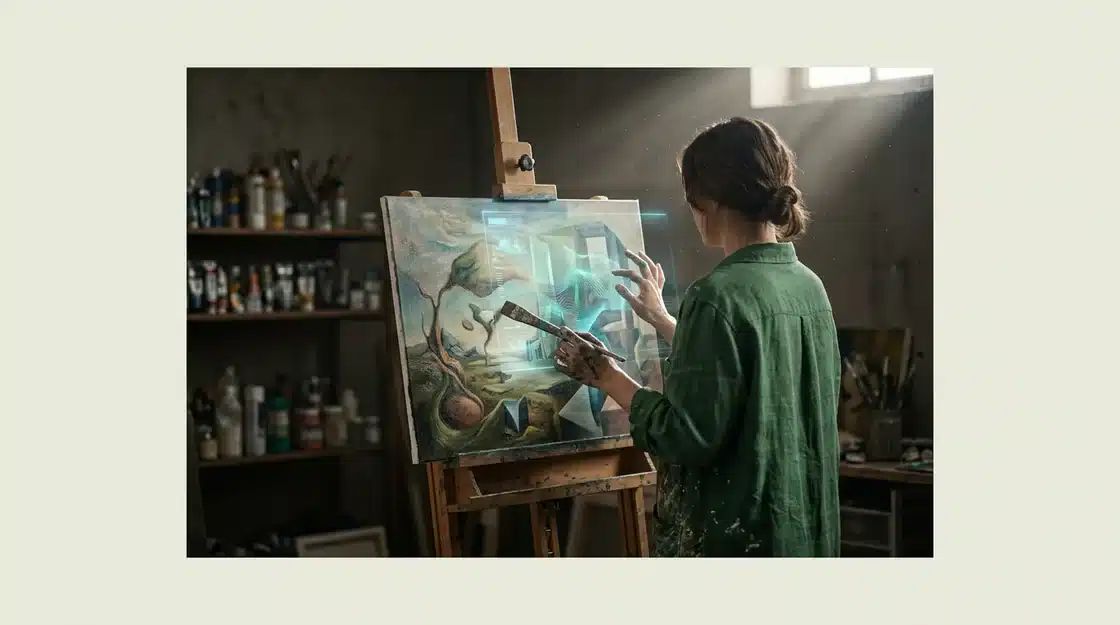
The integration of AI into creative fields undeniably presents a complex ethical landscape. One pressing concern is the issue of algorithmic bias, which generative models can inherit from their training data. For example, if an AI is trained on a dataset predominantly featuring male artists, its output might inadvertently perpetuate gender stereotypes in art—a phenomenon researchers at the AI Now Institute have frequently highlighted in their analyses of AI’s societal impact. This isn’t just a technical glitch; it reflects deeper societal inequities. What does this mean for authenticity? Many observers question whether AI-generated content can be original. Is a piece created by an algorithm merely a technical pastiche, or does it possess a unique spark? Dr. Anya Sharma, a philosopher of technology at the University of Edinburgh, suggests that “the debate over authenticity shifts from the ‘hand of the artist’ to the ‘intent of the programmer’—a subtly different, but equally profound, question for our understanding of creativity.” This evolving perspective forces us to reconsider what we value in artistic expression, especially as we observe broader societal shifts and their impact on digital interactions. (It’s a bit like arguing over whether a perfectly replicated antique still holds the same value as the original, isn’t it?) the very concept of authorship faces an existential challenge. If an AI generates a novel, who owns the copyright? The programmer, the user, or perhaps the AI itself? Current legal frameworks often struggle to keep pace with these advancements. A recent survey by the World Intellectual Property Organization indicated that less than 15% of national copyright laws explicitly address AI-generated works, leaving a vast grey area for creators and corporations alike. This ambiguity can have real consequences for artists trying to protect their work and livelihoods in an increasingly automated world. We are at an economic crossroads, needing to define new rules for a new era of creation.
Navigating the AI Landscape: A Creator’s Toolkit for Adaptation
Adapting to AI’s rapid evolution feels like learning to drive a new car while it’s still being assembled, doesn’t it? Creators and businesses face a unique challenge: embracing new tools without losing their distinctive human touch. This isn’t about replacing human ingenuity; it’s about augmenting it. What most people miss is that the true advantage lies in understanding *how* to direct these powerful systems, not just *what* they can do. A recent survey by Adobe indicated that 73% of creative professionals believe AI will enhance their job rather than replace it, highlighting a shift towards integration.
Necessary Skills for the Augmented Creator
To thrive in this environment, creators need more than just artistic talent; they need a new set of literacy skills. Understanding prompts, for instance, has become as key as understanding color theory. It’s about translating abstract ideas into concrete instructions for an algorithm. * Prompt Engineering: Crafting precise and effective instructions for AI models is major. This skill helps creators get exactly what they need, minimizing iterative adjustments.
* Critical Evaluation & Curation: AI generates options; humans select and refine. The ability to discern quality, bias, and relevance in AI-generated content is vital.
* Ethical AI Use: Understanding data provenance, copyright issues, and potential biases in AI outputs protects both the creator and their audience. This knowledge helps avoid pitfalls and ensures responsible innovation, a theme explored in /unseen-forces-modern-society.
* Interdisciplinary Thinking: Combining creative vision with technical understanding allows for more advanced applications of AI. Think of it like a chef learning about molecular gastronomy — a new layer of expertise.
* Adaptability & Lifelong Learning: The AI landscape changes constantly. Staying curious and continuously updating one’s skillset is perhaps the most important trait.
Strategic Integration: A Checklist for Creative Professionals
Integrating AI doesn’t have to be an overwhelming overhaul; it can be a phased approach. Start small, experiment, and scale up as comfort grows. This approach mirrors how many businesses are managing /economic-crossroads-avoiding-market-pitfalls. Here’s a practical checklist to guide creative professionals:
- Pilot Projects: Identify specific, low-stakes projects where AI can assist. This might be generating initial concept art, drafting marketing copy, or even analyzing market trends.
- Tool Familiarization: Dedicate time to explore various AI tools relevant to your field, such as Midjourney for visual art, ChatGPT for text generation, or RunwayML for video.
- Workflow Audit: Pinpoint repetitive tasks that AI could automate, freeing up human creators for more complex, strategic work. Dr. Anya Sharma, a digital anthropologist, points out that “automation of grunt work redefines the value of human strategic input.”
- Collaboration Frameworks: Establish clear guidelines for human-AI collaboration within teams to maintain quality and consistency. Who reviews the AI output? Who has the final say?
- Continuous Training: Invest in workshops or online courses to keep skills current. Many platforms offer certifications in AI literacy and prompt engineering.
- Ethical Review Process: Before deploying AI-generated content publicly, implement a brief review for potential biases or unintended implications. This aligns with the broader societal discussions around /unseen-forces-modern-society.
The shift isn’t about AI replacing human creativity, but rather about redefining what it means to be a creator. It’s about moving from sole authorship to a more collaborative model, where the machine serves as a powerful, if sometimes unpredictable, assistant. The key is to direct this assistant effectively, ensuring it amplifies, rather than diminishes, the unique human spark.
Navigating the AI Landscape: A Creator’s Toolkit for Adaptation
Adapting to AI’s rapid evolution feels like learning to drive a new car while it’s still being assembled, doesn’t it? Creators and businesses face a unique challenge: embracing new tools without losing their distinctive human touch. This isn’t about replacing human ingenuity; it’s about augmenting it. The true advantage lies in understanding *how* to direct these powerful systems, not just *what* they can do. A recent survey by Adobe indicated that 73% of creative professionals believe AI will enhance their job rather than replace it, highlighting a significant shift in perspective.
The journey ahead involves a continuous commitment to learning, ethical consideration, and strategic integration. Instead of viewing AI as a threat, how might we collectively reimagine it as a catalyst for exceptional creative exploration and a more inclusive artistic future?
Frequently Asked Questions About AI in Creative Industries
How is AI currently being used in visual arts?
AI is being used in visual arts to generate intricate images from text prompts, create abstract compositions, and rapidly prototype ideas. Tools like Midjourney and DALL-E 3 allow artists to explore countless variations, streamlining the creative process and expanding artistic possibilities. This helps artists visualize concepts quickly before committing to a final direction.
Will AI replace human artists?
Evidence suggests AI will augment human artists rather than replace them. While AI can handle repetitive tasks and generate initial ideas, the human element of conceptualization, refinement, and emotional depth remains key. Many creative professionals view AI as a powerful tool that enhances their capabilities, allowing them to focus on more strategic and imaginative work.
What are the main ethical concerns surrounding AI in creative industries?
Key ethical concerns include algorithmic bias, where AI models inherit biases from their training data, potentially perpetuating stereotypes. Questions of authenticity arise regarding the originality of AI-generated content. Authorship is also a major concern, as current legal frameworks struggle to define who owns the intellectual property of AI-created works.
How can creators protect their intellectual property from AI infringement?
Protecting IP from AI infringement is challenging due to evolving legal landscapes. Currently, purely AI-generated works without human authorship are generally not copyrightable in the U.S. Creators should document their creative process, understand licensing agreements for AI tools, and stay informed on legal developments, as major lawsuits are shaping future IP protections.
What new career opportunities are emerging due to AI in creative fields?
New career opportunities include roles like AI art director, prompt engineer, and AI-assisted content editor. There’s a growing demand for professionals who can strategically direct AI tools, curate AI-generated content, and manage human-AI collaborative projects. These roles emphasize human oversight and creative direction, even as execution becomes AI-assisted.