2026 Federal Infrastructure: Regional Economic Impacts & Growth

The Unfolding Impact of 2026 Federal Infrastructure Spending on U.S. Regional Economies
The year 2026 stands as a pivotal moment for the United States, poised to witness the full acceleration of historic federal infrastructure spending. This monumental investment, aimed at revitalizing America’s aging infrastructure, is not merely about repairing roads and bridges; it’s a strategic initiative designed to catalyze economic growth, enhance national competitiveness, and foster a more resilient and equitable future. The scale of this financial injection promises to reshape landscapes, create jobs, and stimulate innovation across the nation. However, the impact will not be uniform. Regional economies, with their unique industrial compositions, demographic profiles, and existing infrastructure needs, are expected to experience varying degrees of transformation. Understanding these nuanced regional impacts is crucial for policymakers, businesses, and communities alike to strategically harness the opportunities and mitigate potential challenges.
Our comprehensive analysis delves into the anticipated effects of this substantial federal infrastructure spending, offering a data-backed comparison of growth opportunities across different U.S. regions. We will explore how these investments are projected to influence key economic indicators, labor markets, and technological advancements, providing a roadmap for understanding the complex interplay between federal policy and local economic realities. The focus on 2026 is deliberate, as it represents a period where many foundational projects will be well underway, and their initial economic ripples will begin to manifest significantly.
The Core of Federal Infrastructure Spending: What It Entails
Before dissecting the regional impacts, it’s essential to grasp the multifaceted nature of the federal infrastructure spending package. This isn’t a singular allocation but a broad spectrum of investments targeting critical areas. At its heart, the funding is channeled into:
- Transportation Infrastructure: This includes significant upgrades to roads, bridges, railways, public transit, ports, and airports. The goal is to improve connectivity, reduce congestion, enhance safety, and streamline supply chains. Modernizing these networks is fundamental to boosting economic efficiency and facilitating trade.
- Utilities and Energy Infrastructure: Investments here focus on modernizing the electric grid to be more resilient and incorporate renewable energy sources, improving water pipes and wastewater systems, and expanding access to broadband internet. These are foundational elements for both urban and rural development, supporting everything from advanced manufacturing to remote work.
- Resilience and Climate Infrastructure: A substantial portion is dedicated to making infrastructure more resilient to climate change impacts, such as extreme weather events. This includes investments in flood control, wildfire mitigation, coastal protection, and upgrading infrastructure to withstand future climate challenges.
- Human Infrastructure: While less tangible, this often includes investments in workforce development programs to train skilled labor needed for infrastructure projects, as well as community development initiatives that indirectly benefit from improved physical infrastructure.
The sheer volume of this federal infrastructure spending is unprecedented in recent history, designed to address decades of underinvestment and position the U.S. for future economic prosperity. The implications for job creation, technological adoption, and long-term economic stability are profound, making a detailed regional analysis indispensable.
Methodology for Regional Economic Analysis
To provide a data-backed comparison, our analysis relies on a combination of economic modeling, historical data, and expert projections. Key methodologies include:
- Input-Output Models: These models help estimate the direct, indirect, and induced economic impacts of infrastructure spending. Direct impacts are the immediate jobs and output from construction. Indirect impacts arise from supply chain demands (e.g., steel, concrete). Induced impacts result from workers spending their wages in the local economy.
- Geographic Information Systems (GIS): GIS tools are used to map existing infrastructure gaps, project locations, and demographic data, providing a visual and spatial understanding of potential impacts.
- Labor Market Analysis: Examining current unemployment rates, skill gaps, and vocational training programs in different regions helps predict where job creation will be most impactful and where workforce development will be most critical.
- Sectoral Projections: Analyzing the concentration of industries in each region (e.g., manufacturing, technology, agriculture) allows for tailored predictions of how infrastructure improvements will benefit specific sectors.
By integrating these analytical tools, we can construct a robust framework for understanding the diverse ways in which federal infrastructure spending will ripple through the U.S. economy by 2026.
Northeast: Modernizing Legacy Systems and Boosting Connectivity
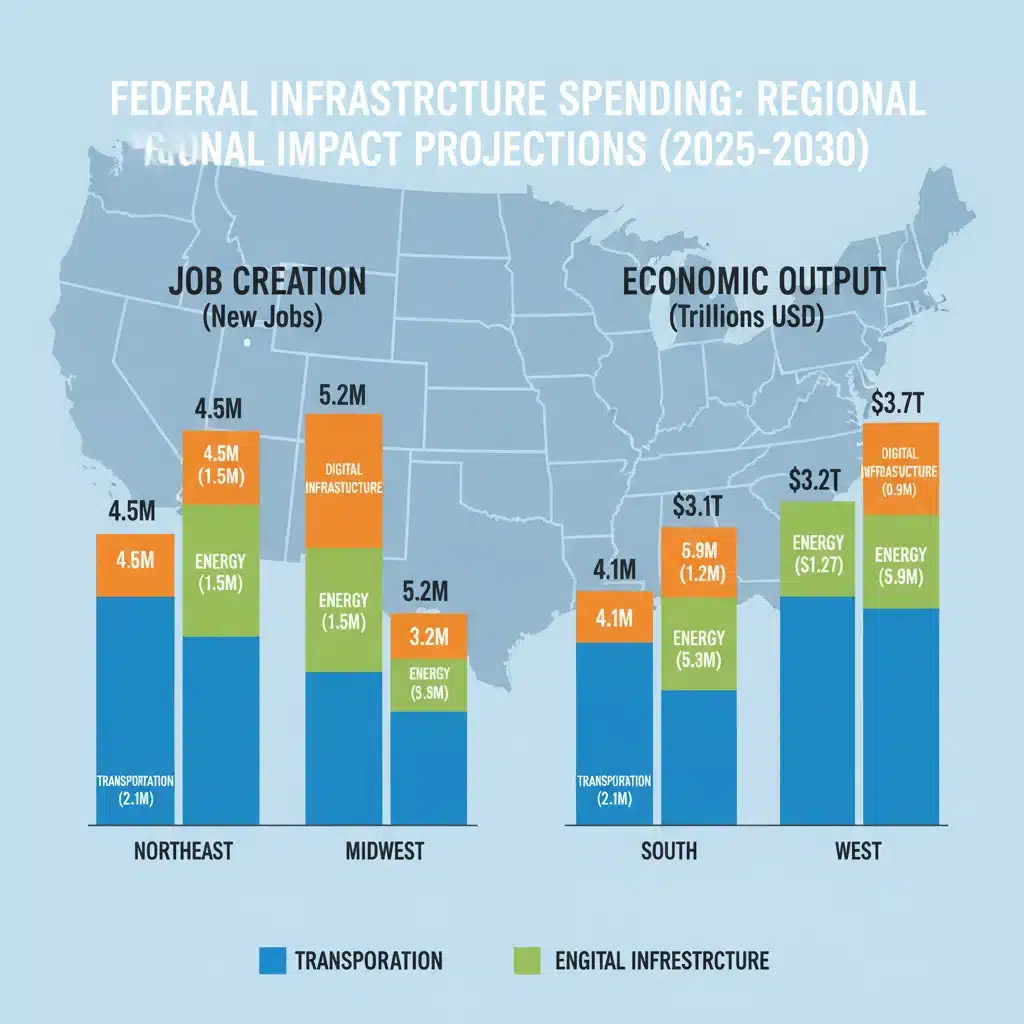
The Northeast, with its dense population centers and aging infrastructure, stands to benefit significantly from federal infrastructure spending. The region’s extensive network of roads, bridges, and public transit systems, many dating back decades or even a century, are prime candidates for modernization. Projects focusing on high-speed rail, tunnel repairs, and port upgrades are expected to be prominent.
- Growth Opportunities: Expect a surge in construction jobs, particularly in urban areas. Improved transit will reduce commuting times, boosting productivity and real estate values. Port modernizations will enhance global trade capabilities. Digital infrastructure investments will close broadband gaps in more rural parts of the region, fostering remote work and digital innovation.
- Key Sectors Benefiting: Construction, engineering, materials manufacturing, logistics, and technology.
- Data-Backed Insights: Studies by economic think tanks project substantial job creation in metropolitan areas like New York, Boston, and Philadelphia. For instance, a focus on upgrading Amtrak’s Northeast Corridor could generate tens of thousands of direct and indirect jobs, while significantly improving inter-city connectivity and reducing carbon emissions. Data from the American Society of Civil Engineers (ASCE) consistently highlights the Northeast’s critical need for infrastructure upgrades, making it a priority region for federal investment.
- Challenges: High labor costs, complex regulatory environments, and the sheer scale of urban projects can pose implementation hurdles. Workforce development programs will be crucial to ensure a sufficient supply of skilled labor.
Midwest: Revitalizing Industrial Cores and Agricultural Links
The Midwest, often referred to as the nation’s industrial heartland and agricultural powerhouse, will see federal infrastructure spending focused on different priorities. Here, investments will likely target improving freight rail, inland waterways, and rural broadband, alongside modernizing manufacturing facilities and energy grids.
- Growth Opportunities: Enhanced transportation networks will lower shipping costs for agricultural products and manufactured goods, boosting regional competitiveness. Investments in renewable energy infrastructure will create jobs in green technology and manufacturing. Rural broadband expansion will unlock new economic opportunities in underserved communities, attracting remote workers and supporting precision agriculture.
- Key Sectors Benefiting: Manufacturing, agriculture, logistics, renewable energy, and technology.
- Data-Backed Insights: Federal funding for projects like the Great Lakes Restoration Initiative, combined with investments in lock and dam modernizations on major rivers, will significantly benefit states like Illinois, Michigan, and Ohio. Economic models predict that improved freight efficiency could save billions annually for Midwestern industries. Furthermore, the expansion of electric vehicle charging networks and smart grid technologies will drive innovation and job growth in the automotive and energy sectors. Data indicates a significant need for upgrading aging water infrastructure in many Midwestern cities, which will be a major focus of federal efforts.
- Challenges: Attracting and retaining a skilled workforce in some declining industrial areas, and navigating the complexities of large-scale rural infrastructure deployment.
South: Managing Rapid Growth and Climate Resilience
The South, experiencing rapid population growth and significant climate vulnerabilities, will see federal infrastructure spending directed towards managing expansion, improving climate resilience, and expanding access to essential services. Investments in new transportation corridors, coastal protection, and updated water management systems are anticipated.
- Growth Opportunities: New infrastructure will support continued population and business influx, preventing bottlenecks and maintaining quality of life. Coastal and flood resilience projects will protect valuable assets and economies. Expanded access to clean water and broadband will improve public health and economic equity, particularly in historically underserved areas.
- Key Sectors Benefiting: Construction, real estate, tourism, energy, and environmental engineering.
- Data-Backed Insights: States like Florida, Texas, and the Carolinas, which are experiencing substantial demographic shifts, will be major recipients of federal infrastructure spending. For example, investments in hurricane protection and resilient energy grids in coastal regions are critical and will spur significant economic activity. Economic projections suggest that every dollar invested in resilience can save multiple dollars in disaster recovery costs, making these investments economically sound. The expansion of port infrastructure along the Gulf and Atlantic coasts will also bolster international trade.
- Challenges: Balancing rapid development with environmental protection, addressing labor shortages in high-growth areas, and ensuring equitable distribution of benefits across diverse communities.
West: Addressing Water Scarcity, Wildfires, and Renewable Energy Potential
The Western U.S. faces unique infrastructure challenges, including widespread water scarcity, increasing wildfire risks, and a vast landscape ripe for renewable energy development. Federal infrastructure spending here will likely prioritize water infrastructure, wildfire mitigation, and large-scale renewable energy projects.
- Growth Opportunities: Investments in water recycling, desalination, and improved irrigation systems will secure vital resources for agriculture and urban centers. Wildfire prevention infrastructure (e.g., undergrounding power lines, forest management) will protect communities and ecosystems. The development of solar, wind, and geothermal energy projects will create thousands of green jobs and position the West as a leader in renewable energy.
- Key Sectors Benefiting: Water management, environmental services, renewable energy, construction, and tourism (through protected natural resources).
- Data-Backed Insights: California, Arizona, and other Western states are at the forefront of water infrastructure innovation. Federal funding for projects like the Colorado River Basin conservation efforts or forest health initiatives will have profound economic and environmental benefits. The Bureau of Reclamation’s data consistently highlights the urgent need for water infrastructure upgrades in the region. Furthermore, the immense potential for renewable energy generation in states like Nevada and New Mexico will be unlocked by investments in transmission lines and storage facilities, creating a new energy economy.
- Challenges: Navigating complex land-use regulations, managing interstate water disputes, and securing the necessary workforce for specialized environmental and energy projects.
Cross-Cutting Impacts and Broader Economic Implications
Beyond the specific regional spotlights, federal infrastructure spending in 2026 will have several overarching impacts on the U.S. economy:
- Job Creation: A primary goal is the creation of millions of well-paying jobs, both directly in construction and indirectly in supporting industries. This includes skilled trades, engineers, project managers, and material suppliers.
- Productivity Growth: Modernized infrastructure reduces transportation costs, shortens delivery times, and improves access to markets, all of which contribute to increased economic productivity and efficiency.
- Inflationary Pressures: While beneficial, such large-scale spending can also exert inflationary pressures on raw materials (e.g., steel, concrete) and labor, which policymakers will need to monitor closely.
- Technological Advancement: The demand for smart infrastructure solutions (e.g., IoT sensors, AI-driven traffic management, advanced materials) will accelerate research, development, and adoption of new technologies.
- Equity and Access: A deliberate focus on bringing infrastructure improvements to underserved rural and urban communities aims to reduce economic disparities and improve access to essential services like broadband, clean water, and reliable transportation.
- Supply Chain Resilience: Investments in ports, rail, and freight corridors will help fortify supply chains, making them less vulnerable to disruptions and more efficient in moving goods across the country.
These broader implications underscore the transformative potential of sustained federal infrastructure spending, extending far beyond the immediate construction sites to influence the fundamental structure and competitiveness of the U.S. economy.

Strategic Considerations for Businesses and Policymakers
For businesses, understanding these regional dynamics is paramount. Companies in construction, engineering, materials, logistics, and technology should be strategically positioning themselves to capitalize on the surge in demand. This includes:
- Workforce Development: Investing in training and apprenticeship programs to build a skilled labor force capable of executing complex infrastructure projects.
- Supply Chain Optimization: Strengthening relationships with suppliers and ensuring robust supply chains for critical materials.
- Technological Adoption: Integrating advanced technologies like BIM (Building Information Modeling), drones, and AI for more efficient project management and execution.
- Regional Partnerships: Collaborating with local governments, educational institutions, and community organizations to address specific regional needs and workforce requirements.
Policymakers, on the other hand, face the intricate task of effective project selection, oversight, and equitable distribution of funds. Key considerations for them include:
- Data-Driven Prioritization: Using robust data and economic models to identify the most impactful projects that yield the highest return on investment and address critical needs.
- Streamlined Permitting: Implementing measures to expedite project approvals without compromising environmental and safety standards.
- Monitoring and Evaluation: Establishing clear metrics to track progress, economic impact, and ensure accountability for federal infrastructure spending.
- Long-Term Planning: Developing sustainable funding mechanisms and maintenance plans to ensure the longevity and effectiveness of new infrastructure.
The success of this federal infrastructure spending hinges not just on the allocation of funds, but on the collaborative efforts of all stakeholders to translate investment into tangible, long-lasting economic and societal benefits.
Potential Challenges and Mitigation Strategies
While the outlook for federal infrastructure spending is largely positive, several challenges could impede its full potential:
- Inflation and Cost Overruns: The sheer demand for materials and labor could drive up project costs, potentially limiting the number of projects that can be completed within budget. Mitigation requires careful project budgeting, fixed-price contracts where appropriate, and continuous market monitoring.
- Workforce Shortages: A persistent shortage of skilled labor in construction and related fields could slow down project execution. Addressing this requires aggressive investment in vocational training, apprenticeships, and potentially immigration reform to attract skilled workers.
- Supply Chain Disruptions: Global supply chain issues could delay the delivery of critical components and materials. Diversifying sourcing, fostering domestic production, and maintaining strategic reserves can help mitigate this.
- Bureaucracy and Permitting Delays: Complex regulatory processes can significantly prolong project timelines. Streamlining environmental reviews and permitting processes, while maintaining crucial protections, is essential.
- Political Will and Continuity: The long-term success of infrastructure projects often spans multiple political cycles. Sustained bipartisan support is critical to ensure projects are completed and maintained.
Proactive planning and adaptive strategies will be essential to navigate these challenges and ensure that the federal infrastructure spending delivers on its promise of a stronger, more resilient American economy.
Conclusion: A Transformative Era for U.S. Regional Economies
The 2026 federal infrastructure spending represents a generational opportunity to fundamentally reshape the U.S. economic landscape. From modernizing the aging transit systems of the Northeast to bolstering the climate resilience of the South, revitalizing the industrial core of the Midwest, and addressing the unique environmental challenges of the West, the investments are poised to touch every corner of the nation. The data-backed projections indicate significant growth opportunities across various sectors, leading to job creation, increased productivity, and a more competitive economy.
However, the realization of these benefits hinges on effective implementation, strategic planning, and a concerted effort from all levels of government, private industry, and local communities. By understanding the distinct regional impacts, stakeholders can tailor their approaches to maximize the positive outcomes and proactively address potential hurdles. As 2026 approaches, the nation stands at the precipice of an infrastructure renaissance, one that promises not only to build and repair physical assets but also to lay a robust foundation for enduring economic prosperity and a more connected, resilient future for all Americans. The long-term impact of this federal infrastructure spending will define the economic trajectory of the U.S. for decades to come, making its careful execution paramount.