Navigating the New Normal: Unpacking Current Shifts in Digital Life and Society

We live in an era of quiet but profound transformation, where the digital and physical worlds have merged so completely that the line between them is no longer visible. The online persona, once a playful avatar or a curated profile, has become a permanent, high-stakes extension of our identity—a record scrutinized by employers, a performance judged by peers, and a target for new forms of manipulation. This constant documentation of our lives creates a low-grade anxiety, a sense that we are perpetually on display, navigating a landscape whose rules seem to change overnight.
This shift extends far beyond our personal profiles. It’s fundamentally reordering the bedrock of society, from how we earn a living to how we form communities. The traditional 9-to-5 job is giving way to a decentralized gig economy and micro-entrepreneurship, creating both historic freedom and precariousness. The public square has been abandoned for millions of niche digital campfires, spaces that offer belonging but also risk creating deeper echo chambers. These are not isolated trends; they are interconnected seismic events reshaping our economic and social realities.
So, how do we navigate this new normal? This article unpacks the critical shifts defining our contemporary experience. We will explore the evolving nature of digital identity in the age of AI and deepfakes, dissect the burgeoning informal digital economy, and examine the migration toward private online communities. Finally, we will address the central data dilemma of our time, offering practical strategies for reclaiming a measure of control in an age of pervasive surveillance. Understanding these forces is the first step toward consciously shaping our role within them.
The Evolving Digital Identity: Beyond Avatars and Profiles
The line between our physical lives and our digital selves has all but vanished. What began as a playful escape—a collection of usernames and curated profiles—has morphed into a complex, high-stakes extension of our core identity. It’s a permanent record and a real-time performance, all at once. Your online persona is no longer just a reflection of you; in many ways, it is you.
This integration brings profound consequences for how we interact, build reputations, and even secure employment. The digital breadcrumbs we leave behind are now forming a full, often unforgiving, narrative about who we are. We’ve moved from crafting an identity to simply being documented.
From Anonymity to Authenticity: A Shifting Paradigm
The early internet promised a clean slate. Users reveled in the anonymity of forums and chat rooms, creating personas completely detached from their real-world baggage. That digital frontier, has been paved over and commercialized. Today, platforms like LinkedIn and even visually-driven apps demand a level of verified authenticity that ties directly to our professional and personal lives—a digital résumé that, let’s be honest, is scrutinized more than your actual CV.
This shift isn’t trivial. A survey from CareerBuilder found that 70% of employers use social networking sites to research job candidates. The demand is for a consistent, “brand-safe” individual whose online presence aligns with corporate values. But is this true authenticity, or just a carefully managed performance? This change reflects one of the many profound societal shifts driven by our interconnected lives. The pressure to present a polished, perpetually “on” version of oneself has created a new kind of social anxiety.
The Impact of AI and Deepfakes on Digital Trust
Just as we’ve grown accustomed to this new era of digital transparency, artificial intelligence arrives to muddy the waters entirely. The rise of technical deepfakes and AI-generated content poses a direct threat to the very concept of a verifiable digital identity. If an AI can perfectly mimic your voice from a three-second clip or create a video of you saying something you never uttered, what does proof of identity even mean anymore?
This isn’t a distant problem. Dr. Elias Vance, a researcher at MIT’s Digital Integrity Initiative, suggests we are on the cusp of an “identity crisis at scale.” He explains that the tools to create convincing fakes are becoming widely accessible, eroding the trust that underpins online communication and commerce. Managing this new reality is a core challenge of the algorithmic age we now inhabit. The technology that connects us now holds the power to create undetectable forgeries of us. The next frontier isn’t about building a better profile, but about proving the one you have is actually real.
Economic Undercurrents: The Informal Digital Marketplace
Forget the 9-to-5. A shadow economy is flourishing online, operating in the spaces between traditional employment and outright entrepreneurship. This isn’t just about a few side hustles; it represents a underlying reordering of how value is created and exchanged, largely outside the view of conventional economic metrics. This is the new wild west of work.
The Rise of Micro-Entrepreneurship
The barrier to entry for starting a business has effectively collapsed. Platforms like Etsy, Substack, and Patreon have enabled millions to become what can only be described as micro-entrepreneurs. They aren’t just selling crafts or writing newsletters; they are building niche communities and monetizing personal brands with startling efficiency. An individual can now manage sourcing, marketing, sales, and fulfillment from a single device, a reality that was pure science fiction just a couple of decades ago.
This isn’t a fringe movement. A recent study from the Aspen Institute’s Future of Work Initiative found that over 30% of American adults have earned money in the digital platform economy. What most people miss is how this atomizes labor, turning a workforce into a collection of individual vendors. Is this true economic freedom, or is it simply a more stylish form of precarity? The answer, I suspect, is uncomfortably in between, reflecting the silent revolution in modern societal values.
Challenges and Opportunities in the Gig Economy
The gig economy promised flexibility and autonomy, but the reality is far more complex. For some, it’s a lifeline that provides supplemental income on their own terms. For others, it’s a trap of inconsistent pay and zero benefits, with algorithms acting as unforgiving bosses. The trade-offs are stark, creating a new class of workers navigating a system with few safety nets.
The entire system functions like a high-stakes balancing act. It pits the desire for freedom against the need for security. Here’s a breakdown of the core tensions:
| Aspect | Traditional Employment | Informal Digital Work |
|---|---|---|
| Income Stability | Predictable, regular salary | Variable, often feast-or-famine cycles |
| Benefits | Health insurance, retirement plans, paid time off | None; worker bears full cost and risk |
| Autonomy | Low; structured hours and management oversight | High; control over when and where to work |
| Career Progression | Defined corporate ladder | Self-directed; growth depends on personal branding and skill acquisition |
| Safety Net | Unemployment benefits, worker’s compensation | Minimal to non-existent |
Decentralized Finance (DeFi) and Its Societal Reach
Parallel to the rise of gig work, a new financial infrastructure is being built with the potential to either democratize or destabilize global economics. Decentralized Finance (DeFi) uses blockchain technology to create financial systems — for lending, borrowing, and trading — without traditional intermediaries like banks. This isn’t just a niche for tech enthusiasts anymore; it’s seeping into the creator economy and offering alternative funding mechanisms for these new micro-entrepreneurs.
Democratizing Access to Capital
The primary promise of DeFi is its potential to bank the unbanked and provide capital to those excluded from the legacy financial system. An artist in a developing nation could theoretically secure a loan from a global pool of lenders based on the value of their digital creations, without ever stepping into a bank. This peer-to-peer model sidesteps gatekeepers, making financial tools more accessible. It’s a powerful concept that directly challenges centuries of centralized financial control.
Regulatory Hurdles and Consumer Protection
Of course, this unregulated frontier is fraught with peril. The very lack of oversight that makes DeFi appealing also makes it a hotbed for scams, fraud, and catastrophic losses — a far cry from the FDIC-insured savings account your parents had. Governments are scrambling to understand and regulate this space, but they are often several steps behind the technology. The central tension is how to protect consumers from bad actors without stifling the very innovation that makes the system so compelling.
This struggle highlights how deeply the interconnected web of digital living reshapes society. As these informal marketplaces grow, they will inevitably collide with formal structures, forcing a reckoning over what “work” and “value” mean in the algorithmic age we now inhabit.
We are on the cusp of an ‘identity crisis at scale.’ The tools to create convincing fakes are becoming widely accessible, eroding the trust that underpins online communication and commerce.
— Dr. Elias Vance, Researcher at MIT’s Digital Integrity Initiative
| Aspect | Traditional Employment | Informal Digital Work |
|---|---|---|
| Income Stability | Predictable, regular salary | Variable, often feast-or-famine cycles |
| Benefits | Health insurance, retirement plans, paid time off | None; worker bears full cost and risk |
| Autonomy | Low; structured hours and management oversight | High; control over when and where to work |
| Career Progression | Defined corporate ladder | Self-directed; growth depends on personal branding and skill acquisition |
| Safety Net | Unemployment benefits, worker’s compensation | Minimal to non-existent |
Reimagining Community: Digital Spaces as Social Hubs
The public square of mainstream social media is crumbling. While legacy platforms optimized for broadcast-style performance, a counter-movement has quietly gained irreversible momentum toward niche, private spaces. People are not just logging off; they are logging *in* to something different — spaces built for genuine interaction, not just impression counts. What most people miss is that this isn’t about abandoning digital life, but about seeking a more authentic version of it, a clear departure from how digital structures redefine daily life.
The scale of this migration is staggering.
Consider that Discord, once seen as a gamer-only tool, now hosts over 19 million active servers weekly, according to its own reporting. These servers cover everything from urban gardening to quantum physics. This is the modern equivalent of the local hobby shop, a third place where digital belonging is forged through shared interest rather than shared aesthetic — a stark contrast to the performative nature of older networks.
But are these new digital campfires an improvement, or are they simply more effective digital echo chambers with better moderation tools? The intimacy they offer can foster deep connections, yet it can also amplify fringe ideas with frightening efficiency. This tension highlights one of the most significant modern societal shifts currently unfolding, challenging our very definition of community in an increasingly fragmented world.
The Data Dilemma: Privacy, Surveillance, and Empowerment
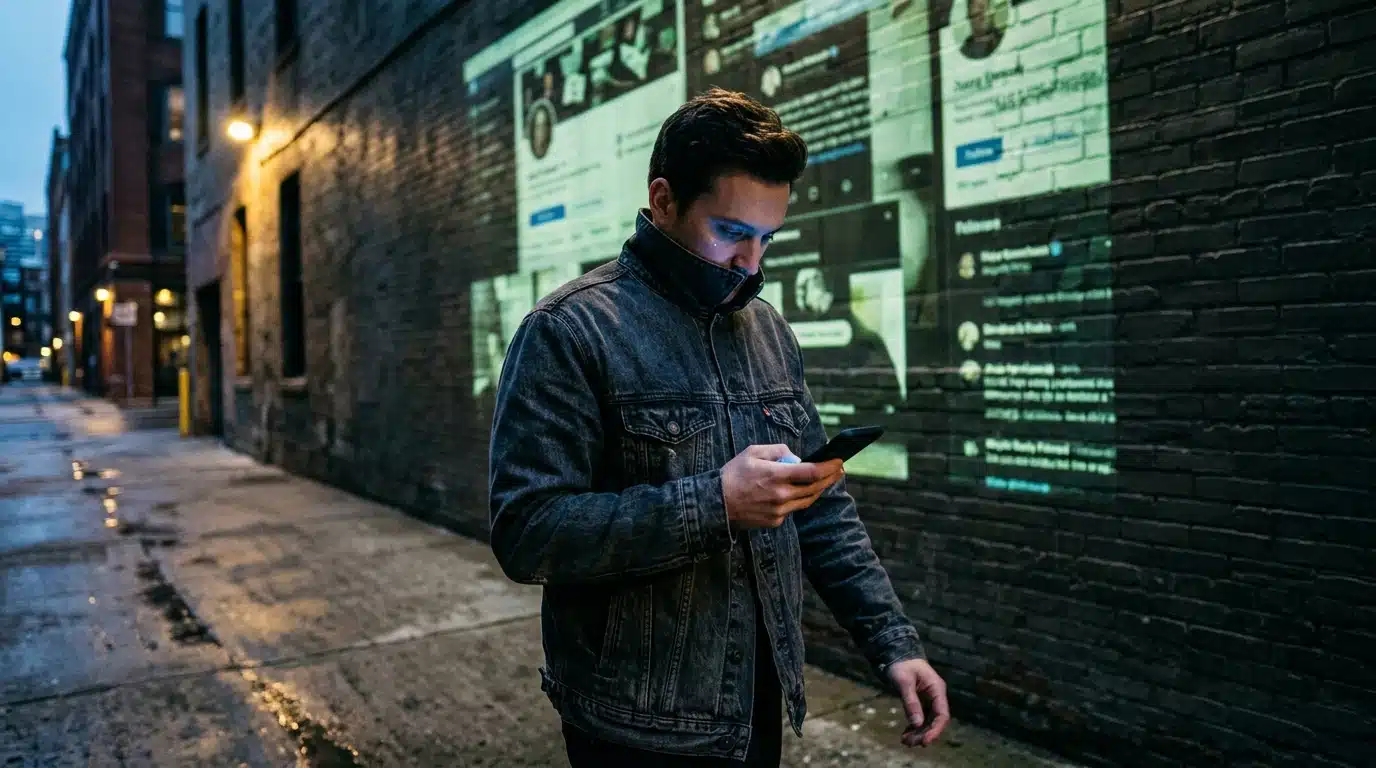
We claim to value our privacy above all else, yet we willingly trade our most personal information for a bit of convenience. This is the central, uncomfortable truth of our digital lives. Every free service, from social media to navigation apps, is paid for with a currency we barely understand: our own data. This transaction has created a massive surveillance apparatus, operated not just by governments, but by corporations whose business models depend on knowing you better than you know yourself.
The result is a constant, low-grade anxiety. A report from the Pew Research Center found that 79% of Americans are concerned about the way their data is being used by companies. People are not stupid. They know they are being watched.
Navigating the Privacy Paradox: Convenience vs. Control
The “privacy paradox” describes the gap between what people say about privacy and what they actually do. We express outrage over data breaches, then sign up for a new app a moment later without a second thought for the permissions we grant it. Why? The simple answer is that the benefits feel immediate and tangible, while the risks are abstract and distant. A personalized recommendation saves you time now; the potential misuse of your location history is a problem for later.
This isn’t just a personal failing; it’s a feature of the system. The entire algorithmic age is built on making data surrender as frictionless as possible. User interfaces are designed to guide you toward sharing, with privacy settings often buried under layers of menus. It is, I suspect, a deliberate design choice meant to exploit our natural inclination toward the path of least resistance. The convenience is just too good for most to pass up.
Emerging Regulations and Their Global Impact
In response to growing public pressure, governments have started to intervene. Regulations like Europe’s General Data Protection Regulation (GDPR) and California’s Consumer Privacy Act (CCPA) represent attempts to rebalance the scales, granting users rights over their own information. These laws have forced companies to be more transparent about data collection and have given users the right to access or delete their personal data.
But have they changed the game? For many, the result has been little more than an endless barrage of “cookie consent” pop-ups — a minor annoyance that we click through to get to the content we want. What most people miss is that while these laws create a framework for accountability, their enforcement is often slow and complex. Corporations have armies of lawyers dedicated to finding loopholes, turning a revolutionary concept into another box-ticking exercise. The underlying modern societal shifts toward datafication continue largely unabated.
Tools and Strategies for Digital Self-Defense
Despite the systemic challenges, individuals are not entirely powerless. A growing movement toward “data empowerment” focuses on providing users with the knowledge and tools to protect themselves. This isn’t about going off the grid; it’s about making conscious, informed choices. Think of it less like building a fortress and more like learning basic self-defense — practical steps to reduce your vulnerability.
Privacy-Focused Browsers and Search Engines
Your web browser and search engine are the primary gateways for data collection. Mainstream options like Chrome and Google Search build detailed profiles on you for targeted advertising. Privacy-focused alternatives function differently. Browsers like Brave automatically block trackers and ads, while search engines like DuckDuckGo don’t log your search history at all. Switching is one of the single most effective steps you can take. It’s like choosing to have a private conversation instead of shouting in a crowded room.
Understanding Data Permissions and Opt-Outs
Managing data permissions is the digital equivalent of deciding who gets a key to your house. Do you give every app a master key that works everywhere, or do you grant specific, limited access? Taking control requires a bit of digital housekeeping, but it’s primary for anyone serious about their privacy.
- Review App Permissions: Regularly check the settings on your smartphone. Does that simple calculator app really need access to your contacts and microphone? If not, revoke the permission.
- Be Stingy with Location Data: When an app asks for your location, choose “While Using the App” or “Ask Next Time” instead of “Always.” There are very few legitimate reasons for an app to track you when you’re not actively using it.
- Use burner emails: When signing up for newsletters or services you don’t fully trust, use a disposable email address. This prevents your primary inbox from being flooded and limits the ability to connect your activity across different platforms.
- Actively Opt-Out: Companies often bury their opt-out links for data sharing and targeted advertising. Take the ten minutes required to find them in the privacy settings of the services you use most. It’s tedious, but it directly impacts the data available for sale.
This ongoing battle over data isn’t just about technology; it’s about power. The next frontier may involve data unions and collective bargaining for our digital rights, fundamentally challenging the idea that our personal information is a resource to be mined for free.
Cultural Resonance: Digital Trends Shaping Offline Behavior
The firewall between digital fads and physical reality has been utterly demolished. What starts as a niche meme or a viral video clip now regularly dictates what we buy, where we eat, and even how we protest. A recent study by the Digital Marketing Institute revealed that a staggering 62% of consumers under 30 admitted to purchasing a product directly because they saw it trending on a platform like TikTok or Instagram. This isn’t passive influence; it’s active behavioral engineering, happening in plain sight.
Consider the countless food crazes that have sent specific ingredients flying off shelves. One week it’s feta cheese, the next it’s a particular brand of pink sauce. These flash-in-the-pan obsessions are perfect examples of how a digital echo chamber can create real-world economic ripples, putting immense pressure on supply chains to meet sudden, algorithm-fueled demand. What most people miss is that this phenomenon extends far beyond simple consumerism, driving the very fabric of our modern societal shifts.
This dynamic acts like a cultural stock market, where attention is the currency and virality determines value.
Beyond commerce, this trend is reshaping civic engagement. Online discourse and hashtag campaigns are no longer just slacktivism; they are the primary organizing tools for real-world movements, capable of mobilizing thousands of people in a matter of hours. The line between a trending topic and a protest on the street has become dangerously thin. The unpredictable nature of this connection suggests we are only just beginning to understand the true power and potential peril of a fully networked culture.
The Future of Work: Blurring Lines and New Paradigms
The traditional nine-to-five commute is becoming a relic. While companies attempt to lure employees back to physical offices with perks and mandates, the data suggests a permanent psychological shift has occurred. The rigid structure of pre-digital work life has been shattered, and what’s emerging is a far more fluid—and arguably more contentious—professional landscape. The very concept of “going to work” has been redefined for millions.
The Hybrid Work Revolution: Benefits and Challenges
Hybrid models are not a simple compromise; they represent a basic restructuring of corporate culture. A recent study from Stanford University highlighted that employees in a hybrid arrangement were 13% more productive and reported higher job satisfaction. But what is the hidden cost of this flexibility? The same study found that opportunities for mentorship and spontaneous collaboration—the very things that build a cohesive team—declined significantly.
Companies are now grappling with a two-tiered system where proximity bias can unconsciously favor in-office workers for promotions and key projects. This creates a difficult balancing act. Managing this new environment is less about scheduling and more about redesigning communication from the ground up, a challenge that ties directly into the larger digital living impact on society and the economy. Is the convenience of working from home worth the potential erosion of company culture and equitable career progression?
The truth is, there’s no one-size-fits-all solution. For some, the autonomy of remote work is a massive boost, making them ideal candidates for the lifestyle of a modern digital nomad. For others, the office is a necessary sanctuary for focus and social connection.
Reskilling and Upskilling for the Automated Age
Parallel to the remote work debate is the relentless march of automation. It’s no longer just about robots on an assembly line. AI and machine learning are now performing tasks previously reserved for white-collar professionals, from drafting legal documents to analyzing financial reports. The World Economic Forum predicts that while automation will displace millions of jobs, it will also create new ones—but these new roles require entirely different skills.
This forces a critical question upon the workforce: adapt or become obsolete. The demand is shifting from rote task execution to skills like critical thinking, emotional intelligence, and digital literacy. According to Dr. Anya Sharma, a labor economist at the University of Chicago, “We are witnessing a great skill polarization.” She explains that jobs requiring uniquely human interaction or complex problem-solving are growing, while routine-based roles are diminishing at an accelerated rate. Trying to compete with old skills is like trying to navigate a city with an outdated paper map while everyone else is using real-time GPS.
This ongoing shift demands a commitment to lifelong learning, not as a corporate buzzword but as a basic survival strategy. The ability to unlearn old methods and embrace new technologies will define career longevity, profoundly altering the underlying fabric of modern societal shifts. The future belongs not to those who know the most, but to those who can learn the fastest.
The Unseen Negotiation
As we adapt to these digital currents, we are all engaged in a constant, often unconscious, negotiation. We trade privacy for convenience, autonomy for security, and broad social connection for the comfort of niche communities. The tools that empower us to become micro-entrepreneurs also atomize us as a workforce, and the platforms that connect us with like-minded souls can just as easily isolate us from differing views. There are no simple answers or easy villains in this story—only a complex web of trade-offs that we make every day with each click, post, and transaction.
The most critical question, then, is not what technology will do to us, but what we will choose to do with it. As AI blurs the line between real and fake, and decentralized systems challenge traditional power structures, we have a fleeting opportunity to set new norms. Will we build digital worlds that amplify our best instincts for community and creativity, or will we construct more efficient cages of performance and control? The next great societal shift won’t be technological; it will be the conscious choice we make about which human values to embed in the code that runs our lives.
Frequently Asked Questions
How are digital identities changing in the age of AI?
Digital identities are moving from curated profiles to a state of constant verification crisis. The rise of AI-driven deepfakes and generative content erodes trust, making it difficult to prove that your online presence is genuinely yours. This shifts the challenge from simply managing your reputation to actively defending your identity against convincing forgeries.
What are the biggest economic shifts driven by digital lifestyles today?
The largest economic shifts include the rise of micro-entrepreneurship on platforms like Etsy and Substack, and the expansion of the gig economy. This is creating a move away from stable, long-term employment toward more flexible but precarious forms of work. Decentralized Finance (DeFi) is emerging as an alternative financial system that challenges traditional banking.
How do online communities impact real-world social dynamics?
Online communities are causing a social fragmentation, as people migrate from large, public social networks to smaller, private digital spaces like Discord servers. While these niche groups can foster deep connections and a sense of belonging, they also risk creating powerful echo chambers. This can amplify fringe ideas and reduce exposure to diverse perspectives, impacting real-world social and political cohesion.
What are the most effective ways to protect digital privacy?
Effective digital privacy protection involves proactive measures known as ‘digital self-defense.’ Key strategies include switching to privacy-focused browsers like Brave and search engines like DuckDuckGo to block trackers. It is also key to regularly review and limit app permissions on your devices, especially for location data, and use burner emails for untrusted services.
Which digital trends are currently having the most significant impact on offline culture?
The demand for a polished ‘authentic’ online persona is directly influencing hiring decisions and creating new social pressures. The gig economy is restructuring labor markets and challenging traditional definitions of work and benefits. the migration to niche online communities is altering how people form social bonds and engage with society, sometimes leading to increased real-world polarization.