Digital Divide 2.0: Emerging Tech Reshaping Access & Inequality by 2026

Digital Divide 2.0: How 4 Emerging Technologies are Reshaping Access and Inequality by 2026
The digital revolution, while promising unprecedented connectivity and opportunity, has paradoxically deepened existing societal inequalities, giving rise to what is commonly known as the digital divide. This chasm, initially defined by disparities in internet access and computer ownership, is rapidly evolving. As we hurtle towards 2026, a new generation of emerging technologies isn’t just bridging old gaps; it’s creating entirely new ones, ushering in ‘Digital Divide 2.0’. Understanding how these advancements—Artificial Intelligence (AI), 5G connectivity, the Internet of Things (IoT), and Blockchain—are reshaping access and inequality is crucial for policymakers, educators, businesses, and individuals alike.
The original digital divide focused on basic access: who had a computer, who had internet. Today, the conversation is far more nuanced. It’s about meaningful access, digital literacy, affordability, and the ability to leverage technology for social and economic advancement. It’s about the quality of connection, the relevance of content, and the skills to navigate increasingly complex digital ecosystems. The stakes are higher than ever, as participation in the digital economy becomes synonymous with participation in society itself. Failure to address this evolving emerging tech digital divide risks exacerbating global disparities, leaving vast populations behind in an increasingly automated and interconnected world.
This article delves into the transformative power of these four key emerging technologies, analyzing their potential to both democratize access and deepen inequality. We will explore the mechanisms through which they operate, the current trends indicating their future impact, and the proactive measures required to ensure a more equitable digital future. By understanding the complexities of Digital Divide 2.0, we can better prepare for the challenges and harness the opportunities that lie ahead by 2026 and beyond.
Artificial Intelligence (AI): The Double-Edged Sword of Advancement
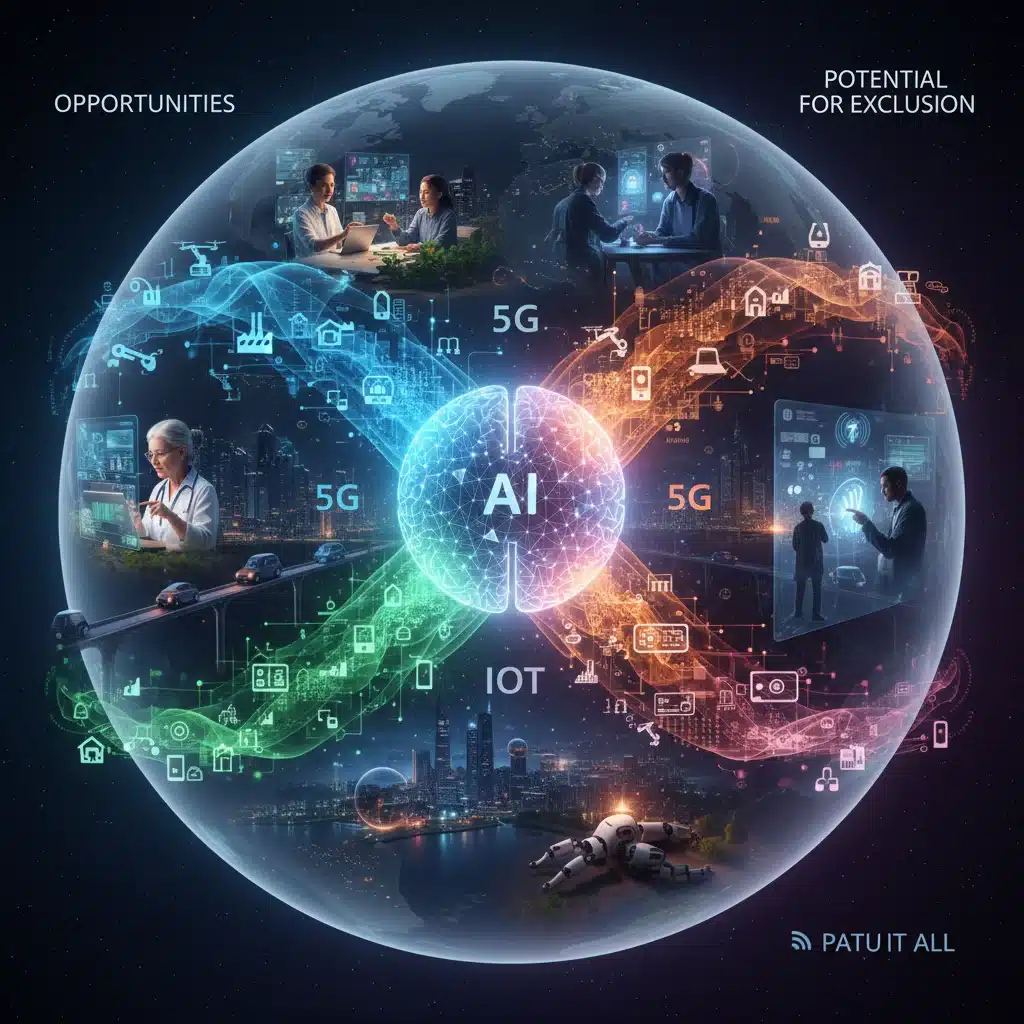
Artificial Intelligence (AI) is arguably the most transformative technology of our era. From sophisticated algorithms powering personalized recommendations to advanced machine learning driving autonomous vehicles and medical diagnostics, AI’s reach is expanding exponentially. By 2026, AI will be embedded in nearly every facet of our lives, promising unprecedented efficiencies, innovations, and solutions to complex problems. However, its proliferation also presents a significant challenge to the emerging tech digital divide.
AI’s Potential to Bridge the Divide:
- Personalized Education: AI-powered learning platforms can adapt to individual student needs, offering customized curricula and support, potentially leveling the playing field for learners in resource-poor areas.
- Healthcare Access: AI diagnostics can assist healthcare professionals in remote regions, providing quicker, more accurate diagnoses and reducing the burden on limited medical infrastructure.
- Language Barriers: Real-time AI translation tools can break down communication barriers, facilitating global collaboration and access to information for non-English speakers.
- Agricultural Optimization: AI can help farmers in developing countries optimize crop yields, manage resources more efficiently, and adapt to climate change, improving food security.
AI’s Potential to Widen the Divide:
- Skill Gap and Job Displacement: As AI automates tasks, demand for certain human skills will diminish, potentially displacing workers in sectors vulnerable to automation, especially those with lower digital literacy. This creates an emerging tech digital divide in employment opportunities.
- Access to Advanced AI Tools: High-end AI tools and infrastructure are expensive and require significant computational power, often concentrated in developed nations and large corporations. This limits access for smaller businesses, startups, and individuals in less affluent regions.
- Algorithmic Bias: AI systems trained on biased data can perpetuate and even amplify existing societal inequalities, leading to discriminatory outcomes in areas like credit scoring, hiring, and criminal justice, disproportionately affecting marginalized communities.
- Data Colonialism: The collection and processing of vast amounts of data, essential for AI, often flow from developing countries to tech giants in developed nations, raising concerns about data ownership, privacy, and economic exploitation.
The challenge for 2026 is to democratize access to AI’s benefits while mitigating its risks. This requires investments in AI literacy, ethical AI development, and policies that promote inclusive access to AI infrastructure and training. Without these measures, AI could become a powerful engine for deepening the emerging tech digital divide.
5G Connectivity: The Foundation for a Hyper-Connected Future
Fifth-generation (5G) wireless technology promises unprecedented speeds, ultra-low latency, and massive connectivity, far surpassing its predecessors. It’s not just an upgrade; it’s a foundational shift that will enable a truly hyper-connected world, powering everything from smart cities and autonomous vehicles to advanced virtual reality experiences and remote surgery. By 2026, 5G will be the backbone of digital infrastructure in many parts of the world, but its deployment and accessibility will critically influence the emerging tech digital divide.
5G’s Potential to Bridge the Divide:
- Enhanced Rural Connectivity: 5G’s architecture, particularly its ability to utilize various spectrum bands, can provide high-speed internet to remote and underserved rural areas where fiber optic deployment is impractical.
- Affordable Access: Increased competition and efficiencies in 5G networks could potentially lead to more affordable data plans, making high-speed internet accessible to a broader population.
- New Economic Opportunities: Reliable, high-speed connectivity can catalyze economic growth in developing regions by enabling remote work, e-commerce, and digital entrepreneurship.
- Support for Critical Services: 5G’s low latency is vital for applications like remote healthcare and precision agriculture, which can significantly benefit communities currently lacking adequate infrastructure.
5G’s Potential to Widen the Divide:
- Uneven Deployment: The rollout of 5G is capital-intensive and complex, often prioritizing densely populated urban centers and economically powerful regions. This leaves rural and less affluent areas lagging, creating a significant emerging tech digital divide in connectivity.
- Cost of Devices: Accessing 5G’s full potential requires compatible devices, which are often more expensive than older models, creating a barrier for low-income individuals.
- Digital Literacy Requirements: While 5G provides the pipe, users still need the skills to utilize the advanced applications it enables, such as VR, AR, and complex IoT ecosystems.
- Infrastructure Disparities: Beyond the network itself, the supporting infrastructure (e.g., power grids, backhaul networks) needed for widespread 5G is often lacking in developing countries, slowing deployment and widening the gap.
Ensuring equitable 5G access by 2026 requires strategic government investment, public-private partnerships, and innovative deployment models that prioritize underserved communities. Without a concerted effort, the promise of 5G could become another layer in the emerging tech digital divide, separating those with ultra-fast, seamless connectivity from those stuck in digital slow lanes.
Internet of Things (IoT): Ubiquitous Data, Unequal Benefits
The Internet of Things (IoT) refers to the vast network of physical objects embedded with sensors, software, and other technologies for the purpose of connecting and exchanging data with other devices and systems over the internet. From smart home appliances and wearable health trackers to industrial sensors and connected vehicles, IoT is generating an unprecedented volume of data. By 2026, the number of connected devices is projected to be in the tens of billions, fundamentally altering how we interact with our environment and presenting new dimensions to the emerging tech digital divide.
IoT’s Potential to Bridge the Divide:
- Resource Management: IoT sensors can optimize water usage in agriculture, monitor energy consumption in smart grids, and track environmental conditions, leading to more efficient resource allocation, particularly beneficial in resource-scarce regions.
- Smart Cities for All: IoT can enhance public services like waste management, traffic flow, and public safety, potentially improving quality of life in urban areas, including those in developing countries.
- Preventive Healthcare: Wearable IoT devices can monitor vital signs and detect health issues early, offering proactive healthcare solutions, especially for populations with limited access to traditional medical facilities.
- Disaster Preparedness: IoT sensors can provide early warnings for natural disasters, helping communities prepare and mitigate impact, which is crucial for vulnerable populations.
IoT’s Potential to Widen the Divide:
- Cost of Devices and Infrastructure: The initial investment in IoT devices and the underlying network infrastructure (often requiring 5G) can be prohibitive for low-income households and communities.
- Data Ownership and Privacy: The immense data generated by IoT devices raises significant concerns about privacy, security, and who controls this data. Marginalized communities, often with less digital literacy, may be more vulnerable to data exploitation.
- Maintenance and Technical Expertise: Deploying and maintaining complex IoT systems requires specialized technical skills, which are scarce in many developing regions, creating a knowledge-based emerging tech digital divide.
- Digital Dependence: Over-reliance on IoT for essential services (e.g., smart grids, smart homes) can create new vulnerabilities. A lack of access to these technologies or disruptions can disproportionately affect those who cannot afford alternatives.
To prevent IoT from becoming another exclusive domain, efforts must focus on developing affordable, open-source IoT solutions, establishing robust data governance frameworks, and investing in digital literacy and technical training. Without these, the ubiquitous data promised by IoT might only serve to amplify existing inequalities, deepening the emerging tech digital divide by 2026.
Blockchain Technology: Decentralization and Digital Inclusion
Blockchain, the decentralized, distributed ledger technology underpinning cryptocurrencies like Bitcoin, has applications far beyond digital money. Its core tenets of transparency, immutability, and security make it a powerful tool for various sectors, from supply chain management and digital identity to voting systems and financial services. By 2026, blockchain is expected to revolutionize how trust is established and transactions are conducted, offering both profound opportunities and potential pitfalls for the emerging tech digital divide.
Blockchain’s Potential to Bridge the Divide:
- Financial Inclusion: Blockchain can provide secure, low-cost financial services to the unbanked and underbanked populations, enabling access to credit, remittances, and savings without traditional intermediaries.
- Digital Identity: Self-sovereign digital identities built on blockchain can empower individuals, especially refugees and marginalized groups, to prove their identity securely and access essential services.
- Transparent Governance: Blockchain can enhance transparency in governance, land registries, and voting systems, reducing corruption and empowering citizens in developing nations.
- Supply Chain Transparency: Tracking goods on a blockchain can ensure fair trade practices, verify ethical sourcing, and provide consumers with confidence, benefiting producers in developing countries.
Blockchain’s Potential to Widen the Divide:
- Energy Consumption: Many blockchain networks, particularly proof-of-work systems, are energy-intensive, raising environmental concerns and potentially increasing energy costs, which can disproportionately affect developing nations.
- Complexity and Education: Understanding and interacting with blockchain technology requires a certain level of digital literacy and technical understanding, posing a barrier for those unfamiliar with complex digital concepts.
- Regulatory Challenges: The decentralized nature of blockchain presents regulatory challenges. Lack of clear legal frameworks can hinder adoption and leave users vulnerable, particularly in regions with less developed legal systems.
- Access to Infrastructure: While blockchain is decentralized, participation still requires internet access and devices. The underlying digital infrastructure gap remains a fundamental barrier to its widespread adoption and inclusive benefit, contributing to the emerging tech digital divide.
For blockchain to truly serve as a tool for digital inclusion, efforts must focus on developing user-friendly interfaces, promoting digital literacy, and creating energy-efficient blockchain solutions. Without these considerations, blockchain, despite its decentralized promise, could inadvertently reinforce existing power structures and deepen the emerging tech digital divide by 2026.

Addressing Digital Divide 2.0: Strategies for an Equitable Future
The challenges posed by Digital Divide 2.0 are complex and multifaceted, requiring a holistic and multi-stakeholder approach. As AI, 5G, IoT, and Blockchain continue to mature and integrate into our daily lives by 2026, proactive strategies are essential to ensure that these technologies serve as catalysts for inclusion, not further division. Addressing the emerging tech digital divide is not merely a social imperative but an economic necessity for global prosperity.
Key Strategies Include:
- Universal and Affordable Access: Beyond basic internet, focus on providing high-quality, affordable 5G connectivity and devices. Governments must incentivize infrastructure development in underserved areas and explore public-private partnerships to reduce costs.
- Digital Literacy and Skills Development: Invest heavily in education and training programs that equip individuals with the skills needed to navigate and leverage emerging technologies. This includes critical thinking, data literacy, AI ethics, and basic coding, tailored to local contexts.
- Inclusive Design and Ethical AI: Encourage the development of technologies that are designed with diverse user needs in mind, ensuring accessibility, usability, and cultural relevance. Mandate ethical AI guidelines to prevent algorithmic bias and promote fairness.
- Data Governance and Privacy: Implement robust data protection laws and empower individuals with greater control over their data. This is crucial for building trust in IoT and AI systems, especially for vulnerable populations.
- Open-Source and Decentralized Solutions: Promote the development and adoption of open-source technologies and decentralized platforms (like certain blockchain applications) that can be adapted and utilized by communities without proprietary restrictions.
- Policy and Regulation: Governments need to develop forward-thinking policies and regulations that encourage innovation while safeguarding against potential harms of emerging technologies, ensuring equitable access and preventing monopolies.
- Public-Private Partnerships: Foster collaboration between governments, tech companies, NGOs, and academic institutions to pool resources, share expertise, and implement scalable solutions for bridging the emerging tech digital divide.
- Local Content and Relevance: Ensure that digital content and applications are relevant to local needs and cultures, available in local languages, and address specific challenges faced by communities.
The evolving nature of the emerging tech digital divide demands continuous adaptation and innovation in our approaches. What worked for Internet 1.0 will not suffice for Digital Divide 2.0. By prioritizing human-centric technology development and equitable access, we can steer towards a future where these powerful tools empower everyone, rather than leaving a significant portion of humanity behind.
Conclusion: Shaping an Inclusive Digital Future by 2026
The advent of Artificial Intelligence, 5G connectivity, the Internet of Things, and Blockchain technology heralds a new era of digital transformation. These four emerging technologies hold immense promise to solve some of humanity’s most pressing challenges, from healthcare and education to economic development and environmental sustainability. However, their rapid deployment also introduces new complexities and potential for exclusion, redefining the digital divide as we know it. By 2026, the success of our global society will, in part, be measured by how effectively we navigate this ‘Digital Divide 2.0’.
The original digital divide was about access; the new one is about meaningful participation and the ability to thrive in an increasingly AI-driven, hyper-connected, and data-rich world. The disparities in accessing high-speed 5G networks, leveraging AI-powered tools, participating in IoT ecosystems, or benefiting from blockchain’s decentralized applications will determine who leads, who innovates, and who is left to simply consume, or worse, be left out entirely. The emerging tech digital divide is not a static problem; it’s a dynamic challenge that evolves with every technological leap.
To foster an inclusive digital future, a concerted global effort is paramount. This includes strategic investments in infrastructure, comprehensive digital literacy programs, ethical technology development, robust data governance, and collaborative policy-making. It means recognizing that technology is not inherently good or bad, but its impact is shaped by how it is designed, deployed, and accessed. As we approach 2026, the decisions we make today regarding these emerging tech digital divide factors will profoundly influence the equity and sustainability of our interconnected world. The goal must be to ensure that the digital revolution truly benefits all of humanity, creating a future where access, opportunity, and innovation are shared, not hoarded.