AI’s Impact on US Employment: 5 Key Sectors Facing Transformation by 2026

The relentless march of artificial intelligence (AI) is not merely a technological marvel; it’s a profound economic and societal force. Its integration into various industries is redefining job roles, demanding new skill sets, and fundamentally altering the landscape of US employment. As we approach 2026, the transformations are accelerating, impacting virtually every sector, yet some are experiencing more immediate and significant shifts than others. Understanding these dynamics is crucial for policymakers, businesses, and individual workers alike.
The conversation around AI and employment often oscillates between two extremes: mass job displacement and the creation of entirely new, unforeseen roles. The reality, as always, lies somewhere in the nuanced middle. AI is not just replacing human tasks; it is augmenting human capabilities, creating efficiencies, and enabling innovations that were previously unimaginable. This article will delve into the profound impact of AI employment transformation across five key sectors in the US by 2026, offering recent updates and insights into what the future holds.
The Broad Strokes of AI’s Impact on US Employment
Before diving into specific sectors, it’s vital to grasp the overarching trends shaping the US job market due to AI. Automation, powered by AI, is increasingly capable of performing routine, repetitive, and data-intensive tasks. This includes everything from data entry and customer service to complex analytical processes. While some entry-level positions might be automated, the demand for roles requiring creativity, critical thinking, emotional intelligence, and complex problem-solving is expected to rise.
A recent report by the World Economic Forum suggests that while 85 million jobs may be displaced globally by 2025 due to automation, 97 million new roles may emerge. This net positive, however, masks significant disruption and the urgent need for reskilling and upskilling initiatives. In the US, the Bureau of Labor Statistics (BLS) is actively tracking these changes, noting a growing demand for AI specialists, data scientists, machine learning engineers, and robotics engineers, alongside a shift in the nature of existing jobs.
The speed of AI adoption is also a critical factor. Companies that embrace AI early gain a competitive advantage, often leading to increased productivity and, in some cases, expansion that can create new jobs. Conversely, businesses slow to adapt may struggle, potentially leading to job losses or stagnation. The government’s role in fostering an environment conducive to innovation while also providing safety nets and educational pathways for displaced workers is paramount.
Sector 1: Manufacturing and Logistics – A New Era of Automation
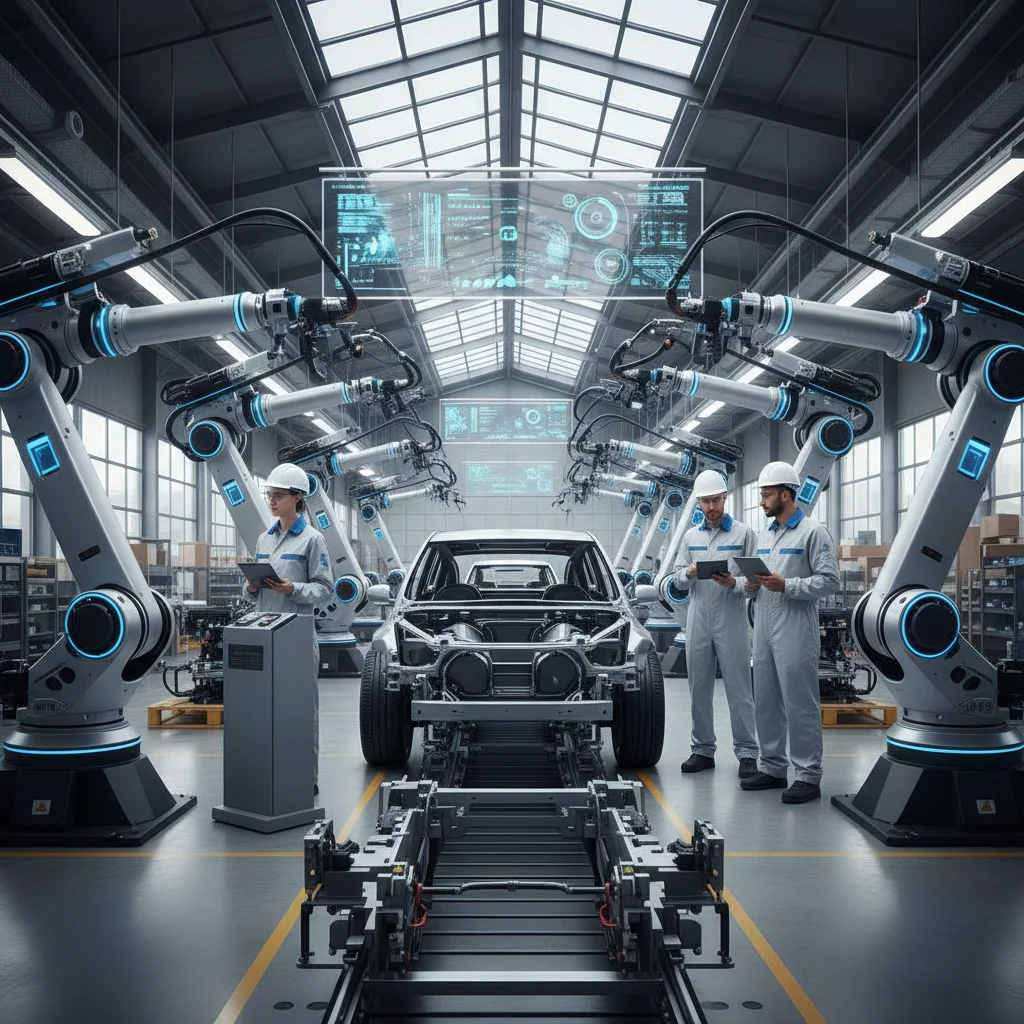
The manufacturing and logistics sectors have long been at the forefront of automation, but AI is ushering in a new era. By 2026, we anticipate a significant acceleration in the deployment of AI-powered robotics, predictive maintenance systems, and optimized supply chain management. This represents a substantial AI employment transformation within these industries.
Robotics and Automation
Advanced robotics, guided by AI, are becoming more agile, versatile, and capable of performing intricate tasks previously reserved for human hands. This includes assembly, quality control, and even more nuanced tasks like delicate handling of components. While this might reduce the need for certain manual labor roles, it creates a surge in demand for robotics engineers, AI trainers, maintenance technicians for complex machinery, and data analysts to optimize production lines.
Predictive Maintenance
AI algorithms can analyze vast amounts of sensor data from machinery to predict potential failures before they occur. This predictive maintenance significantly reduces downtime, extends equipment lifespan, and optimizes operational efficiency. The human role shifts from reactive repair to proactive monitoring, analysis, and strategic planning, requiring different skill sets.
Optimized Supply Chains
In logistics, AI is revolutionizing supply chain management. From demand forecasting and inventory optimization to route planning for autonomous vehicles and drone delivery systems, AI is making supply chains more efficient, resilient, and responsive. This means fewer jobs in routine tracking and manual inventory, but more in data science, logistics AI development, and oversight of automated systems.
Recent updates indicate that major US manufacturers are investing heavily in AI-driven automation, often citing labor shortages and the need for increased competitiveness. While concerns about job displacement persist, many companies are also focusing on reskilling their existing workforce to manage and interact with these new technologies, illustrating a strategic approach to AI employment transformation.
Sector 2: Healthcare – Enhancing Diagnostics and Patient Care
Healthcare is another sector ripe for AI transformation, promising improvements in diagnostics, treatment personalization, and administrative efficiency. By 2026, AI’s role in healthcare will be significantly more pronounced, leading to a nuanced shift in job functions and a greater emphasis on human-AI collaboration.
AI in Diagnostics and Treatment
AI algorithms are proving exceptionally adept at analyzing medical images (X-rays, MRIs, CT scans) to detect anomalies with greater accuracy and speed than human eyes alone. They can also process vast amounts of patient data to identify patterns, predict disease progression, and recommend personalized treatment plans. This doesn’t replace doctors but empowers them with more precise tools, allowing them to focus on complex cases, patient interaction, and strategic decision-making. The demand for medical AI specialists, bioinformatics engineers, and AI-savvy clinicians is soaring.
Administrative Efficiency and Robotics
Beyond clinical applications, AI is streamlining administrative tasks in healthcare, from appointment scheduling and billing to medical record management. Chatbots and virtual assistants can handle routine patient inquiries, freeing up human staff for more critical interactions. Robotic process automation (RPA) is reducing the burden of paperwork. Surgical robots, guided by AI, are also making procedures more precise and less invasive, requiring specialized technicians and operators.
Personalized Medicine and Drug Discovery
AI is accelerating drug discovery by analyzing molecular structures and predicting drug efficacy, significantly reducing the time and cost associated with bringing new medicines to market. In personalized medicine, AI helps tailor treatments based on an individual’s genetic makeup, lifestyle, and environment. These advancements create new roles in pharmaceutical AI research, genetic data analysis, and ethical AI development within healthcare. The AI employment transformation in healthcare is thus characterized by augmentation rather than outright replacement.
Recent reports highlight increasing investment in AI startups focused on healthcare, with a particular emphasis on ethical AI frameworks and data privacy. The focus is on how AI can assist, rather than supersede, human medical expertise, making the healthcare workforce more efficient and effective.
Sector 3: Finance and Banking – Precision and Protection
The finance and banking sectors, heavily reliant on data and complex algorithms, are undergoing a profound AI employment transformation. By 2026, AI will be integral to fraud detection, algorithmic trading, customer service, and personalized financial advice, reshaping numerous roles.
Fraud Detection and Cybersecurity
AI’s ability to analyze massive datasets in real-time makes it an invaluable tool for detecting fraudulent transactions and identifying cyber threats. Machine learning models can spot unusual patterns that human analysts might miss, significantly enhancing security. This means a reduced need for manual fraud investigation but a heightened demand for AI security specialists, ethical hackers, and data forensics experts.
Algorithmic Trading and Risk Management
In investment banking, AI-powered algorithms execute trades at lightning speed, analyze market trends, and manage portfolios with unprecedented efficiency. AI also plays a crucial role in risk assessment, helping financial institutions identify and mitigate potential financial risks. While this may reduce the number of traditional traders and analysts, it creates opportunities for quantitative analysts, AI model developers, and compliance officers who understand AI’s intricacies.
Customer Service and Personalized Finance
Chatbots and virtual assistants, powered by AI, are increasingly handling routine customer inquiries, account management, and even basic financial advice. This frees up human financial advisors to focus on more complex client needs, wealth management, and relationship building. AI is also enabling hyper-personalized financial products and services, requiring experts in AI-driven marketing, data privacy, and ethical AI in finance.
The financial industry is rapidly integrating AI to remain competitive, with a strong emphasis on regulatory compliance and the ethical implications of AI. This has led to a growing demand for professionals who can bridge the gap between financial expertise and AI capabilities, driving a significant AI employment transformation.
Sector 4: Retail and E-commerce – Hyper-Personalization and Automation
Retail and e-commerce are being revolutionized by AI, from optimizing supply chains to personalizing customer experiences. By 2026, AI will have deeply permeated these sectors, altering store operations, marketing strategies, and the very nature of customer interaction, fueling a substantial AI employment transformation.
Personalized Shopping Experiences
AI algorithms analyze customer browsing history, purchase patterns, and preferences to offer highly personalized product recommendations, dynamic pricing, and tailored marketing campaigns. This enhances customer satisfaction and drives sales. While some marketing roles may shift, there’s a growing need for AI-driven marketing strategists, customer experience designers, and data privacy specialists.
Automated Warehousing and Inventory
In warehouses and distribution centers, AI-powered robots are automating tasks like picking, packing, and sorting, significantly increasing efficiency and speed. AI also optimizes inventory management, predicting demand and ensuring optimal stock levels. This reduces the need for manual labor in these areas but creates demand for robotics engineers, AI logistics managers, and data scientists to manage these complex systems.
In-Store AI and Customer Service
Even brick-and-mortar stores are seeing AI integration, with smart shelves, AI-powered checkout systems, and virtual assistants providing in-store assistance. Chatbots handle a significant portion of online customer service. This shifts human roles from routine transactions to more complex problem-solving, brand ambassadorship, and managing AI systems.
Recent trends show retailers leveraging AI to combat rising labor costs and improve operational efficiency. The focus is on creating seamless omnichannel experiences, where AI plays a central role in connecting online and offline retail. This demands a workforce that is comfortable working alongside AI, capable of interpreting its insights, and focused on enhancing the human touch where it matters most.

Sector 5: Education and Training – Adapting to the Future of Work
Perhaps one of the most critical sectors impacted by AI, yet often overlooked in direct job displacement discussions, is education and training. By 2026, AI will not only reshape how we learn but also what we need to learn, creating a dynamic AI employment transformation within this vital sector.
Personalized Learning and Adaptive Education
AI-powered platforms can tailor educational content and teaching methods to individual student needs, adapting to their learning pace and style. This can include intelligent tutoring systems, personalized feedback, and adaptive assessments. While this won’t replace teachers, it will augment their capabilities, allowing them to focus on mentorship, critical thinking, and social-emotional development. The demand for AI curriculum developers, learning analytics specialists, and educators trained in AI-assisted teaching methods will grow.
Reskilling and Upskilling for the AI Economy
As AI reshapes other industries, the education sector faces the immense challenge and opportunity of reskilling and upskilling the workforce. Educational institutions, vocational schools, and corporate training programs will need to rapidly develop curricula focused on AI literacy, data science, robotics, and the ‘human’ skills that AI cannot replicate (creativity, emotional intelligence, complex problem-solving). This will create a boom in demand for AI educators, instructional designers specializing in AI, and career counselors guiding individuals through career transitions.
AI in Educational Administration
Beyond direct learning, AI can streamline administrative tasks in education, such as student admissions, scheduling, and resource allocation, freeing up administrative staff for more strategic roles. Predictive analytics can also help identify students at risk of falling behind, allowing for timely interventions.
Recent initiatives from the US Department of Education and various private foundations focus on integrating AI literacy into K-12 and higher education, emphasizing the need for a future-ready workforce. The education sector’s ability to adapt and innovate will be crucial in mitigating potential negative impacts of AI on employment and harnessing its potential for economic growth. This sector’s AI employment transformation is less about job loss and more about a complete re-evaluation of its purpose and methods.
Addressing the Challenges and Seizing Opportunities
While the AI employment transformation presents undeniable challenges, particularly concerning job displacement for routine tasks, it also unlocks unprecedented opportunities for economic growth, innovation, and the creation of higher-value jobs. The key to navigating this transition successfully lies in proactive measures and strategic investments.
Policy and Government Initiatives
Governments have a vital role to play in shaping the future of work in the age of AI. This includes:
- Investing in education and training: Funding for STEM education, AI literacy programs, and vocational training for AI-related skills.
- Developing robust social safety nets: Exploring universal basic income or expanded unemployment benefits to support workers during transitions.
- Fostering innovation: Creating regulatory environments that encourage AI development while addressing ethical concerns.
- Promoting ethical AI: Establishing guidelines for fair, transparent, and accountable AI systems to prevent bias and ensure equitable outcomes.
Business Adaptation Strategies
Businesses must embrace AI not just as a cost-cutting measure but as a tool for growth and innovation. Key strategies include:
- Upskilling and reskilling current employees: Investing in training programs to equip their workforce with AI-relevant skills.
- Reimagining job roles: Focusing on how AI can augment human capabilities rather than simply replace them.
- Cultivating a culture of continuous learning: Encouraging employees to adapt to new technologies and embrace lifelong learning.
- Ethical AI deployment: Prioritizing the responsible and fair use of AI within their operations.
Individual Preparedness
For individuals, adapting to the AI employment transformation means:
- Embracing lifelong learning: Continuously acquiring new skills, especially in areas like data analysis, programming, and AI literacy.
- Developing ‘human’ skills: Focusing on creativity, critical thinking, emotional intelligence, communication, and collaboration, which are harder for AI to replicate.
- Networking and adaptability: Staying informed about industry trends and being open to career changes or new job functions.
- Understanding AI’s capabilities and limitations: Knowing how to effectively work alongside AI tools.
Conclusion: Navigating the AI-Driven Future of Work
The impact of AI on US employment by 2026 is multifaceted and profound. The five sectors examined – manufacturing and logistics, healthcare, finance and banking, retail and e-commerce, and education and training – are at the forefront of this AI employment transformation. While some traditional roles may diminish, a wealth of new opportunities is emerging, demanding a workforce equipped with new skills and a collaborative mindset.
The narrative is not one of humans versus machines, but rather of humans working smarter with machines. The coming years will witness an unprecedented evolution in how we work, learn, and create value. By proactively addressing the challenges through education, policy, and strategic business decisions, the US can successfully harness the power of AI to drive innovation, enhance productivity, and foster a more prosperous and adaptable workforce.
The journey ahead requires foresight, flexibility, and a commitment to continuous learning from all stakeholders. Understanding these recent updates and preparing for the inevitable shifts will be paramount for individuals and organizations aiming to thrive in the AI-powered economy of tomorrow.