Social Media’s Evolving Role: How 70% of US Adults are Rethinking Digital Privacy in 2026 (RECENT UPDATES)

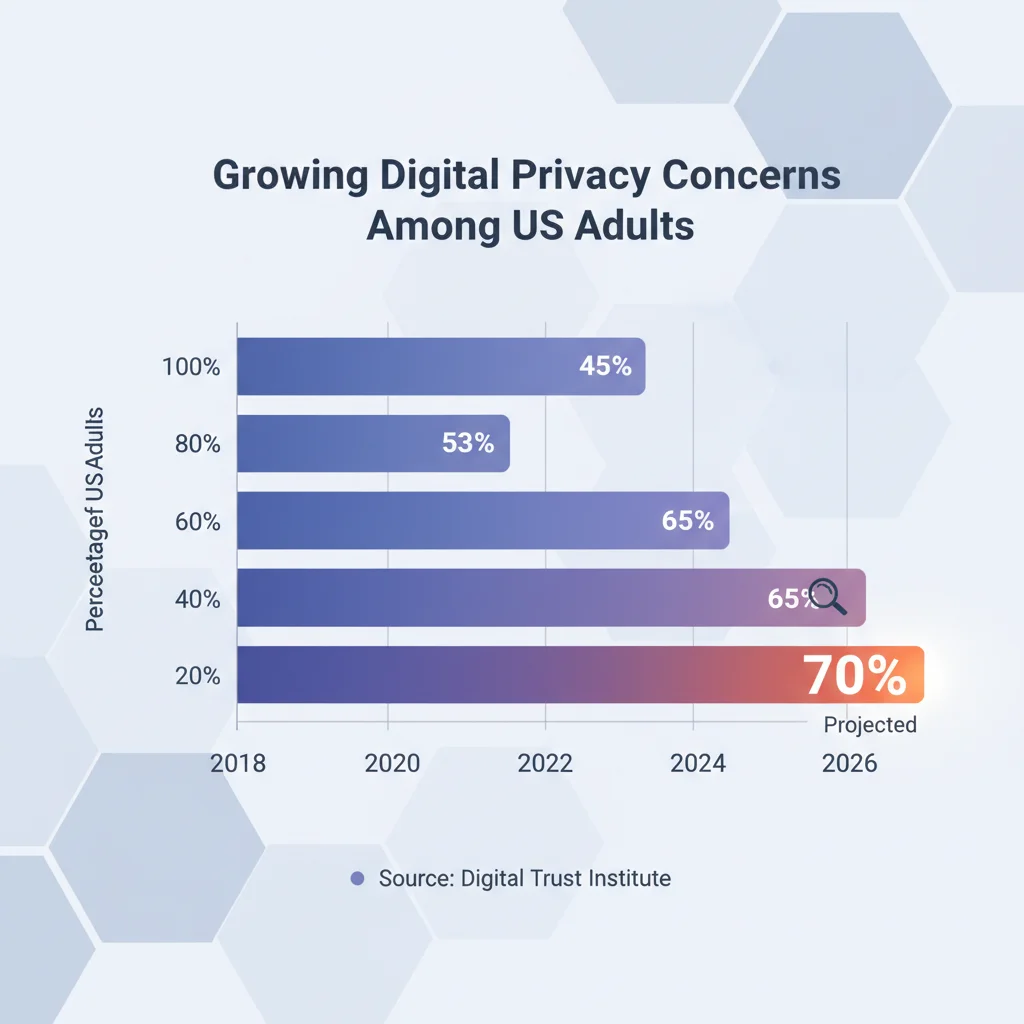
In an increasingly interconnected world, where our lives are intricately woven into the fabric of the internet, the concept of digital privacy concerns has transcended from a niche topic for tech enthusiasts to a mainstream imperative. Recent data indicates a seismic shift in public perception, with a staggering 70% of US adults now actively rethinking their digital privacy in 2026. This isn’t just a fleeting trend; it’s a fundamental re-evaluation of our relationship with online platforms, particularly social media. The evolving role of social media in our daily lives has brought both unprecedented connectivity and unforeseen challenges to our personal data.
The landscape of digital interaction is constantly changing, and with it, the expectations and anxieties surrounding how our personal information is collected, used, and shared. For years, many users passively accepted the terms and conditions of social media giants, often without fully grasping the implications for their privacy. However, a series of high-profile data breaches, growing awareness campaigns, and increasingly sophisticated data tracking methods have ignited a collective awakening. This article delves deep into the multifaceted reasons behind this significant shift, exploring the recent updates, underlying challenges, and what this means for the future of online privacy and social media.
The Genesis of Heightened Digital Privacy Concerns
To understand the current climate, we must first trace the roots of these heightened digital privacy concerns. The early days of social media were characterized by an almost utopian vision of global connection, where sharing was paramount and the implications of such widespread data dissemination were largely unexamined. As platforms grew, so did their hunger for data, which became the new currency of the digital age. This data fueled targeted advertising, personalized content, and sophisticated algorithms designed to keep users engaged. While these features offered convenience and tailored experiences, they also created an opaque system where users often felt their data was being used in ways they didn’t fully comprehend or consent to.
Key Milestones Shaping Privacy Awareness
- Cambridge Analytica Scandal (2018): This watershed moment exposed how personal data from millions of Facebook users was harvested without their consent for political advertising. It served as a stark reminder of the potential for misuse of personal information, igniting widespread public outrage and forcing a re-evaluation of data practices.
- Introduction of GDPR (2018) and CCPA (2020): Major privacy regulations like the General Data Protection Regulation in Europe and the California Consumer Privacy Act in the US brought legal frameworks to data protection. These laws empowered individuals with more control over their data, making companies more accountable and, in turn, raising public awareness about their digital rights.
- Increased Data Breaches and Cyberattacks: The continuous stream of news about data breaches affecting major companies has kept privacy a front-of-mind issue. Each breach serves as a painful reminder of the vulnerability of personal information stored online.
- The Pandemic’s Digital Acceleration: The COVID-19 pandemic forced a rapid acceleration of digital adoption across all aspects of life, from work and education to social interaction. This increased reliance on digital platforms further highlighted the importance of secure and private online environments.
These events collectively contributed to a growing skepticism among users regarding the safety and privacy of their online activities, laying the groundwork for the significant shift we observe in 2026. The once-casual approach to sharing personal information has been replaced by a more cautious and discerning attitude, driven by a deeper understanding of the potential ramifications of unchecked data collection.
Social Media’s Evolving Role and its Privacy Implications
Social media platforms have undergone a profound transformation since their inception. What began as simple platforms for connecting with friends have evolved into multifaceted ecosystems encompassing news dissemination, e-commerce, entertainment, professional networking, and even political discourse. This expansion of functionality has inevitably led to an increase in the types and quantities of data collected, amplifying digital privacy concerns.
From Connection to Commerce: The Data Imperative
The business models of most social media platforms are intrinsically linked to data. User data allows them to sell targeted advertising, a highly lucrative revenue stream. This means that every like, share, comment, search, and even the duration of time spent viewing content, is a data point. While this enables personalized experiences, it also means that platforms have an insatiable appetite for personal information, often pushing the boundaries of what users deem acceptable for their privacy.
The Rise of AI and Predictive Analytics
The integration of artificial intelligence (AI) and machine learning has further complicated the privacy landscape. AI algorithms can analyze vast datasets to predict user behavior, preferences, and even emotional states. This predictive power, while offering enhanced user experiences, raises ethical questions about algorithmic bias, manipulation, and the extent to which our digital footprint can be used to infer highly personal attributes without explicit consent. The fear of being constantly monitored and analyzed contributes significantly to the growing digital privacy concerns.
Ephemeral Content and Persistent Data
The popularity of ephemeral content formats, like stories that disappear after 24 hours, initially offered a sense of transient sharing. However, users are increasingly realizing that even "disappearing" content often leaves a persistent data trail on servers, challenging the very notion of ephemerality and further fueling distrust regarding data retention policies.
The 70% Shift: Why US Adults are Rethinking Digital Privacy in 2026
The statistic that 70% of US adults are rethinking their digital privacy in 2026 is not just a number; it represents a significant cultural and technological shift. This re-evaluation stems from a confluence of factors, moving beyond mere awareness to active engagement with privacy settings and digital habits.
Increased Awareness and Education
Years of public discourse, media coverage, and educational initiatives have empowered individuals with a better understanding of how their data is used. This increased literacy has demystified complex technical concepts, making digital privacy concerns more tangible and relatable.
Personal Experiences with Data Misuse
Many individuals have had personal experiences or know someone who has been affected by data breaches, identity theft, or unwanted targeted advertising. These real-world consequences make privacy a personal issue rather than an abstract concept, driving a desire for greater control and protection.
A Desire for Control and Transparency
Users are no longer content with opaque data practices. There is a growing demand for greater transparency from social media companies about what data they collect, how it’s used, and who it’s shared with. Furthermore, individuals want more granular control over their privacy settings, moving beyond simple "agree" or "disagree" options.
Influence of Regulatory Changes
The global push for stronger data protection regulations has played a crucial role. While US federal privacy laws are still evolving, state-level initiatives and the influence of international standards (like GDPR) have raised the bar for data handling practices, making consumers more aware of their rights and what to expect from platforms.

Recent Updates and Emerging Trends in Digital Privacy
The year 2026 marks a pivotal moment, not just for user attitudes but also for the technological and regulatory responses to growing digital privacy concerns. Several recent updates and emerging trends are shaping the future of online data protection.
Privacy-Enhancing Technologies (PETs)
The demand for privacy has spurred innovation in Privacy-Enhancing Technologies (PETs). These technologies, such as differential privacy, homomorphic encryption, and secure multi-party computation, allow data to be analyzed or shared while preserving individual privacy. While still in nascent stages for widespread social media application, their development signifies a shift towards privacy-by-design approaches.
Decentralized Social Media Platforms
A growing movement towards decentralized social media platforms (often built on blockchain technology) aims to give users more control over their data and content. These platforms promise greater transparency, censorship resistance, and the ability for users to own their digital identities, directly addressing core digital privacy concerns.
Stricter In-App Privacy Controls
Following pressure from users and regulators, major social media platforms are rolling out more robust and user-friendly privacy controls. This includes clearer explanations of data usage, easier ways to opt-out of certain data collection, and more transparent consent mechanisms. While progress is often slow, the direction is clearly towards empowering users.
The "Cookie-less" Future and New Tracking Methods
The impending deprecation of third-party cookies by major browsers is forcing advertisers and platforms to find new ways to track users. While this initially seems like a win for privacy, it has led to the development of alternative tracking methods (e.g., fingerprinting, first-party data strategies) that could potentially be even more opaque. Navigating this "cookie-less" future while upholding privacy remains a significant challenge.
The Role of Artificial Intelligence in Privacy Management
AI is not just a tool for data collection; it’s also being leveraged for privacy management. AI-powered tools can help users understand complex privacy policies, identify potential privacy risks in their online activities, and even automate the management of their privacy settings. This dual role of AI highlights its transformative potential in both exacerbating and alleviating digital privacy concerns.
Challenges and Opportunities for Social Media Platforms
The shift in user attitudes presents both significant challenges and unique opportunities for social media platforms. Ignoring these evolving digital privacy concerns could lead to user exodus and regulatory penalties, while embracing them could foster trust and long-term loyalty.
Rebuilding Trust and Transparency
The biggest challenge for social media platforms is rebuilding the trust that has eroded over years of questionable data practices. This requires not just superficial changes but a fundamental shift towards greater transparency in data collection, usage, and sharing. Platforms need to clearly communicate their policies in plain language and provide users with intuitive tools to manage their preferences.
Balancing Personalization with Privacy
The core dilemma for platforms is how to continue offering personalized experiences and targeted advertising – which users often appreciate – while respecting their privacy. This involves finding innovative ways to deliver value without relying on overly intrusive data collection, possibly through privacy-preserving machine learning or federated learning approaches.
Navigating a Complex Regulatory Landscape
With a patchwork of global and regional privacy regulations, platforms face the complex task of ensuring compliance across different jurisdictions. This requires robust internal data governance frameworks and a proactive approach to anticipating future regulatory trends, all while addressing digital privacy concerns on a global scale.
Opportunity for "Privacy-First" Platforms
The heightened awareness creates a fertile ground for "privacy-first" social media platforms. These platforms can differentiate themselves by building privacy into their core design, offering end-to-end encryption, minimal data collection, and user-centric data ownership models. This could attract a significant segment of the 70% of users who are actively seeking more secure online environments.
Empowering the User: Strategies for Managing Digital Privacy
As 70% of US adults rethink their digital privacy in 2026, the onus is not solely on platforms and regulators. Individual users also have a crucial role to play in managing their online footprint. Empowering oneself with knowledge and proactive strategies is key to mitigating digital privacy concerns.
Audit Your Digital Footprint Regularly
Periodically review your social media profiles, checking what information is publicly visible, what apps have access to your data, and what your privacy settings are. Remove old posts, photos, or connections that you no longer wish to share. This regular "digital declutter" is essential.
Understand and Utilize Privacy Settings
Most social media platforms offer a range of privacy settings, but they are often complex and hidden. Take the time to understand each setting and configure it to your comfort level. Pay particular attention to data sharing with third-party apps and advertising preferences.
Be Discerning About Information Sharing
Before posting or sharing any personal information, pause and consider who will see it and how it might be used. Adopt a "less is more" approach, especially concerning sensitive data like your location, personal events, or financial details.
Use Strong, Unique Passwords and Two-Factor Authentication
Basic security hygiene is paramount. Implement strong, unique passwords for all your online accounts and enable two-factor authentication (2FA) wherever possible. This adds an extra layer of security that can significantly reduce the risk of unauthorized access.
Be Wary of Phishing and Scams
Cybercriminals constantly evolve their tactics to trick users into divulging personal information. Be skeptical of unsolicited messages, emails, or links, and verify the authenticity of requests before clicking or sharing any data.
Consider Privacy-Focused Alternatives
As the market for privacy-focused services grows, explore alternative social media platforms, browsers, and search engines that prioritize user privacy and offer stronger data protection features. Supporting these alternatives can drive broader industry change.
Educate Yourself Continuously
The digital landscape is dynamic. Stay informed about new privacy threats, emerging technologies, and updates to privacy regulations. Continuous learning is vital for effectively managing your digital privacy concerns in the long run.
The Future of Digital Privacy and Social Media
The year 2026 represents a critical juncture where the conversation around digital privacy concerns has matured significantly. The future will likely be shaped by a continuous interplay between technological advancements, regulatory mandates, and evolving user expectations.
Towards a More Federated and User-Centric Internet
There’s a growing vision for a more federated and user-centric internet, where individuals have greater sovereignty over their data. This could involve technologies that allow users to store their data locally or in personal data lockers, granting platforms temporary, revocable access rather than outright ownership.
The Role of Government and International Cooperation
As data flows globally, effective digital privacy protection will increasingly require international cooperation and harmonized regulatory frameworks. Governments will need to collaborate to establish clear rules and enforcement mechanisms that protect citizens’ data across borders, addressing global digital privacy concerns.
Ethical AI and Data Governance
The development of ethical AI principles and robust data governance frameworks will be paramount. This includes ensuring algorithmic transparency, accountability for AI decisions, and mechanisms to prevent bias and discrimination stemming from data analysis.
A New Social Contract for the Digital Age
Ultimately, the shift observed in 2026 points towards the need for a new social contract between users and digital platforms. This contract would be built on principles of mutual respect, transparency, and explicit consent, moving away from the implicit consent models of the past. Users are demanding to be treated as partners in the digital ecosystem, not just products.
Conclusion
The fact that 70% of US adults are rethinking their digital privacy in 2026 signals a profound and irreversible change in our collective consciousness regarding online data. The evolving role of social media, coupled with increasing awareness and regulatory pressure, has brought digital privacy concerns to the forefront of public discourse. This shift is not merely a challenge but an opportunity – for platforms to innovate with privacy at their core, for regulators to craft more effective protections, and most importantly, for individuals to reclaim agency over their digital lives. As we move forward, a more informed, empowered, and privacy-conscious user base will undoubtedly shape a healthier and more secure digital future for everyone.