US Tech Sector 2026: 6% Growth & Financial Impact Forecast

US Tech Sector Poised for 6% Expansion by 2026: A Deep Dive into the Innovation Economy
The United States tech sector stands on the precipice of another significant growth phase, with projections indicating a robust 6% expansion by 2026. This anticipated surge is not merely a statistical anomaly but a reflection of deep-seated trends, technological breakthroughs, and evolving market demands that continue to solidify the nation’s position as a global innovation powerhouse. Understanding the nuances of this projected growth, its financial implications, and the underlying drivers is crucial for investors, policymakers, and industry stakeholders alike. The innovation economy, fueled by relentless advancement and strategic investments, is set to redefine economic landscapes, create new opportunities, and address some of the most pressing challenges of our time. This comprehensive analysis will delve into the factors propelling this growth, the key segments leading the charge, and the potential financial and societal impacts of a thriving US Tech Growth 2026.
Understanding the Drivers Behind the US Tech Growth 2026
The projected 6% expansion of the US tech sector by 2026 is underpinned by a confluence of powerful forces. These drivers extend beyond mere technological innovation, encompassing economic policies, evolving consumer and business behaviors, and a global competitive landscape that increasingly values digital transformation. To truly grasp the magnitude of this forecast, we must dissect these foundational elements.
Artificial Intelligence (AI) and Machine Learning (ML) Dominance
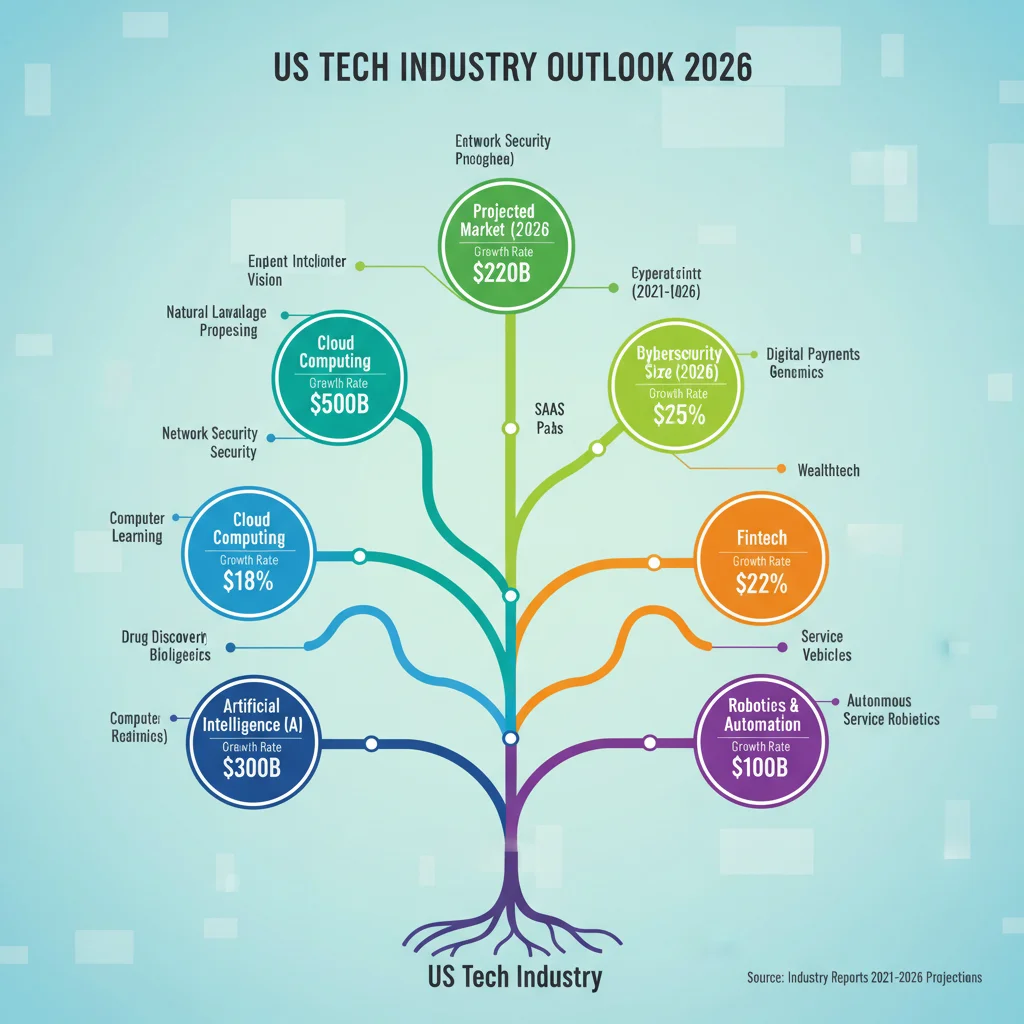
At the forefront of the US Tech Growth 2026 is the relentless march of Artificial Intelligence and Machine Learning. These technologies are no longer confined to research labs; they are actively reshaping industries from healthcare and finance to manufacturing and entertainment. The ability of AI to automate complex tasks, analyze vast datasets, and predict future trends is driving unprecedented efficiency and innovation. Investments in AI startups have skyrocketed, and established tech giants are pouring resources into developing advanced AI models and applications. Generative AI, in particular, has captured headlines and venture capital, promising to revolutionize content creation, software development, and personalized experiences. The integration of AI into enterprise software, cloud services, and consumer devices will be a primary catalyst for the sustained growth observed in the US tech sector.
The Pervasive Power of Cloud Computing
Cloud computing continues to be the backbone of modern digital infrastructure, and its expansion shows no signs of slowing down. The shift from on-premise servers to scalable, flexible, and cost-effective cloud solutions remains a strategic imperative for businesses of all sizes. Hyperscale cloud providers, predominantly based in the US, are continuously expanding their global footprints and service offerings, encompassing everything from Infrastructure as a Service (IaaS) to Platform as a Service (PaaS) and Software as a Service (SaaS). Edge computing, a natural extension of cloud architecture, is also gaining traction, bringing computational power closer to data sources to reduce latency and enhance real-time processing. This continuous evolution and adoption of cloud technologies will be a significant contributor to the overall US Tech Growth 2026, as businesses leverage cloud platforms for everything from data storage to advanced analytics and AI deployment.
Cybersecurity: An Ever-Growing Imperative
As digital transformation accelerates, so too does the threat landscape. Cybersecurity is no longer an optional add-on but a fundamental necessity for businesses and governments. The increasing sophistication of cyberattacks, coupled with stringent regulatory requirements for data protection, is fueling massive investments in cybersecurity solutions. This includes everything from advanced threat detection and response systems to identity and access management, cloud security, and data privacy tools. The demand for skilled cybersecurity professionals and innovative security technologies far outstrips supply, creating a robust market for cybersecurity firms. This sector’s growth is intrinsically linked to the broader digital economy, making it an indispensable component of the predicted US Tech Growth 2026.
5G and Next-Generation Connectivity
The rollout and widespread adoption of 5G technology are set to unlock a new era of connectivity, enabling faster speeds, lower latency, and greater capacity. This will not only enhance mobile experiences but also serve as a foundational layer for emerging technologies like the Internet of Things (IoT), autonomous vehicles, and smart cities. The infrastructure investments required for 5G deployment, coupled with the development of new applications and services that leverage its capabilities, will provide a substantial boost to the US tech sector. This enhanced connectivity will facilitate greater efficiency across industries, from logistics and healthcare to manufacturing, thereby contributing to the overall economic expansion.
Biotechnology and Health Tech Synergy
While often considered distinct, the lines between traditional tech and biotechnology are increasingly blurring. Advances in genomics, personalized medicine, digital therapeutics, and AI-powered drug discovery are creating a vibrant health tech ecosystem. The pandemic accelerated the adoption of telehealth and remote monitoring solutions, demonstrating the critical role technology plays in healthcare delivery. The convergence of bio-sciences with data analytics, AI, and cloud computing is leading to groundbreaking innovations and significant investment, positioning health tech as a powerful engine for US Tech Growth 2026.
Financial Impact and Economic Implications
The projected 6% expansion of the US tech sector by 2026 carries profound financial and economic implications, extending far beyond the tech industry itself. This growth is anticipated to be a significant driver of national prosperity, influencing employment, investment, and global competitiveness.
Job Creation and Workforce Transformation
A thriving tech sector is synonymous with robust job creation. The projected growth will lead to a substantial increase in demand for skilled professionals across a wide array of roles, including software engineers, data scientists, cybersecurity analysts, AI specialists, and cloud architects. This demand will not only generate direct employment opportunities within tech companies but also stimulate growth in ancillary sectors such as education, training, and consulting. Furthermore, the increasing adoption of tech solutions across industries will necessitate a workforce transformation, requiring existing employees to upskill and reskill to adapt to new digital tools and processes. This continuous evolution of the workforce will be a cornerstone of the US Tech Growth 2026’s economic impact.
Increased Investment and Capital Inflows
The promise of a 6% expansion will undoubtedly attract significant domestic and international investment. Venture capital firms will continue to pour funds into promising startups, while established companies will invest heavily in research and development, mergers and acquisitions, and infrastructure upgrades. This influx of capital will fuel innovation, accelerate product development, and enable companies to scale operations. Furthermore, the strong performance of tech stocks will likely continue to draw institutional and retail investors, contributing to overall market buoyancy and wealth creation. The US tech sector’s ability to consistently deliver high returns on investment makes it an attractive destination for global capital, reinforcing its growth trajectory.
Productivity Gains and Economic Efficiency
Technological advancement is inherently linked to productivity gains. As businesses adopt more sophisticated software, automation tools, and data analytics platforms, they can streamline operations, reduce costs, and enhance output. AI-driven solutions, in particular, are poised to revolutionize efficiency across various functions, from customer service to supply chain management. These productivity improvements translate into higher economic output and increased competitiveness for US businesses on a global scale. The cumulative effect of these efficiencies across numerous industries will be a significant contributor to the overall economic benefits derived from the US Tech Growth 2026.
Global Competitiveness and Innovation Leadership
The sustained growth of the US tech sector reinforces the nation’s position as a global leader in innovation. A vibrant tech ecosystem attracts top talent, fosters groundbreaking research, and sets the pace for technological development worldwide. This leadership translates into economic advantages, including the ability to export high-value tech products and services, attract foreign direct investment, and influence global technology standards. Maintaining this competitive edge is vital for long-term economic prosperity and national security, making the projected US Tech Growth 2026 a strategic imperative.

Recent Updates and Emerging Trends Shaping the Future
The tech landscape is in a constant state of flux, with new developments and trends continually emerging. Keeping abreast of these recent updates is essential for understanding the dynamics of the US Tech Growth 2026.
The Rise of Generative AI and Large Language Models (LLMs)
The past year has seen an explosion in the capabilities and adoption of generative AI, particularly Large Language Models (LLMs). Tools like ChatGPT, DALL-E, and their counterparts have demonstrated the transformative potential of AI in content creation, coding, design, and more. This technology is rapidly being integrated into enterprise applications, promising to automate tasks, enhance creativity, and personalize user experiences on an unprecedented scale. The race to develop and deploy the most advanced LLMs is a major driving force in current tech investments and will significantly shape the trajectory of the US Tech Growth 2026.
Quantum Computing: From Research to Reality
While still in its nascent stages, quantum computing is progressing from theoretical research to practical application. Major tech companies and government agencies are investing heavily in quantum hardware and software development. Although widespread commercial adoption is still some years away, breakthroughs in quantum computing have the potential to revolutionize fields such as cryptography, materials science, and drug discovery. The foundational work being done now will lay the groundwork for future waves of innovation and contribute to the long-term strength of the US tech sector.
Sustainable Technology and Green Tech Initiatives
An increasingly important trend is the focus on sustainable technology, or "green tech." As environmental concerns grow, there’s a heightened demand for technological solutions that reduce carbon footprints, optimize energy consumption, and promote sustainable practices. This includes innovations in renewable energy, smart grids, efficient data centers, and circular economy platforms. Tech companies are not only developing these solutions but also striving to make their own operations more sustainable. This commitment to environmental responsibility is becoming a key differentiator and a growth area within the US tech sector.
Web3, Blockchain, and Decentralized Technologies
The concept of Web3, encompassing blockchain, cryptocurrencies, NFTs, and decentralized autonomous organizations (DAOs), continues to evolve. While the market has experienced volatility, the underlying blockchain technology offers significant potential for secure data management, transparent transactions, and new forms of digital ownership. Enterprises are exploring blockchain for supply chain management, digital identity, and financial services. The ongoing development and refinement of these decentralized technologies, despite regulatory uncertainties, will contribute to the diversity and innovation within the US tech ecosystem, influencing the US Tech Growth 2026.
Regulatory Landscape and Geopolitical Factors
The tech sector does not operate in a vacuum. Regulatory scrutiny, particularly concerning data privacy, antitrust issues, and AI ethics, is intensifying. Companies must navigate a complex and evolving legal landscape, which can influence innovation and investment decisions. Geopolitical tensions, trade policies, and global supply chain disruptions also play a significant role, impacting everything from semiconductor availability to market access. Understanding and adapting to these external factors will be crucial for companies aiming to capitalize on the US Tech Growth 2026.
Challenges and Opportunities for Sustained US Tech Growth 2026
While the outlook for the US tech sector is overwhelmingly positive, it is not without its challenges. Addressing these obstacles effectively will be paramount to realizing the full potential of the projected 6% expansion.
Talent Shortages and Skill Gaps
One of the most persistent challenges facing the tech sector is the shortage of skilled talent. The rapid pace of technological change often outstrips the ability of educational institutions and training programs to produce enough qualified professionals. This scarcity can lead to increased labor costs, slower project completion, and a drag on innovation. To sustain the US Tech Growth 2026, there needs to be a concerted effort to invest in STEM education, workforce development programs, and immigration policies that attract top global talent. Companies are also increasingly looking inward, investing in reskilling and upskilling their existing employees to meet evolving demands.
Ensuring Ethical AI Development and Deployment
As AI becomes more powerful and pervasive, ethical considerations move to the forefront. Concerns around bias in algorithms, data privacy, job displacement, and the potential for misuse of AI technologies are growing. The tech sector, in collaboration with policymakers and ethicists, must develop robust frameworks and best practices for responsible AI development and deployment. Building trust in AI systems is crucial for their widespread adoption and for ensuring that the benefits of US Tech Growth 2026 are equitably distributed across society.
Supply Chain Resilience and Geopolitical Risks
Recent global events have highlighted the fragility of global supply chains, particularly in critical components like semiconductors. The US tech sector relies heavily on a complex international network for manufacturing and distribution. Geopolitical tensions and trade disputes can disrupt these chains, leading to delays and increased costs. Companies are increasingly exploring strategies for supply chain diversification, reshoring, and building greater resilience to mitigate these risks. Addressing these vulnerabilities will be key to maintaining the momentum of US Tech Growth 2026.
Data Privacy and Security Regulations
The proliferation of data and the increasing reliance on digital platforms have led to a surge in data privacy and security regulations worldwide. Compliance with frameworks like GDPR, CCPA, and emerging state-level laws adds complexity and cost for tech companies. While these regulations are essential for protecting consumer rights, navigating their intricacies can be challenging. The tech sector must continue to innovate in privacy-enhancing technologies and work with regulators to create effective yet flexible frameworks that foster innovation while safeguarding data.
Market Saturation and Differentiation
In certain mature segments of the tech market, competition is fierce, and differentiation can be challenging. Companies must continuously innovate, identify niche markets, and offer superior value propositions to stand out. This requires significant investment in R&D, customer experience, and strategic partnerships. The ability to pivot quickly, adapt to changing market conditions, and anticipate future needs will be critical for sustained success within the dynamic environment of US Tech Growth 2026.
The Path Forward: Capitalizing on US Tech Growth 2026
To fully capitalize on the anticipated 6% expansion of the US tech sector by 2026, a multi-faceted approach involving collaboration between industry, government, and academia is essential.
Fostering a Culture of Continuous Innovation
Innovation is the lifeblood of the tech industry. Companies must continue to invest heavily in research and development, encourage experimentation, and foster a culture that embraces risk-taking and learning from failure. Open innovation models, where companies collaborate with startups, universities, and even competitors, can accelerate the pace of discovery and bring new solutions to market faster. This continuous pursuit of novelty will be crucial for maintaining the competitive edge that underpins US Tech Growth 2026.
Strategic Investments in Infrastructure
Robust digital infrastructure is the foundation upon which the tech sector builds. This includes not only physical infrastructure like data centers and 5G networks but also digital infrastructure such as cloud platforms and cybersecurity frameworks. Government policies that support investment in these critical areas, alongside private sector capital, will ensure that the US has the capacity to support future technological advancements and economic expansion.
Developing a Future-Ready Workforce
Addressing the talent gap is paramount. This requires a holistic approach that includes strengthening STEM education from an early age, promoting lifelong learning and reskilling initiatives, and encouraging diversity and inclusion within the tech workforce. Partnerships between educational institutions and tech companies can ensure that curricula are aligned with industry needs, producing graduates with relevant skills. Attracting and retaining top global talent through favorable immigration policies will also be a key component of sustaining US Tech Growth 2026.
Proactive and Adaptive Regulatory Frameworks
Policymakers face the delicate task of regulating the tech sector in a way that protects consumers and promotes fair competition without stifling innovation. This requires a proactive and adaptive approach, where regulations are developed in consultation with industry experts and are flexible enough to evolve with technological advancements. Balancing national security concerns with economic openness will also be a continuous challenge. Thoughtful regulation can provide clarity and stability, encouraging responsible growth within the US tech sector.
Embracing Global Collaboration
While the focus is on US growth, the tech sector is inherently global. International collaboration in research, development, and market expansion is vital. Building strong partnerships with allies, participating in global standard-setting bodies, and facilitating cross-border data flows (with appropriate safeguards) can unlock new opportunities and foster a more interconnected and innovative global economy. The global nature of challenges like climate change and pandemics also underscores the need for tech-driven solutions developed through international cooperation.
Conclusion: A Bright Horizon for US Tech Growth 2026
The US tech sector is poised for a remarkable 6% expansion by 2026, a testament to its enduring capacity for innovation, adaptability, and economic impact. Driven by the transformative power of AI, cloud computing, cybersecurity, and emerging technologies, this growth promises not only significant financial returns but also widespread societal benefits through job creation, productivity gains, and advancements in critical sectors like healthcare and sustainability. While challenges such as talent shortages and regulatory complexities exist, a concerted effort from industry, government, and academia can effectively navigate these hurdles. The innovation economy continues to be a beacon of progress, and the sustained US Tech Growth 2026 will undoubtedly cement the nation’s position at the forefront of global technological leadership for years to come. The future is digital, and the US tech sector is leading the charge.