Federal Reserve 2026 Outlook: 0.25% Hike & US Mortgage Impact
Federal Reserve’s 2026 Interest Rate Outlook: What a 0.25% Hike Means for US Mortgages (Recent Updates, Financial Impact)
The financial world is a complex tapestry of interconnected variables, and few threads are as pivotal as the actions of the Federal Reserve. As we cast our gaze towards 2026, the prospect of a 0.25% interest rate hike by the Fed looms large, carrying with it significant implications for the United States economy, particularly the housing market and, by extension, US mortgages. This article delves into the potential ramifications of such a move, offering a comprehensive analysis of recent updates, financial impacts, and what it all means for homeowners and prospective buyers. Understanding the Fed’s monetary policy and its ripple effects is crucial for anyone navigating the current and future financial landscape.
The Federal Reserve’s Mandate and Monetary Policy Tools
To fully grasp the potential impact of a 0.25% interest rate hike, it’s essential to first understand the Federal Reserve’s role and its primary tools. The Fed, as the central bank of the United States, operates with a dual mandate: to achieve maximum employment and maintain price stability. These objectives are pursued through various monetary policy tools, with the federal funds rate being the most prominent.
The federal funds rate is the target rate for overnight lending between banks. While the Fed doesn’t directly set mortgage rates, changes to the federal funds rate have a profound influence on other interest rates throughout the economy, including those for mortgages, car loans, and credit cards. When the Fed raises the federal funds rate, it signals a tightening of monetary policy, making borrowing more expensive. Conversely, a rate cut signifies an easing of policy, aiming to stimulate economic activity by making credit more accessible and affordable.
The decision to adjust interest rates is not made lightly. It involves careful consideration of a vast array of economic indicators, including inflation, employment figures, GDP growth, and global economic conditions. The Fed’s forward guidance, often communicated through statements and projections, provides valuable insights into its future policy intentions, allowing markets and individuals to anticipate and prepare for potential shifts.
In the context of a potential 0.25% hike in 2026, the Fed would likely be responding to persistent inflationary pressures, a robust labor market, or a combination of factors that suggest the economy is overheating. Such a move would be aimed at cooling demand, preventing inflation from becoming entrenched, and ensuring long-term economic stability. However, even a seemingly small adjustment like 0.25% can have significant and widespread consequences, especially for sectors as sensitive as the housing market.
Understanding the 2026 Interest Rate Outlook: Why a 0.25% Hike?
Predicting the Federal Reserve’s precise actions years in advance is inherently challenging, as monetary policy is data-dependent and subject to continuous adjustment based on evolving economic conditions. However, economic forecasts and the Fed’s own projections (often summarized in the ‘dot plot’ from the Federal Open Market Committee – FOMC meetings) provide a roadmap for potential future actions. The discussion around a 0.25% hike in 2026 likely stems from several underlying economic trends and expectations.
One primary driver for potential rate increases is persistent inflation. If inflation remains stubbornly above the Fed’s long-term target of 2%, even with current policy measures, the Fed may feel compelled to take further action to bring prices under control. A 0.25% hike, while modest, signals the Fed’s commitment to its price stability mandate and can influence inflation expectations.
Another factor is the state of the labor market. A consistently strong labor market, characterized by low unemployment rates and rising wages, can contribute to inflationary pressures. If wage growth outpaces productivity gains, businesses may pass on higher labor costs to consumers in the form of higher prices. In such a scenario, the Fed might consider a rate hike to temper demand and prevent an inflationary spiral.
Global economic conditions also play a role. International trade, geopolitical events, and the economic performance of other major economies can influence the US economic outlook and, consequently, the Fed’s policy decisions. For instance, supply chain disruptions or increased commodity prices due to global events could fuel domestic inflation, prompting a hawkish response from the Fed.
Furthermore, the Fed might be aiming to normalize interest rates after a period of historically low rates. Keeping rates too low for too long can lead to asset bubbles and financial instability. A gradual, measured increase, such as 0.25%, allows the economy to adjust without causing undue shock, while also providing the Fed with more room to maneuver in future economic downturns.
It’s important to note that a 0.25% hike is often considered a standard increment for the Fed. It’s a deliberate, yet cautious, step that allows the central bank to fine-tune its policy without overreacting to short-term fluctuations. This measured approach helps maintain market confidence and provides a sense of predictability, even amidst uncertainty.
Direct Impact on US Mortgages: How 0.25% Translates
The most immediate and tangible effect of a Federal Reserve interest rate hike, even a seemingly small 0.25%, is felt in the mortgage market. While the federal funds rate doesn’t directly dictate mortgage rates, it sets the benchmark for borrowing costs across the economy. Mortgage rates, particularly for fixed-rate loans, are more closely tied to the yield on long-term Treasury bonds, which in turn are influenced by expectations of future inflation and economic growth, both of which are shaped by Fed policy.
When the Fed raises its policy rate, the cost of funds for banks generally increases. This higher cost is then passed on to consumers in the form of higher interest rates on various loan products, including mortgages. A 0.25% increase in the federal funds rate could lead to a corresponding, though not necessarily identical, increase in mortgage rates. For instance, if the average 30-year fixed mortgage rate is currently 7.00%, a 0.25% Fed hike might push it towards 7.25% or even slightly higher, depending on market sentiment and other economic factors.
For prospective homebuyers, this means higher monthly mortgage payments. Let’s consider an example: on a $400,000 mortgage, a 0.25% increase in the interest rate can add a significant amount to the monthly payment over the life of the loan. While $50-$100 per month might seem negligible to some, for many families, especially first-time buyers, this additional cost can impact affordability and their ability to qualify for a loan. It effectively reduces their purchasing power, as a larger portion of their budget must be allocated to interest payments.
Existing homeowners with adjustable-rate mortgages (ARMs) are also directly affected. As the Fed raises rates, the interest rates on ARMs typically reset higher, leading to increased monthly payments. This can be a substantial burden for those who took out ARMs during periods of very low interest rates, as their payments could jump considerably. However, the majority of US homeowners have fixed-rate mortgages, which are insulated from direct rate changes after they are originated.
The psychological impact on the housing market is also considerable. Rising mortgage rates can dampen buyer enthusiasm, leading to a decrease in demand. This, in turn, can slow down the pace of home sales and potentially temper home price appreciation, or even lead to price declines in some overheated markets. Sellers might find it harder to attract buyers, and homes might sit on the market longer.

Broader Financial Implications Beyond Mortgages
The ripple effects of a 0.25% Fed hike extend far beyond the mortgage market, influencing various aspects of the broader financial landscape. Understanding these wider implications is crucial for investors, businesses, and individuals alike.
Consumer Spending and Credit Costs
Higher interest rates mean increased borrowing costs for consumers across the board. This includes credit card interest rates, auto loans, and personal loans. As the cost of credit rises, consumers may become more cautious with their spending, particularly on big-ticket items. This slowdown in consumer spending, which is a significant component of GDP, can have a dampening effect on economic growth. Businesses might experience reduced sales, potentially leading to adjustments in their investment and hiring plans.
Business Investment and Corporate Borrowing
For businesses, a Fed rate hike translates to higher costs for corporate borrowing. Companies that rely on loans or bonds to finance expansion, research and development, or operational needs will face increased interest expenses. This can deter new investments, slow down job creation, and potentially impact profitability. Smaller businesses, which often have less access to diverse funding sources, may be particularly sensitive to these changes, facing tighter credit conditions and higher loan rates.
Stock Market Volatility
The stock market often reacts negatively to interest rate hikes. Higher rates can reduce corporate profits by increasing borrowing costs and slowing consumer demand, which can lead to lower stock valuations. Additionally, higher interest rates make bonds a more attractive investment alternative, drawing capital away from equities. This reallocation of capital can contribute to stock market volatility and, in some cases, sustained downturns. Investors might shift towards safer, fixed-income assets that offer a better return in a rising rate environment.
Savings and Fixed-Income Investments
On the flip side, higher interest rates are generally good news for savers. Banks tend to offer higher interest rates on savings accounts, certificates of deposit (CDs), and money market accounts. This can encourage saving and provide a better return on parked capital. For individuals relying on fixed-income investments, such as bonds, a rising rate environment means newly issued bonds will offer higher yields, making them more appealing. However, existing bonds with lower fixed rates may see their market value decline as new, higher-yielding bonds become available.
The US Dollar and International Trade
A rate hike by the Federal Reserve typically strengthens the US dollar. When interest rates in the US are higher relative to other countries, foreign investors are more attracted to dollar-denominated assets, increasing demand for the currency. A stronger dollar can make US exports more expensive for foreign buyers, potentially reducing export volumes. Conversely, it makes imports cheaper for US consumers, which can help to temper domestic inflation but might also hurt domestic industries competing with foreign goods.
In essence, a 0.25% hike, while appearing minor, acts as a lever that adjusts the equilibrium of the entire financial ecosystem. Its effects are multifaceted, creating winners and losers, and necessitating careful financial planning for all stakeholders.
Recent Updates and Economic Indicators Influencing the Fed’s Stance
The Federal Reserve’s decisions are never made in a vacuum; they are a direct response to the prevailing economic climate and forward-looking projections. As we approach 2026, several key economic indicators and recent developments will heavily influence the Fed’s propensity for a 0.25% hike.
Inflation Trends
The trajectory of inflation remains paramount. If the Consumer Price Index (CPI) and Personal Consumption Expenditures (PCE) price index, the Fed’s preferred inflation gauge, continue to show signs of being above the 2% target, especially core inflation which excludes volatile food and energy prices, the pressure for the Fed to act will intensify. The persistence of supply chain issues, geopolitical tensions impacting commodity prices, and strong wage growth could all contribute to sustained inflationary pressures. The Fed will be closely monitoring these trends to determine if current policy is sufficient or if further tightening is required.
Labor Market Dynamics
The strength of the US labor market is another critical factor. A consistently low unemployment rate, robust job creation, and significant wage growth suggest an economy operating at or near full employment. While desirable, an excessively tight labor market can fuel inflation. The Fed will be watching for signs of overheating in the labor market, such as a substantial increase in job openings coupled with declining labor force participation, which could signal the need for a rate adjustment to cool demand.
GDP Growth and Economic Resilience
The overall health and growth rate of the US economy will also guide the Fed’s hand. If GDP growth remains strong and the economy demonstrates resilience in the face of existing headwinds, the Fed will have more leeway to implement rate hikes without fear of triggering a recession. Conversely, signs of a significant slowdown or contraction in economic activity might lead the Fed to pause or even reverse its tightening plans, prioritizing economic stability over inflation control.
Global Economic Landscape
International economic conditions, including growth rates in major trading partners, currency fluctuations, and global supply chain stability, can impact the US economy and the Fed’s policy. For example, a global slowdown could reduce demand for US exports, affecting domestic growth and inflation. The Fed considers these external factors to ensure its policies are aligned with broader global economic realities and do not inadvertently create international financial instability.
Fiscal Policy and Government Spending
The actions of the US government through fiscal policy (taxation and spending) can also influence the Fed’s decisions. Large government spending initiatives, for instance, can stimulate demand and potentially contribute to inflation, prompting the Fed to counteract with tighter monetary policy. The interplay between fiscal and monetary policy is a delicate balance, and the Fed will assess the impact of government actions on the overall economic outlook.
Recent communications from Fed officials, including speeches and minutes from FOMC meetings, provide valuable insights into their collective thinking and the data points they are prioritizing. These updates often signal potential shifts in policy direction well in advance, allowing markets to adjust expectations. For anyone tracking the Fed’s 2026 outlook, staying abreast of these economic indicators and official communications is paramount.
Strategies for Homeowners and Prospective Buyers
Given the potential for a 0.25% Fed hike and its implications for US mortgages, both current homeowners and prospective buyers need to consider proactive strategies to navigate the evolving market. Informed decision-making can help mitigate risks and capitalize on opportunities.
For Prospective Homebuyers:
- Assess Affordability Carefully: Before committing to a home purchase, conduct a thorough assessment of your financial situation. Calculate how a slightly higher mortgage rate would impact your monthly payments and overall budget. Use online mortgage calculators and consider getting pre-approved to understand your borrowing capacity.
- Consider Your Loan Options: While fixed-rate mortgages offer stability, explore all loan products. If you anticipate your income rising significantly in the near future or plan to move within a few years, an adjustable-rate mortgage (ARM) might offer a lower initial rate, but be acutely aware of the potential for rate increases. Consult with a mortgage broker to understand the pros and cons of each option given the Fed’s outlook.
- Strengthen Your Financial Profile: Work on improving your credit score and reducing existing debt. A strong credit profile can help you secure the most favorable interest rates available, even in a rising rate environment. A larger down payment can also reduce the principal amount borrowed, thereby lessening the impact of higher interest rates.
- Be Prepared for Market Shifts: A rising rate environment can cool the housing market, potentially leading to less competition or more negotiable prices in some areas. Be prepared to act quickly if the right opportunity arises, but also be patient and avoid emotional decisions.
For Existing Homeowners:
- Review Your Mortgage Terms: If you have an adjustable-rate mortgage (ARM), understand when your rate is scheduled to reset and by how much it could increase. Begin budgeting for potentially higher payments now.
- Consider Refinancing (If Applicable): If you have an ARM or a fixed-rate mortgage with a significantly higher rate than current offerings (even after a 0.25% hike), evaluate whether refinancing to a new fixed-rate mortgage makes financial sense. This locks in your rate and provides payment stability, protecting you from future rate increases. However, be mindful of closing costs associated with refinancing.
- Build an Emergency Fund: Regardless of your mortgage type, having a robust emergency fund is always prudent. This financial cushion can help absorb unexpected increases in housing costs or other financial shocks.
- Explore Home Equity Options Cautiously: If you need access to funds, home equity loans or lines of credit (HELOCs) are options. However, these are often tied to prime rates, which move with the federal funds rate. Be cautious about taking on additional debt, especially if rates are expected to rise.
The key takeaway for both groups is to be proactive and informed. Financial planning should be dynamic, adapting to changes in the economic landscape. Consulting with a financial advisor or mortgage professional can provide personalized guidance tailored to your specific circumstances and help you make the best decisions in light of the Fed’s potential actions.
Long-Term Economic Outlook and the Housing Market
Beyond the immediate impact, a 0.25% Fed hike in 2026 contributes to a broader long-term economic outlook that has significant implications for the housing market. The Fed’s actions are part of a larger strategy to achieve sustainable economic growth and stability, and the housing sector is inextricably linked to these overarching goals.
Normalization of Interest Rates
If the Fed proceeds with rate hikes, it signifies a move towards the normalization of interest rates after a prolonged period of historically low rates. This normalization can be seen as a sign of a healthy, growing economy that no longer requires extraordinary stimulus. While higher rates might initially cool the housing market, a stable and predictable rate environment can foster long-term confidence. It also provides the Fed with more conventional tools to combat future economic downturns, as they would have room to cut rates if needed.
Sustainable Home Price Growth
Rising mortgage rates typically put downward pressure on home price appreciation. In markets that have experienced rapid price growth, a Fed hike can help bring prices back to a more sustainable trajectory, reducing the risk of speculative bubbles. While some homeowners might see a slowdown in equity gains, this can create a more balanced market, making homeownership more accessible for future generations and reducing the likelihood of a sharp market correction.
Impact on Housing Supply and Demand
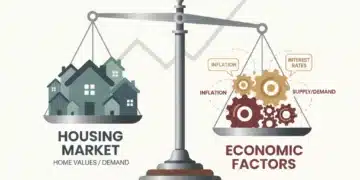
The interplay of supply and demand in the housing market is complex. Higher rates can deter some potential buyers, reducing demand. On the supply side, higher borrowing costs for developers can slow down new construction, potentially limiting the increase in housing inventory. However, if the market cools significantly, some existing homeowners might choose to stay put rather than sell and buy a new home at a higher mortgage rate, which could further constrain supply in certain segments. The net effect on supply and demand dynamics will vary by region and market segment.
Affordability Challenges and Solutions
Even a small increase in mortgage rates exacerbates existing affordability challenges, particularly for low- and moderate-income individuals. This highlights the ongoing need for innovative housing solutions, including affordable housing initiatives, down payment assistance programs, and policies that encourage increased housing supply. The long-term outlook suggests that affordability will remain a critical issue, requiring concerted efforts from policymakers and the private sector.
Regional Variations
It’s crucial to remember that the housing market is not monolithic. The impact of a Fed hike will vary significantly across different regions and local markets. Areas with strong job growth and limited inventory might be more resilient to rising rates, while markets that were already showing signs of weakness or overvaluation could experience a more pronounced slowdown. Analyzing local economic conditions and housing market trends is essential for a nuanced understanding of the long-term outlook.
In conclusion, while a 0.25% Fed hike in 2026 might seem minor, its long-term implications for the housing market are substantial. It contributes to a broader economic recalibration that aims for stability and sustainable growth. Understanding these long-term trends is vital for making informed decisions about real estate investments and financial planning.
Navigating Uncertainty: The Role of Data and Expert Analysis
The future, especially in economics, is always shrouded in some degree of uncertainty. While we can analyze current trends and anticipate potential actions, unforeseen events can quickly alter the trajectory of the economy and the Federal Reserve’s policy decisions. Therefore, navigating the period leading up to and beyond a potential 0.25% Fed hike in 2026 requires a continuous commitment to data analysis and expert insights.

Staying Informed with Reliable Data Sources
For individuals and businesses, regularly consulting reliable economic data sources is paramount. Key reports such as the Bureau of Labor Statistics (BLS) Consumer Price Index (CPI) and Producer Price Index (PPI), the Department of Commerce’s GDP reports, and the Federal Reserve’s own publications, including the Beige Book and FOMC minutes, offer invaluable insights into economic health and policy discussions. Tracking these indicators can provide an early warning system for potential shifts in the Fed’s stance.
Leveraging Expert Analysis
The financial media, economic think tanks, and investment firms regularly publish analyses and forecasts regarding the Federal Reserve’s actions and their potential impact. While these analyses can vary, consulting a range of reputable sources can help form a more comprehensive understanding of the consensus and dissenting opinions. Economists and market strategists often provide nuanced interpretations of complex data, translating them into actionable insights for various stakeholders.
The Importance of Adaptability in Financial Planning
Given the inherent unpredictability of economic cycles, financial planning should not be static. Instead, it must be adaptable and resilient. This means regularly reviewing personal budgets, investment portfolios, and real estate strategies to ensure they remain aligned with current economic realities and future expectations. For prospective homebuyers, this might involve stress-testing their budget against higher interest rates. For homeowners, it could mean re-evaluating refinancing opportunities as rates fluctuate.
Consulting Financial Professionals
Perhaps the most critical step in navigating economic uncertainty is to consult with qualified financial professionals. Mortgage brokers can offer up-to-date information on loan products and rates. Financial advisors can help tailor investment strategies to a rising rate environment and provide holistic financial planning advice. Real estate agents, particularly those with a strong understanding of local market dynamics, can offer insights into how interest rate changes might specifically affect property values and sales activity in your area.
Understanding the Fed’s Communication Strategy
The Federal Reserve has become increasingly transparent in its communications, offering forward guidance to help markets anticipate its moves. Paying attention to speeches by Fed governors, press conferences following FOMC meetings, and the Summary of Economic Projections (SEP) can provide critical clues about the central bank’s thinking and its likely path for interest rates. These communications aim to reduce market volatility by providing clarity on the Fed’s intentions.
In essence, successfully navigating the implications of a potential 0.25% Fed hike in 2026 requires a proactive, informed, and adaptive approach. By staying abreast of economic data, leveraging expert analysis, and seeking professional guidance, individuals and businesses can make more confident and resilient financial decisions in an ever-changing economic landscape.
Conclusion: Preparing for the Future of US Mortgages
The Federal Reserve’s 2026 interest rate outlook, with the potential for a 0.25% hike, serves as a crucial point of focus for anyone involved in the US housing market. While seemingly small, such an adjustment in the federal funds rate can trigger a cascade of effects, profoundly influencing US mortgages, consumer spending, business investment, and the broader financial ecosystem. This article has explored the rationale behind such a potential move, detailed its direct impact on mortgage rates and monthly payments, and highlighted the wider financial implications for the economy.
For prospective homebuyers, the message is clear: meticulous financial planning, a thorough understanding of affordability, and careful consideration of loan options are paramount. Strengthening your credit profile and being prepared for potential shifts in market dynamics will position you advantageously. For existing homeowners, particularly those with adjustable-rate mortgages, vigilance is key. Reviewing mortgage terms, exploring refinancing possibilities, and building a robust emergency fund are prudent steps to ensure financial stability.
Beyond individual strategies, the Fed’s actions contribute to a long-term economic outlook aimed at achieving sustainable growth and price stability. While higher rates might introduce affordability challenges and temper rapid home price appreciation, they also signal a return to a more normalized economic environment. This normalization, in the long run, can foster a healthier and more balanced housing market, even as it necessitates adjustments in short-term expectations.
Ultimately, navigating the complexities of the Fed’s monetary policy and its impact on US mortgages requires a continuous commitment to staying informed. By closely monitoring economic indicators, leveraging expert analysis, and consulting with financial professionals, individuals and businesses can make more confident and resilient financial decisions in an ever-changing economic landscape. The 2026 outlook is not just a forecast; it’s a call to proactive financial engagement.