Global Economic Headwinds 2026: Key Factors Affecting US Economy
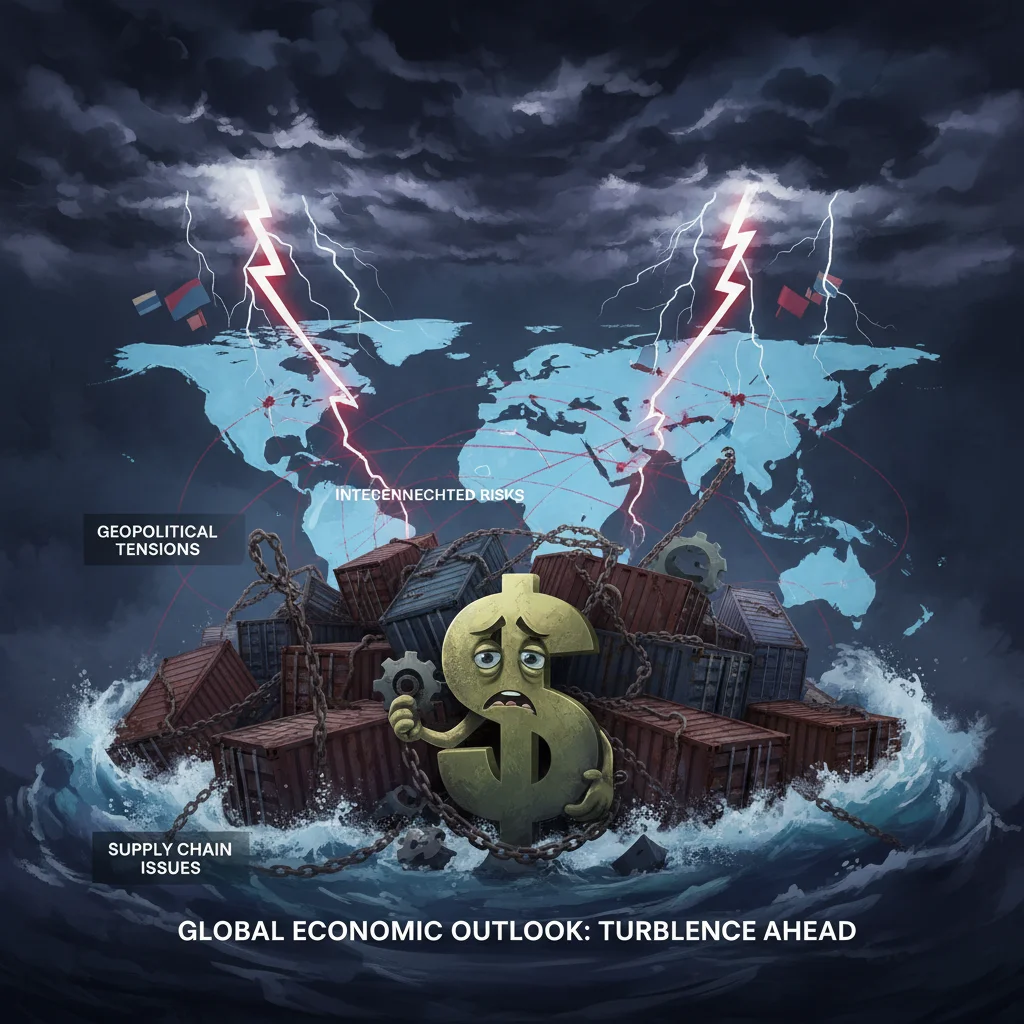
The year 2026 looms large on the horizon, bringing with it a complex tapestry of economic predictions and potential challenges for the United States. While domestic policies and consumer behaviors undoubtedly play a crucial role, it is increasingly clear that the most significant forces shaping the American economic landscape will emanate from beyond its borders. The interconnectedness of the modern global economy means that no nation, not even an economic superpower like the US, is immune to international tremors. As we delve into the prospective economic environment of 2026, two major international factors stand out as particularly influential global economic headwinds: the escalating geopolitical tensions across various regions and the persistent, evolving vulnerabilities within global supply chains.
Understanding these global economic headwinds is not merely an academic exercise; it is essential for policymakers, businesses, and individual investors to strategize and adapt. The decisions made today, informed by a clear understanding of these impending international dynamics, will dictate economic resilience and prosperity tomorrow.
The Resurgence of Geopolitical Tensions: A New Era of Global Economic Headwinds
The geopolitical landscape has undergone a dramatic transformation in recent years, moving away from a unipolar or even bipolar world order towards a more multipolar and fractured one. This shift has profound implications for global trade, investment, and stability, directly translating into significant global economic headwinds for the US economy in 2026. The nature of these tensions is multifaceted, encompassing everything from traditional interstate rivalries to ideological clashes and competition for critical resources.
The US-China Rivalry: A Defining Economic Contest
At the forefront of these geopolitical global economic headwinds is the ongoing strategic competition between the United States and China. This rivalry is not confined to military posturing; it is fundamentally an economic contest that impacts global commerce, technology, and financial markets. By 2026, we can expect this competition to intensify, manifesting in several key areas:
- Technological Decoupling: The drive for technological supremacy, particularly in critical sectors like semiconductors, artificial intelligence, and quantum computing, will likely lead to further decoupling efforts. Both nations are investing heavily in domestic capabilities and restricting access to advanced technologies for the other. This creates inefficiencies, duplicates research and development efforts, and fragments global tech ecosystems. For US businesses, this means navigating complex export controls, intellectual property challenges, and potentially higher costs for components or services.
- Trade and Tariff Wars: While direct, large-scale tariff wars might ebb and flow, the underlying tensions regarding trade imbalances, intellectual property theft, and market access will persist. The US may continue to use tariffs and other trade barriers as leverage, leading to retaliatory measures from China. This uncertainty disrupts global supply chains, increases import costs for US consumers, and makes long-term business planning exceedingly difficult for companies reliant on cross-border trade.
- Influence in Developing Nations: Both the US and China are actively vying for influence in developing countries through infrastructure investments, aid, and trade agreements. This competition can lead to increased political instability in these regions, impacting resource availability and market access for US companies. Furthermore, it can create a ‘choosing sides’ dilemma for smaller nations, further fragmenting global economic blocs.
Regional Conflicts and Instability: Shaking Global Confidence
Beyond the US-China dynamic, a myriad of regional conflicts and areas of instability contribute significantly to global economic headwinds. These localized crises often have ripple effects that extend far beyond their immediate geographic boundaries, directly impacting the US economy.
- The War in Ukraine and European Security: The ongoing conflict in Ukraine has already demonstrated its capacity to disrupt global energy markets, food supplies, and inflation rates. By 2026, even if the conflict de-escalates, the ramifications will linger. European security concerns will likely lead to increased defense spending, potentially redirecting resources from economic growth initiatives. For the US, this means continued pressure on energy prices, potential for sustained inflation, and the need to maintain strong alliances, often at an economic cost. The rebuilding efforts in Ukraine, whenever they begin in earnest, will also present both opportunities and challenges for international capital and resources.
- Middle East Volatility: The Middle East remains a geopolitical tinderbox, with various proxy conflicts, internal instabilities, and the ever-present issue of oil production. Any significant escalation in this region could send oil prices soaring, directly impacting US consumers through higher gas prices and increased transportation costs for businesses. Furthermore, instability can disrupt shipping lanes, leading to delays and increased insurance costs for goods traversing critical choke points like the Suez Canal or the Strait of Hormuz.
- Tensions in the Indo-Pacific: Beyond the US-China rivalry, specific flashpoints in the Indo-Pacific, such as potential conflicts over Taiwan or disputes in the South China Sea, pose immense risks. A military confrontation in this region would not only be a humanitarian disaster but would also bring the global economy to a standstill. The region is a critical hub for manufacturing, technology, and shipping. Any disruption would have immediate and catastrophic consequences for global supply chains, financial markets, and trade, directly impacting the US economy through shortages, inflation, and a severe blow to investor confidence.
These geopolitical global economic headwinds erode investor confidence, increase risk premiums, and divert resources from productive investments to defense and security. Businesses face greater uncertainty, making long-term planning difficult and potentially leading to slower growth and reduced innovation. For consumers, the impact can be seen in higher prices, reduced availability of goods, and a general sense of economic insecurity.

Global Supply Chain Vulnerabilities: A Persistent Economic Achilles’ Heel
The COVID-19 pandemic exposed the fragility of global supply chains, transforming them from an often-overlooked logistical detail into a critical geopolitical and economic concern. While some immediate issues have been addressed, the underlying vulnerabilities persist and are likely to continue acting as significant global economic headwinds for the US economy in 2026. The drive for efficiency over resilience has created a system prone to disruption from a multitude of factors.
Concentration Risks and Lack of Diversification
One of the primary vulnerabilities lies in the high concentration of production for critical goods and components in a few geographic locations or even single factories. This concentration creates immense risk:
- Single Points of Failure: An earthquake in Taiwan, a factory fire in Vietnam, a political lockdown in China – any localized event can have a disproportionately large impact on global production if that region or facility is the sole or dominant supplier of a crucial component. For the US, this means potential shortages of everything from advanced microchips to pharmaceuticals and consumer electronics.
- Geographic Concentration: The reliance on specific regions, particularly East Asia, for manufacturing a vast array of goods, makes global supply chains susceptible to regional shocks. Whether it’s a natural disaster, a public health crisis, or geopolitical tensions (as discussed earlier), a disruption in one major manufacturing hub can send shockwaves across the entire global economy.
- Lack of Redundancy: Years of optimizing for just-in-time inventory and lean manufacturing have stripped away much of the redundancy in supply chains. While efficient in stable times, this leaves little buffer when disruptions occur. Rebuilding inventories and finding alternative suppliers takes time, leading to prolonged shortages and price spikes.
The Impact of Climate Change and Extreme Weather Events
Climate change is no longer a distant threat; its effects are already being felt and will increasingly contribute to global economic headwinds by disrupting supply chains. Extreme weather events are becoming more frequent and severe, impacting agriculture, infrastructure, and transportation networks.
- Disruption of Agricultural Production: Droughts, floods, and unseasonable temperatures can devastate harvests, leading to higher food prices and food insecurity. For the US, this means increased import costs for certain foodstuffs and potential domestic inflationary pressures.
- Infrastructure Damage: Hurricanes, typhoons, and other extreme weather events can damage ports, roads, and rail lines, making it impossible to transport goods. This directly leads to shipping delays, increased logistics costs, and shortages of goods. For example, a major hurricane striking a key US port could paralyze regional and national supply chains for weeks or months.
- Resource Scarcity: Water scarcity in some regions due to climate change can impact industrial processes, particularly in manufacturing sectors that require significant water input. This can lead to production cuts or relocation, adding further stress to global supply lines.
Cybersecurity Threats and Digital Vulnerabilities
As supply chains become increasingly digitized and interconnected, they also become more vulnerable to cyberattacks. These digital threats represent a growing and insidious form of global economic headwinds.
- Ransomware Attacks: Attacks on logistics companies, ports, or manufacturing facilities can cripple operations, causing delays and financial losses. A successful ransomware attack on a major shipping company, for instance, could halt the movement of thousands of containers, creating massive backlogs and disrupting global trade.
- Data Breaches and Intellectual Property Theft: While not always directly impacting physical goods movement, data breaches can undermine trust, compromise sensitive business information, and lead to significant financial and reputational damage. The theft of intellectual property in highly competitive sectors can also erode a nation’s economic advantage.
- Disruption of Operational Technology (OT): Attacks targeting the operational technology that controls industrial processes in factories or critical infrastructure can lead to physical damage, production halts, and widespread disruption, further exacerbating supply chain issues.
The cumulative effect of these supply chain vulnerabilities is increased volatility, higher production costs, and inflationary pressures for the US economy. Businesses are forced to consider reshoring or nearshoring, which, while potentially increasing resilience, often comes with higher labor and production costs, ultimately passed on to consumers.

The Interplay of Geopolitics and Supply Chains: A Vicious Cycle
It is crucial to recognize that these two major global economic headwinds – geopolitical tensions and persistent supply chain vulnerabilities – are not isolated phenomena. Instead, they are deeply intertwined, often exacerbating one another in a vicious cycle. Geopolitical rivalries, such as the US-China competition, actively drive efforts to decouple supply chains, leading to inefficiencies and higher costs. Conversely, vulnerabilities in critical supply chains, particularly for essential resources or advanced technologies, can become leverage points in geopolitical disputes, increasing the likelihood of economic coercion or conflict.
For example, a geopolitical dispute over a region rich in rare earth minerals, vital for modern electronics, could simultaneously trigger a supply chain crisis and escalate international tensions. The weaponization of trade and technology, a growing trend, highlights this dangerous interplay. Nations might restrict exports of critical components or raw materials to exert political pressure, directly impacting the receiving nation’s industries and consumers.
By 2026, this interplay is likely to become even more pronounced. The drive for national security and economic sovereignty will continue to push nations towards diversifying supply chains, sometimes at the expense of efficiency. This strategic shift, while understandable from a security perspective, contributes to fragmentation and potentially higher global prices, further fueling global economic headwinds.
Navigating the Storm: Implications for the US Economy in 2026
Given these powerful global economic headwinds, what are the likely implications for the US economy in 2026? The outlook suggests a period characterized by heightened uncertainty, persistent inflationary pressures, and the need for significant strategic adjustments.
Persistent Inflationary Pressures
Both geopolitical tensions and supply chain vulnerabilities are inherently inflationary. Geopolitical conflicts can drive up energy and commodity prices, while trade barriers and technological decoupling lead to higher production costs. Supply chain disruptions, whether from natural disasters or cyberattacks, limit the availability of goods, pushing prices upward. For the US consumer, this means a continued erosion of purchasing power, and for businesses, it translates into higher input costs and difficulty in maintaining profit margins. The Federal Reserve will face a complex challenge in managing inflation in an environment where many of the underlying causes are external and beyond its direct control.
Slower Economic Growth and Increased Volatility
Uncertainty is anathema to investment and growth. The unpredictable nature of geopolitical events and the fragility of supply chains deter long-term capital expenditure and innovation. Businesses may become more cautious, hoarding cash rather than investing in expansion, leading to slower job creation and overall economic growth. Financial markets are also likely to experience increased volatility as they react to geopolitical headlines and supply chain disruptions, impacting retirement savings and investment portfolios.
Strategic Reshoring and Nearshoring
In response to these global economic headwinds, US businesses are likely to accelerate efforts to reshore production or nearshore it to politically stable and geographically closer countries. While this can enhance supply chain resilience, it often comes with higher labor and operational costs, which will likely be passed on to consumers. This trend, however, could also lead to a revitalization of domestic manufacturing and job creation in certain sectors, albeit with a transition period that could be challenging.
Increased Government Intervention and Industrial Policy
Faced with these external threats, the US government is likely to adopt more interventionist industrial policies. This could involve subsidies for critical industries, export controls, import restrictions, and strategic investments in domestic manufacturing capabilities, particularly in areas deemed vital for national security (e.g., semiconductors, rare earth minerals, pharmaceuticals). While aimed at bolstering national resilience, such policies can distort markets and potentially lead to trade disputes with allies and rivals alike.
Impact on Innovation and Technological Advancement
The technological decoupling driven by geopolitical competition could have mixed effects on innovation. On one hand, it might spur domestic research and development in critical areas. On the other hand, it could lead to a fragmentation of global scientific collaboration and a duplication of efforts, potentially slowing down overall global technological progress. US companies might face challenges in accessing talent and markets, impacting their ability to innovate and compete globally.
Conclusion: Preparing for a Turbulent 2026
The global economic headwinds set to define 2026 are formidable. The twin forces of intensifying geopolitical tensions and persistent supply chain vulnerabilities will test the resilience of the US economy in unprecedented ways. Policymakers will need to balance national security concerns with economic efficiency, while businesses must adapt to a more volatile and unpredictable operating environment. Consumers, in turn, should prepare for continued inflationary pressures and potential shifts in product availability.
Navigating these complex international factors requires a multifaceted approach. Diplomacy and strategic alliances will be crucial in mitigating geopolitical risks, while robust investments in infrastructure, diversification of supply sources, and technological innovation will be essential for building more resilient supply chains. The US economy’s ability to withstand these global economic headwinds in 2026 will depend on foresight, adaptability, and a willingness to embrace new strategies in an ever-evolving global landscape. The time for proactive planning and strategic adjustments is now, to ensure that the nation can weather the coming storms and emerge stronger on the other side.