2026 Supply Chain Disruptions: A 4-Step Solution for US Businesses

The global economic landscape is a tapestry woven with intricate threads of production, logistics, and consumption. For US businesses, understanding and anticipating potential ruptures in this fabric is not merely a strategic advantage but a critical imperative for survival and growth. As we cast our gaze towards 2026, the specter of supply chain disruptions looms large, shaped by geopolitical shifts, technological advancements, climate change impacts, and evolving consumer demands. The question is no longer if disruptions will occur, but how prepared US businesses are to navigate them. This comprehensive guide will delve into the challenges ahead and, more importantly, present a robust, 4-step practical solution to ensure your business not only withstands but thrives amidst the anticipated 2026 supply chain solutions landscape.
The past few years have served as a stark reminder of the fragility of global supply chains. From the unprecedented challenges posed by the COVID-19 pandemic to geopolitical tensions, trade wars, and natural disasters, businesses worldwide have grappled with everything from raw material shortages and production delays to skyrocketing shipping costs and labor scarcity. These events have exposed vulnerabilities that many companies, particularly those operating within the US, had previously underestimated. The lessons learned are invaluable, but the future demands proactive, rather than reactive, strategies. Focusing on 2026 supply chain solutions now is essential to build the resilience needed for tomorrow.
As we approach 2026, the confluence of several macro-trends suggests that supply chain volatility is likely to persist, if not intensify. Geopolitical tensions, particularly in key manufacturing and shipping regions, continue to create uncertainty. The ongoing digital transformation, while offering immense opportunities, also introduces new vulnerabilities, such as cyber threats to critical infrastructure. Furthermore, the increasing frequency and severity of climate-related events threaten to disrupt transportation networks, agricultural output, and energy supplies. For US businesses, these factors translate into potential risks ranging from increased operational costs and delayed market entry to reputational damage and lost market share. Therefore, developing robust 2026 supply chain solutions is paramount.
This article aims to equip US businesses with a clear, actionable framework. Our 4-step practical solution is designed to move beyond theoretical discussions and provide tangible strategies that can be implemented today to safeguard your operations against future shocks. We will explore how to enhance visibility, foster diversification, embrace technological innovation, and cultivate strategic partnerships. By systematically addressing these areas, US businesses can transform potential threats into opportunities for competitive advantage, ensuring a more resilient and sustainable future. The time to act on 2026 supply chain solutions is now.
The Evolving Landscape: Why 2026 Demands New Supply Chain Strategies
The supply chain environment is in a constant state of flux, but certain factors are converging to make the period leading up to and including 2026 particularly challenging for US businesses. Understanding these drivers is the first step towards formulating effective 2026 supply chain solutions.
Geopolitical Instability and Trade Dynamics
Geopolitical tensions remain a significant wildcard. Trade policies can shift rapidly, impacting tariffs, import/export regulations, and access to critical markets and raw materials. US businesses heavily reliant on specific regions for manufacturing or sourcing must prepare for potential disruptions stemming from international conflicts, political unrest, or evolving trade agreements. Diversifying sourcing strategies and exploring nearshoring or reshoring options become increasingly attractive as part of robust 2026 supply chain solutions.
Technological Acceleration and Cyber Threats
While technology offers powerful tools for supply chain optimization, it also introduces new vulnerabilities. The increasing reliance on digital platforms, IoT devices, and automation makes supply chains more susceptible to cyberattacks, which can cripple operations, compromise sensitive data, and erode trust. Investing in robust cybersecurity measures and developing contingency plans for digital disruptions are crucial components of forward-thinking 2026 supply chain solutions.
Climate Change and Environmental Regulations
The physical impacts of climate change – extreme weather events, rising sea levels, and resource scarcity – are directly affecting supply chain stability. Transportation routes can be disrupted, agricultural yields compromised, and energy costs driven up. Furthermore, growing environmental regulations and consumer demand for sustainable practices are pushing businesses to re-evaluate their entire supply chain footprint, from sourcing to last-mile delivery. Incorporating sustainability into 2026 supply chain solutions is no longer optional.
Labor Market Shifts and Workforce Shortages
The global labor market continues to experience significant shifts, including an aging workforce in some regions, skills gaps, and evolving expectations from employees. This can lead to shortages in critical areas such as logistics, manufacturing, and technical roles, impacting production capacity and distribution efficiency. US businesses must consider automation, reskilling programs, and talent retention strategies as integral parts of their 2026 supply chain solutions.
Consumer Behavior and Demand Volatility
Modern consumers expect speed, flexibility, and transparency. This has fueled the growth of e-commerce and omnichannel retail, placing immense pressure on logistics networks. Rapid shifts in consumer preferences, often amplified by social media, can lead to unpredictable demand patterns, making forecasting and inventory management more complex. Agile and responsive 2026 supply chain solutions are needed to meet these dynamic consumer expectations.
The 4-Step Practical Solution for US Businesses: Building Resilience for 2026
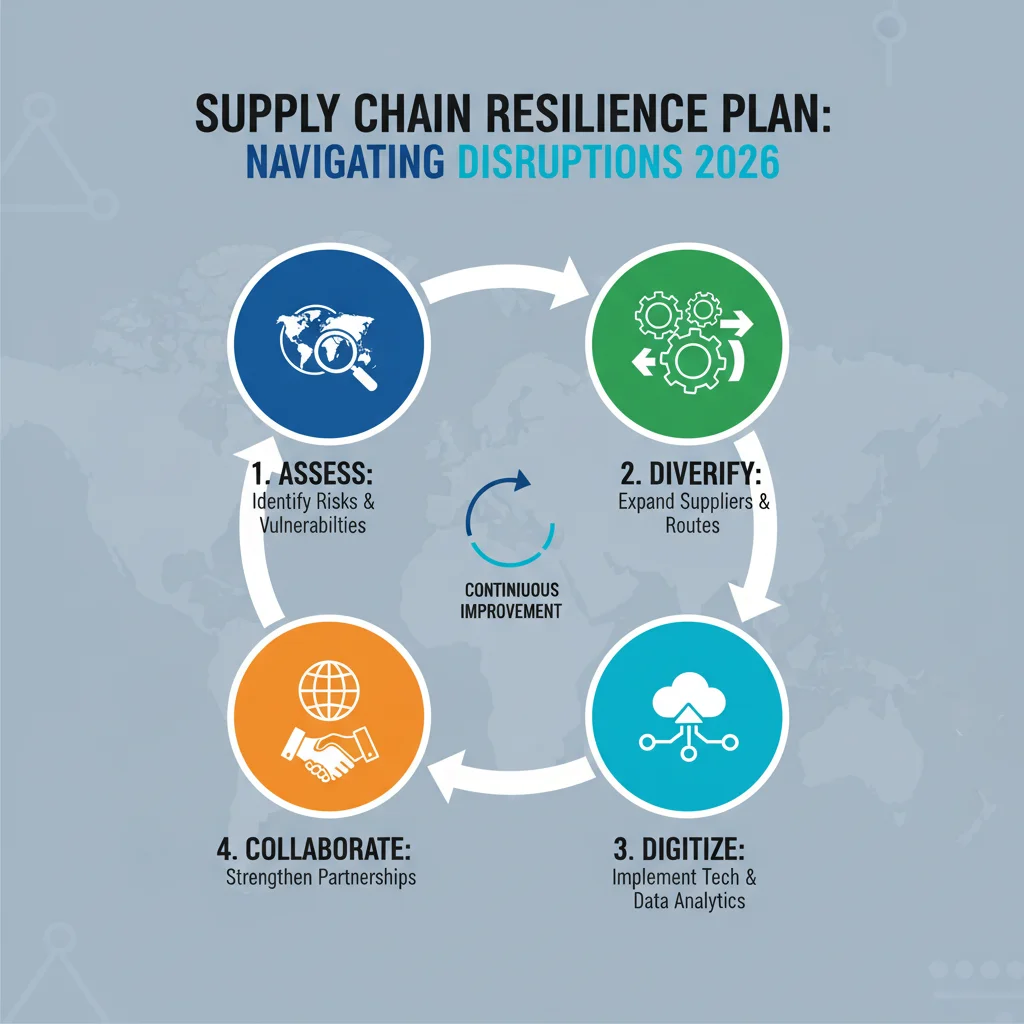
Given the multifaceted challenges ahead, a piecemeal approach to supply chain management is insufficient. US businesses require a holistic, integrated strategy. Our 4-step practical solution provides a comprehensive framework to build enduring resilience and ensure your operations are future-proofed against the 2026 supply chain solutions landscape.
Step 1: Enhance Visibility and Predictive Analytics
You cannot manage what you cannot see. The first and most fundamental step in building a resilient supply chain is to achieve end-to-end visibility. This means having real-time, accurate data on every stage of your supply chain, from raw material sourcing to final product delivery. Without this clarity, businesses operate in the dark, unable to anticipate or react effectively to disruptions. This is where advanced analytics and predictive modeling become indispensable for effective 2026 supply chain solutions.
Implement Advanced Data Collection and Integration
Start by investing in technologies that can collect data from across your entire network. This includes IoT sensors on inventory, vehicles, and production lines; RFID tags for tracking goods; and API integrations with suppliers’ and logistics partners’ systems. The goal is to break down data silos and create a unified, accessible data stream. This foundational step is crucial for any meaningful 2026 supply chain solutions.
Leverage AI and Machine Learning for Predictive Insights
Once you have the data, the next step is to make it intelligent. Artificial intelligence (AI) and machine learning (ML) algorithms can analyze vast datasets to identify patterns, predict potential disruptions (e.g., weather events, port congestion, supplier financial instability), and forecast demand with greater accuracy. Predictive analytics can alert you to potential issues before they escalate, giving you precious time to implement mitigation strategies. This proactive approach is a cornerstone of smart 2026 supply chain solutions.
Develop Digital Twin Models
Consider creating a ‘digital twin’ of your supply chain. This virtual model simulates your physical supply chain, allowing you to test different scenarios and understand the potential impact of disruptions without affecting real-world operations. Digital twins can help optimize inventory levels, identify bottlenecks, and evaluate the effectiveness of various contingency plans, making them powerful tools for developing robust 2026 supply chain solutions.
Step 2: Diversify and Regionalize Sourcing & Production
Over-reliance on a single supplier, region, or production facility is a primary source of vulnerability. The second step focuses on strategically diversifying your supply chain to spread risk and build redundancy. This is a critical element of effective 2026 supply chain solutions.
Multi-Sourcing Strategies
Identify critical components and raw materials and develop relationships with multiple suppliers, ideally in different geographic regions. While this might initially seem to increase complexity or cost, the long-term benefits in terms of resilience and continuity far outweigh these concerns. Dual or triple sourcing ensures that if one supplier or region faces disruption, you have alternative channels to maintain production. This diversification is key to resilient 2026 supply chain solutions.
Nearshoring and Reshoring Initiatives
Evaluate the feasibility of bringing some manufacturing or sourcing closer to home, either within the US (reshoring) or to neighboring countries (nearshoring). While often driven by labor costs, the calculus has shifted to include factors like reduced lead times, lower transportation costs, greater control over quality, and reduced exposure to geopolitical risks. This strategic shift is a powerful component of US-centric 2026 supply chain solutions.
Build Inventory Buffers Strategically
While lean inventory practices have dominated for years, the pandemic highlighted the risks of having too little buffer. Strategic inventory buffering for critical components or finished goods can absorb short-term shocks. This doesn’t mean stockpiling everything, but rather intelligently identifying high-risk, high-impact items that warrant additional safety stock. Balancing lean principles with strategic resilience is crucial for 2026 supply chain solutions.
Step 3: Embrace Digital Transformation and Automation
Technology is not just a tool; it’s a transformative force that can fundamentally reshape your supply chain for resilience and efficiency. The third step emphasizes leveraging digital solutions and automation to optimize processes, improve responsiveness, and reduce human error, which are vital aspects of 2026 supply chain solutions.
Implement Supply Chain Management (SCM) Software
Invest in robust SCM software that integrates various functions like procurement, inventory management, logistics, and demand planning. Modern SCM systems provide a centralized platform for data, enabling better decision-making and streamlined operations. This integration is foundational for truly effective 2026 supply chain solutions.
Automate Key Processes
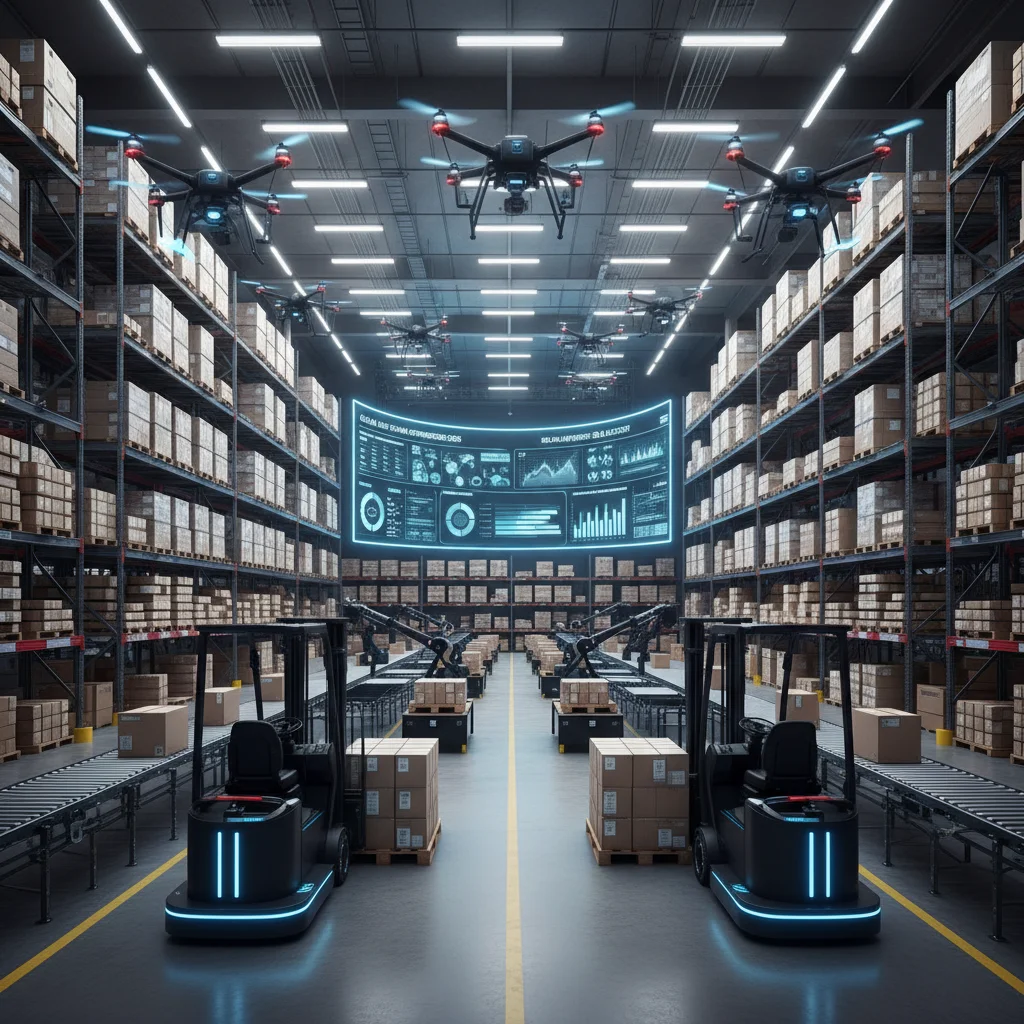
Identify repetitive, labor-intensive tasks within your supply chain and explore automation opportunities. This could include robotic process automation (RPA) for administrative tasks, automated guided vehicles (AGVs) or robots in warehouses, and automated quality control systems in manufacturing. Automation reduces reliance on manual labor, increases speed, and improves accuracy, contributing significantly to resilient 2026 supply chain solutions.
Adopt Blockchain for Transparency and Traceability
Blockchain technology offers an immutable and transparent ledger for transactions and product movements. This can significantly enhance traceability, allowing businesses to verify the origin of goods, track their journey, and quickly identify points of failure or fraud. For industries with complex supply chains or high-value goods, blockchain can be a game-changer in building trust and resilience, making it a powerful tool for advanced 2026 supply chain solutions.
Utilize Cloud-Based Solutions
Cloud computing provides scalable, flexible, and accessible infrastructure for your supply chain systems. It enables real-time collaboration with partners, facilitates data sharing, and ensures business continuity even if local systems are compromised. Moving to the cloud is a strategic move for modern and agile 2026 supply chain solutions.
Step 4: Foster Collaboration and Build Strong Partnerships
No business operates in a vacuum. The strength of your supply chain is often determined by the strength of your relationships. The fourth step focuses on cultivating deep, collaborative partnerships with suppliers, logistics providers, and even competitors to create a more robust and responsive ecosystem. This collaborative approach is a cornerstone of comprehensive 2026 supply chain solutions.
Strategic Supplier Relationships
Move beyond transactional relationships with your key suppliers. Invest in building long-term, strategic partnerships based on trust, transparency, and shared goals. Share forecasts, collaborate on innovation, and work together on risk mitigation strategies. A strong relationship means suppliers are more likely to prioritize your needs during times of disruption. This collaborative spirit is essential for effective 2026 supply chain solutions.
Logistics Partner Collaboration
Work closely with your logistics providers. Share real-time data, communicate potential challenges, and explore flexible shipping options. Consider engaging multiple logistics partners for different routes or modes of transport to build redundancy. Joint planning and information sharing can significantly improve responsiveness and reduce delivery delays, which are crucial for timely 2026 supply chain solutions.
Industry Collaboration and Information Sharing
In some cases, collaborating with industry peers, even competitors, can be beneficial. Industry associations, shared data platforms, or joint initiatives to address common supply chain vulnerabilities can lead to collective resilience. Sharing best practices and intelligence about emerging risks can benefit all participants, strengthening the overall ecosystem for 2026 supply chain solutions.
Cybersecurity Alliances
Given the increasing threat of cyberattacks, forming alliances with cybersecurity experts and sharing threat intelligence with trusted partners can enhance collective defense. A unified front against cyber threats protects not just individual businesses but the entire supply chain network. This is an often-overlooked but vital aspect of modern 2026 supply chain solutions.
Implementing the Solution: A Roadmap for US Businesses
Successfully implementing these 2026 supply chain solutions requires a structured approach and a commitment from leadership. It’s not a one-time project but an ongoing process of assessment, adaptation, and improvement.
Phase 1: Assessment and Strategy Development (Now – Mid 2024)
Conduct a Comprehensive Risk Assessment: Identify critical vulnerabilities in your current supply chain. Map out all tiers of your suppliers, logistics routes, and production facilities. Quantify the potential impact of various disruption scenarios (e.g., supplier failure, natural disaster, cyberattack).
Define Resilience Objectives: What level of disruption can your business tolerate? What are your key performance indicators (KPIs) for supply chain resilience (e.g., lead time stability, on-time delivery rate, inventory turnover)?
Develop a Technology Roadmap: Identify the specific technologies (e.g., SCM software, AI tools, IoT sensors, blockchain) that will best support your visibility and automation goals. Plan for phased implementation.
Form Cross-Functional Teams: Supply chain resilience is not just an operations issue. Involve representatives from procurement, sales, IT, finance, and legal to ensure a holistic strategy for 2026 supply chain solutions.
Phase 2: Pilot and Implementation (Mid 2024 – End 2025)
Pilot New Technologies: Start with small-scale pilot projects for new SCM software, predictive analytics tools, or automation solutions. Learn from these pilots before a full-scale rollout.
Begin Supplier Diversification: Identify alternative suppliers and begin the qualification process. Negotiate contracts that include resilience clauses, such as guaranteed backup capacity or alternative shipping routes.
Invest in Workforce Training: Train your employees on new technologies and processes. Develop a culture of proactive risk management and continuous improvement. This is vital for all 2026 supply chain solutions.
Establish Communication Protocols: Develop clear communication plans for engaging with suppliers, partners, and customers during a disruption. Transparency builds trust.
Phase 3: Optimization and Continuous Improvement (Ongoing from 2026)
Monitor and Evaluate: Continuously track your supply chain KPIs. Regularly review the effectiveness of your resilience strategies and make adjustments as needed. The threat landscape is dynamic, so your 2026 supply chain solutions must also be.
Scenario Planning and Stress Testing: Periodically run simulations of different disruption scenarios to test your plans and identify weaknesses. Use these exercises to refine your strategies.
Foster Innovation: Stay abreast of emerging technologies and best practices in supply chain management. Be open to adopting new solutions that can further enhance your resilience and efficiency.
Strengthen Partnerships: Continuously nurture your relationships with suppliers and partners. Regular communication and joint problem-solving will solidify these alliances, making them even more effective for future 2026 supply chain solutions.
The Benefits of Proactive Supply Chain Management for US Businesses
Investing in these 2026 supply chain solutions is not just about avoiding disaster; it’s about unlocking significant competitive advantages:
Enhanced Operational Continuity
The most immediate benefit is the ability to maintain operations and continue serving customers even when disruptions occur. This minimizes lost revenue, protects market share, and safeguards your brand reputation.
Improved Cost Efficiency
While some resilience measures require upfront investment, they can lead to long-term cost savings by reducing the impact of disruptions, optimizing inventory, and streamlining logistics. Predictive analytics can also help avoid costly expedited shipping or production delays.
Greater Agility and Responsiveness
A visible, diversified, and technologically advanced supply chain is inherently more agile. It can adapt quickly to changes in demand, market conditions, or unforeseen events, allowing your business to seize new opportunities faster than competitors.
Stronger Customer Relationships
Reliable delivery and consistent product availability build customer trust and loyalty. In a world of increasing uncertainty, businesses that can consistently meet customer expectations will stand out.
Sustainable Growth and Competitive Advantage
Ultimately, a resilient supply chain underpins sustainable growth. It allows US businesses to navigate future challenges with confidence, innovate without fear of crippling disruptions, and emerge stronger, securing a lasting competitive edge in the global marketplace. Proactive 2026 supply chain solutions are an investment in your business’s future.
Conclusion: Securing Your Future with 2026 Supply Chain Solutions
The journey towards 2026 presents both challenges and opportunities for US businesses. The lessons of recent years have underscored the critical importance of a robust and resilient supply chain. By proactively implementing our 4-step practical solution – enhancing visibility and predictive analytics, diversifying and regionalizing sourcing and production, embracing digital transformation and automation, and fostering strong collaborations – businesses can transform potential vulnerabilities into sources of strength.
The time for action is now. Delaying these crucial investments in 2026 supply chain solutions could leave your business exposed to significant risks that could erode profitability, damage reputation, and hinder growth. Instead, by adopting a forward-thinking, strategic approach, US businesses can build supply chains that are not only capable of withstanding the shocks of the future but are also optimized for efficiency, innovation, and sustained success.
Embrace these strategies to ensure your business is not just surviving but thriving in the dynamic global economy of 2026 and beyond. The future belongs to the prepared, and with the right 2026 supply chain solutions, your US business can lead the way.